Just think of a world where technology not only helps you connect but also empowers you to do things you never thought possible.
For millions of people with disabilities, adaptive technologies are turning that dream into reality.
The staggering statistic of 15% of the entire population living with some sort of disability is shocking, to say the least (Source: World Bank, 2023).
And that means that more than a billion people have a chance of utilizing these innovations.
And here’s the thing: it isn’t just the technology that is essential; it is the capability to use it that truly matters.
This blog stands to teach how improving your knowledge of adaptive technology can enable you to build a more inclusive and empowered world.
Now, let’s discuss how you can seize this opportunity to drive change.
Understand the Core Principles of Adaptive Technology
If you are working on adaptive technologies, the first step is to analyze the goal for which these technologies are developed.
Adaptive technologies seek to provide assistive solutions to individuals having physical limitations, speaking difficulty, or facing any other day-to-day problem that lowers their quality of life.
You need to understand different types of enablement devices such as mobility scooters, speech-to-text software, etc.
This will help you understand the functioning and the possible gaps in these devices which can be filled with better and user-friendly technologies.
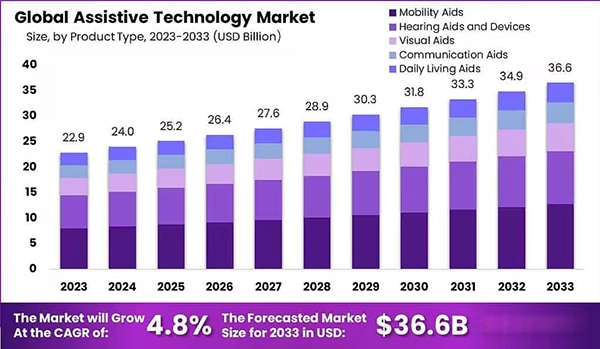
The data below shows that the global assistive technology market is projected to experience steady growth over the coming decade at a CAGR of 4.8%.
Advance Your Expertise with Specialized Education
Another thing that you need to understand is that learning highly specialized education is necessary in the world of adaptive technology.
One great way to do this is by pursuing an assistive technology master’s program that covers a wide scope of training in product development, design, and proper usability.
This is of great help as it equips you with skills to develop technology solutions so you can improve independence and accessibility for users with varying needs.
Develop Strong Programming and Engineering Skills
Improving your technical skills enables you to not only move forward in the field of adaptive technology but also build more effective tools.
To become truly impactful and functional, your tools need to have programming and engineering integrated into their design.
Knowing software languages such as Python, Java, or C++ will allow you to develop software that is compatible with the devices.
Also, if you happen to be working on hardware such as prosthetics, engineering skills become paramount too.
You can follow known accessibility organizations and attend relevant conferences, as they can reveal the most paramount papers that will guide you to the next steps.
In all these, you must also know of changes in regulations as they depict how you should mold your tools so you can meet industry standards and the actual requirements of the users.
Gain Hands-On Experience Through Prototyping and Testing
You should be good enough to build and test prototypes if you wish to sharpen your skills.
This will help you understand better how things work and how they don’t by engaging in real projects and collecting feedback from users.
It will also enable you to refine your ideas, improve your designs, and learn from actual experiences.
Understand the Ethical and Regulatory Considerations
Now sit down and pay attention to ethics, the regulations, and the law when designing tools to aid accessibility.
Always bear in mind privacy and legal issues like the ADA or WCAG when using a product.
One stays legally efficient by being compliant with change regulations times which makes inclusive solutions more useful.
Collaborate with Experts and Interdisciplinary Teams
You can make your product or device much better if you’ve been working with specialists from different areas.
Consultation with designers, engineers, and even people working in health can assist you in enhancing the value of your work.
Talking to end-users is pivotal as it leads to designing practical, usable, and comprehensive solutions.
Do You Know? Assistive technology isn’t new, it has been a part of the human experience for thousands of years. It is believed that eyeglasses were invented in Italy between 1268 and 1289.
Leverage AI and Machine Learning for Smarter Adaptations
With the use of AI and machine learning, the accessibility functions of your adaptation tools can easily be automated, something that many mobile app development companies are now prioritizing to ensure their apps are inclusive and intelligent.
The integration of speech recognition and image processing technologies may form designs that are more suitable for particular user needs.
Understanding how to utilize these tools or systems enables you to deliver more effective and efficient advanced working solutions.
Join Professional Organizations and Networking Groups
You must make sure to join networking and professional groups to actively assist you in advancing your career.
Their offers are many and include fundamental aids, several forms of training, and professional exposure in the network.
These enable you to receive timely updates, mentorship on new concepts, and novel ideas to work on and leverage.
Commit to Lifelong Learning and Continuous Improvement
Like everything else, continuous growth and learning are needed when implementing accessibility features in anything.
Therefore, you must make sure to constantly take part in new courses, seek out workshops, or read fresh academic literature to prepare for changes.
The guarantee that you will remain relevant as well as sharp in your execution of your ideas and solving the dynamically changing market.

 Mahima Dave