
The factors are:
- Product complexity
- Number of features
- UX/UI requirements
- Technology stack
 Reviewed By Mr Kumar
  Upasna Deewan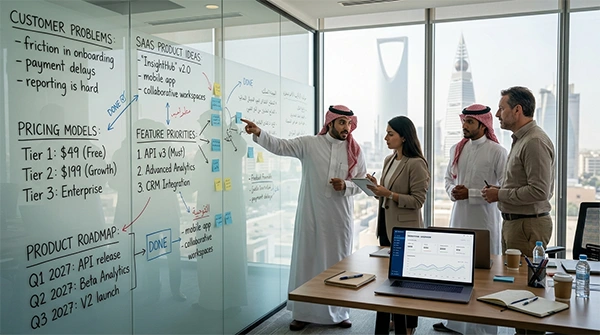
Saudi Arabia is becoming one of the leading technology and business hubs in the Middle East. As Saudi organizations continue investing in digital transformation, the demand for cloud-based software solutions is growing rapidly.
From startups to established enterprises, businesses are looking for software that can enhance and automate processes while also reducing operational costs and supporting long-term growth. This is where an experienced SaaS Development Company in Saudi Arabia can help.
Here’s how the right development partner can transform an idea into a secure and scalable SaaS product designed specifically for businesses’ requirements.
Software as a Service, commonly known as SaaS, is a software delivery model where applications are created in the cloud and accessed through the internet. Users don’t need to install the software locally, while businesses can organize updates, security, and infrastructure centrally.
Popular SaaS products vary between CRM platforms, project management tools, accounting systems, HR software, communication platforms, analytics dashboards, and industry-specific business applications.
For businesses, SaaS can provide several benefits:
However, building a reliable SaaS product requires more than developing a web application. Product strategy, UX design, cloud architecture, security, integrations, billing, analytics, and scalability all need to work simultaneously
Saudi Arabia is experiencing a significant digital transformation across both public and private sectors. Vision 2030 has accelerated investments in technology, cloud computing, artificial intelligence, digital services, and innovative business models.
Saudi Arabia remains at the center of this transformation. Businesses across healthcare, logistics, retail, real estate, education, finance, manufacturing, and professional services are looking for digital solutions that can make them work more efficiently.
For instance, a logistics company could utilize a SaaS platform to manage deliveries and fleet operations. A healthcare firm could use cloud software for appointments and administrative operations. A real estate company may use SaaS to manage properties, leads, documents, and customer communication.
There is also an opportunity for Saudi Arabia-based startups to develop SaaS products for customers across Saudi Arabia, the GCC, and international markets.
A professional SaaS development unit can create different types of cloud-based products depending on the business model and target demographics.
B2B SaaS solutions let organizations manage specific business activities such as CRM, HR, accounting, project management, procurement, inventory, and operations.
Artificial intelligence is bringing another layer of value to SaaS platforms. AI can be used for intelligent recommendations, automated workflows, document analysis, predictive insights, chatbots, and customized user experiences.
Businesses looking to merge SaaS with artificial intelligence can work with a SaaS AI Development Company to build platforms with AI capabilities from the ground up.
Large organizations usually need advanced SaaS solutions along with enterprise security, role-based access, complex workflows, integrations, and scalable infrastructure.
Vertical SaaS focuses on solving the needs of a particular industry. For example, a healthcare SaaS platform may rely on patient workflows, while logistics SaaS could focus on fleet and delivery management.
SaaS can also be adapted to create platforms that connect different groups of users, such as buyers and suppliers, customers and service providers, or businesses and partners.
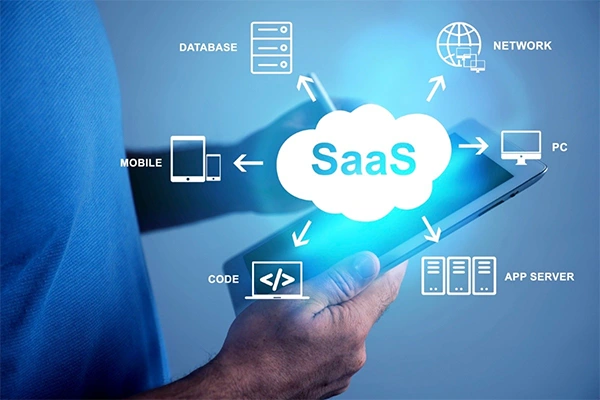
A successful SaaS platform requires a strong technical foundation as well as a good user experience.
A multi-tenant architecture enables multiple customers to use the same application while keeping their data and configurations securely separated.
Different users may require specific access levels. Role-based permissions help organizations control access to sensitive information and platform functionality.
Subscription plans, free trials, recurring payments, invoices, renewals, and usage limits are essential for many SaaS business models.
Analytics lets businesses understand customer behavior, product usage, conversions, and overall platform performance.
Modern SaaS products usually need to connect with CRM systems, ERP software, payment platforms, and other business applications.
Authentication, authorization, encryption, monitoring, secure APIs, and data protection should be considered throughout the development process rather than added later.
A SaaS product should be able to handle increasing users, transactions, and data without negatively affecting its overall stability.
Building SaaS software is an ongoing product journey rather than a one-time development project.
The process starts by understanding the business problem, target audience, competitors, customer expectations, and product goals.
The development team defines the launch roadmap, core features, technology requirements, monetization strategy, and MVP scope.
This is where a reliable product development company can provide significant value by connecting business goals with technology decisions.
A SaaS platform may include dashboards, forms, reports, workflows, and multiple user roles. Good UX design makes these features easier to understand and use.
Developers build the frontend, backend, APIs, database, authentication, integrations, dashboards, and other required functionality as part of scalable SaaS development.
If AI is part of the product, AI models, APIs, recommendation engines, AI agents, or automation process flows can also be integrated during this stage.
The product is tested for functionality, security, performance, usability, compatibility, and reliability.
After testing, the SaaS application is deployed to the cloud and prepared for customers.
SaaS products continue to change after launch. Customer feedback, analytics, market changes, and new technologies can guide future releases.
Choosing a development partner with an understanding of the Saudi market can provide benefits beyond technical expertise.
A Saudi Arabia-focused development team can truly understand local business requirements, customer expectations, Arabic and English user experiences, regional workflows, and the technology ecosystem.
This can be particularly useful for businesses developing SaaS products specifically for Saudi customers.
At the same time, the development partner might have the technical capabilities to build products that can scale beyond the local market when required.
SaaS development costs vary depending on the product and its technical requirements.
A basic MVP with a few core features will usually require less development effort than an enterprise SaaS platform with advanced integrations, AI functionality, analytics, complex permissions, and high scalability requirements.
Factors that can influence development costs include:
Instead of focusing only on the initial development cost, businesses should analyze the long-term value, scalability, and maintenance requirements of the platform.
A technically advanced product doesn’t automatically become a successful SaaS business.
The product must solve a genuine commercial problem and provide enough value for users to continue paying for it.
Successful SaaS products usually start with a clear problem rather than a long list of features.
Users should be able to understand the product quickly. Simple onboarding and intuitive navigation can have a major impact on adoption.
The technology architecture should support future growth in customers, data, transactions, and integrations.
Product analytics can reveal what buyers use, where they drop off, and which features provide the most value.
AI shouldn’t be added simply because it is becoming popular. It should solve a real problem, such as automating repetitive tasks, providing recommendations, analyzing information, or improving customer support.
This is one reason businesses are actively exploring partnerships with a SaaS AI Development Company when building next-generation SaaS products.
The growing digital economy in Saudi Arabia presents interesting opportunities for businesses that want to create scalable SaaS products. From B2B platforms and enterprise software to AI-powered SaaS solutions, companies can use cloud technology to improve operations and identify new digital revenue streams.
But successful SaaS development demands more than writing code. It requires product thinking, market understanding, user-focused design, scalable architecture, security, AI expertise where relevant, and continuous product improvement.
Working with an experienced AI First Product Engineering Company in Saudi Arabia and a capable product development company can ensure that businesses move from an early-stage idea to a market-ready digital product.
The factors are:
The product must solve a genuine commercial problem and provide enough value for users to continue paying for it.
A SaaS platform may include dashboards, forms, reports, workflows, and multiple user roles. Good UX design makes these features easier to understand and use.

Technology issues never come up after giving a prior emergency. They come as a server issue or a software failure…
Not every business tool is worth buying and paying a monthly subscription for. While some tools become a necessary part…