
Both are Microsoft Outlook data files, but the key difference is that OST is a synchronized and offline copy for Exchange/IMAP, and PST is a local archive. OST needs an account, while PSt can work on its own.
How to Convert OST to PST Files in Outlook: Methods, Prerequisites, and Troubleshooting
 Mahima Dave
Updated on: Jul 16, 2024
Table of Contents
- What are OST and PST Files?
- Prerequisites Before You Start Converting OST to PST Format
- How to Convert OST to PST Files Manually?
- How Do I Convert OST to PST Using a Third-Party Converter?
- What are the Advantages of Using an OST to PST Converter?
- How Do I Troubleshoot OST to PST Conversion Issues?
- Why Should You Convert OST Files to PST?
- Practical Applications of OST to PST Conversion
- Conclusion
- Frequently Asked Questions
Converting an OST file to PST is not just a routine Outlook task. It is often about saving critical email data when an account breaks, a server disconnects, or a profile gets deleted. It also serves as a seamless way to migrate your data to another Exchange server.
I will cut through the confusion and keep things practical. So, let’s understand what actually works, how to convert OST to PST files safely, when manual methods make sense, and when professional tools are the best choice.
Key Takeaways
- Manual OST to PST conversion works only when Outlook and the mailbox are fully accessible.
- Orphaned or inaccessible OST files require a third-party converter.
- PST files are portable, backup-friendly, and safer for long-term storage than OST files.
- Always back up the OST file before starting, and avoid cloud-synced folders during conversion.
What are OST and PST Files?
Before you convert anything, get this straight. You cannot treat the OST and PST files the same, and it is the biggest reason conversions fail. So, let’s quickly understand both.
OST File (Offline Outlook Data File)
An OST file is a local and offline copy of your mailbox. Outlook creates it when you connect to Exchange, Microsoft 365, or IMAP products. It allows you to read emails and calendars even without an internet connection.
But here is the catch:
- An OST is locked to the Outlook profile and the email account that created it.
- You cannot open it freely in another Outlook profile.
- If the email account is deleted or disabled, the OST often becomes unusable.
- It is not meant to act as a backup.
You can think of OST as a synced mirror, not a storage file.
PST File (Outlook Data File)
A PST file is portable. It stores emails, contacts, calendars, and attachments locally and can be opened in any Outlook profile. That is why PST files are used for backups, email migration, archiving old data, and moving mailboxes between systems.
The simple rule is that OST depends on the account, and PST stands on its own.
Prerequisites Before You Start Converting OST to PST Format
Here are some prerequisites that are important to understand. Skipping these checks is how people lose data. So, before starting, make sure:
- Outlook desktop is installed if you plan to use manual methods.
- The OST file is copied to a safe backup location.
- You have enough free disk space for the PST file.
- The mailbox is fully synced if you are exporting from Outlook.
And the most important point is to confirm the account still exists if the OST is linked to an Exchange or Microsoft 365 account. If it is deleted, manual conversion will usually fail.
How to Convert OST to PST Files Manually?
I will start with manual methods to convert .ost files to .pst. However, they only work when Outlook can still access the mailbox. So, if your Outlook opens normally, start with the following three methods.
Method 1: Convert OST to PST Using Outlook Export/Import
Exporting or importing OST files and PST files is the most common and popular method for converting OST files. Here are the steps you need to take:
- Open Microsoft Outlook.
- Go to File > Open & Export > Import/Export.
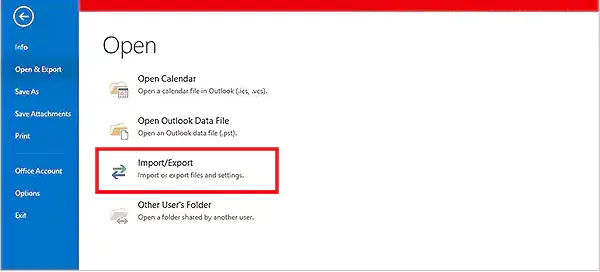
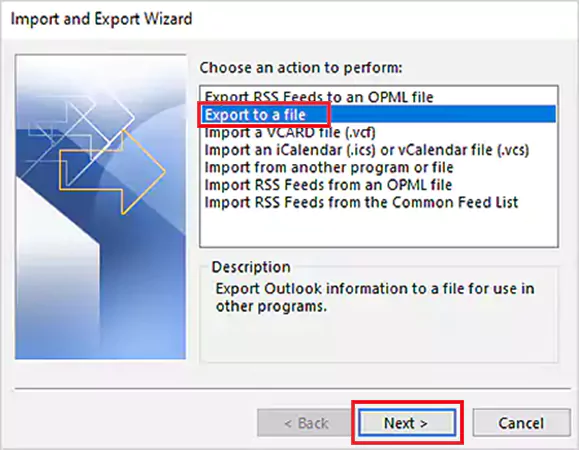
- Here, choose Export to a file, and click on Next.
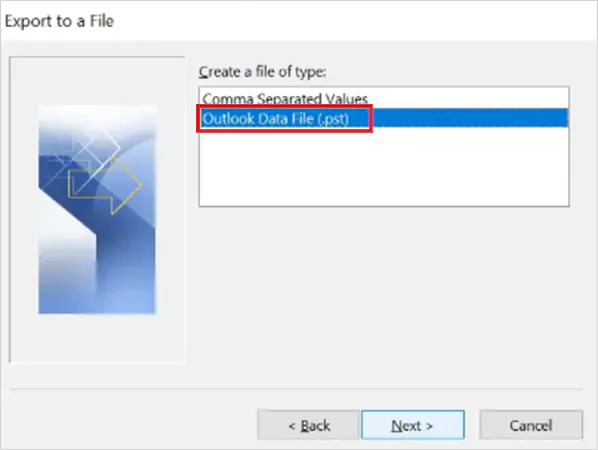
- Select the ‘Outlook Data File (.pst)’ option, and click on Next.
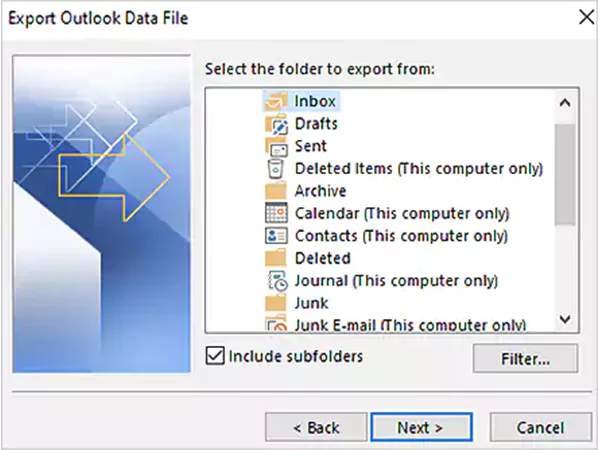
- Choose the mailbox or folder you want to convert. Also, enable the option to include subfolders.
- Browse the destination where you want to save the new PST files and then select ‘Replace duplicates with items exported’.
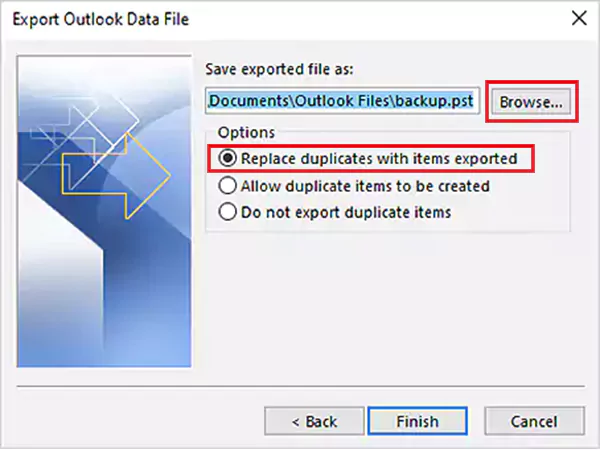
- Click on Finish, and you are done with the conversion.
You can also add a password to the PST if needed. The export time depends on mailbox size and system performance.
Method 2: Drag and Drop OST Data into a PST
This method is suitable if you want to move limited data. It is a quick workaround, not a full solution. For this, you must create a new Outlook data file (.pst), as described below:
- Click on ‘New Items’ and then navigate to ‘More Items’.
- Choose ‘Outlook Data File’ and then select the destination.
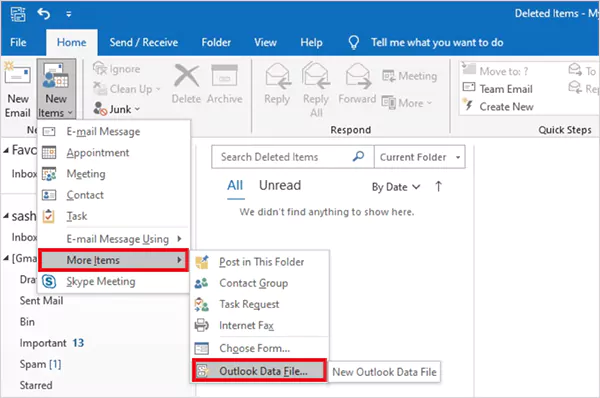
- Now, open both the mailbox and the PST. Then simply drag and drop the OST files from the mailbox to the PST file destination.
This is how you can quickly convert your .ost data to .pst with a simple drag-and-drop method.
Method 3: Convert OST to PST Using the Archive Feature
You can auto-archive OST files, which will automatically save your data in a separate PST folder. This method does not allow users to move their contacts, but facilitates migrating other email data. Here’s how it works:
- Open Outlook, click on File, and then go to Options.
- Click on Advanced Settings and navigate to AutoArchive Settings.
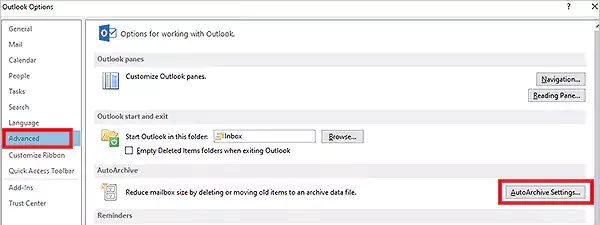
- Select the number of days when you want the system to auto-archive and select the folder.
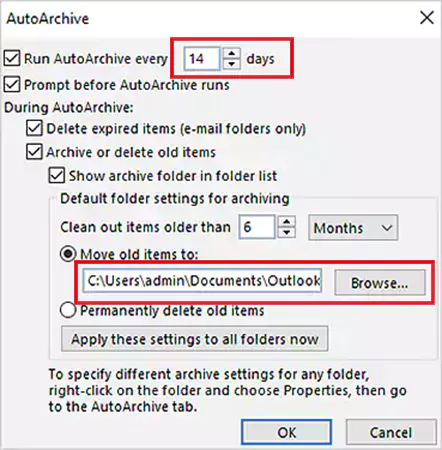
It will convert your OST data to PST as per your settings, and that’s how you can convert your OST data with the auto-archiving method. Make sure that you have enough hardware space, as the program will automatically keep on saving.
How Do I Convert OST to PST Using a Third-Party Converter?
A third-party converter is not a shortcut. It is a recovery option when Outlook can no longer help. There are various tools available, but I would advise you to only use reliable software.
Datarecovee is a top-notch OST to PST converter that provides reliable and precise data migration solutions. Follow the steps outlined below to ensure a smooth conversion process:
- First, back up the OST file (never work on the original file).
- Download and install the Datarecovee software.
- Launch it and click on the Add OST files option.
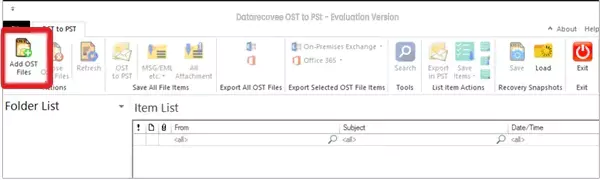
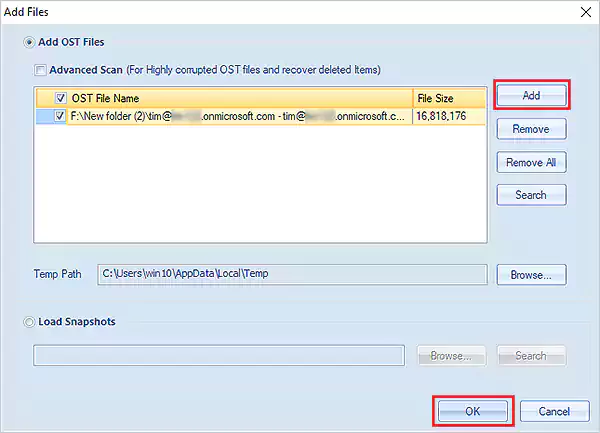
- Hit Add to select the file you want to convert. Once selected, press OK.
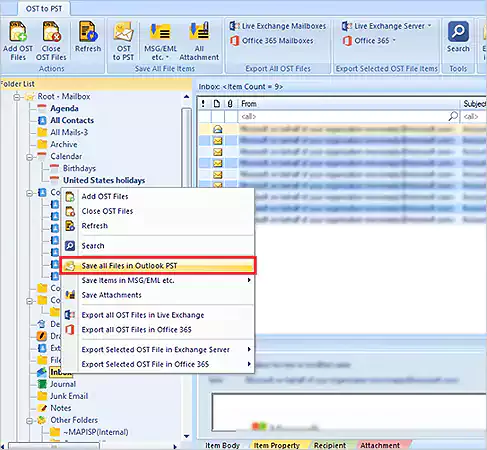
- Right-click and select Save all Files in Outlook PST.
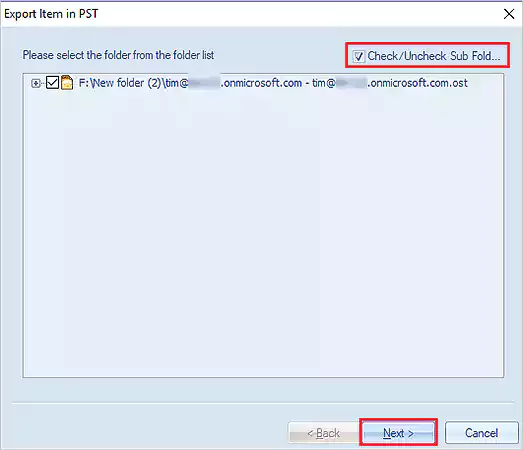
- Here, click on Next. You can also press on the subfolder menu to see the exact location.
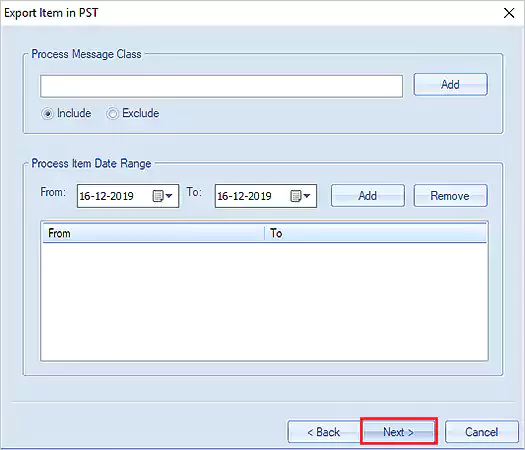
- Apply filters using the Process Message Class and Process Item Data Range. Once it’s done, hit Next.
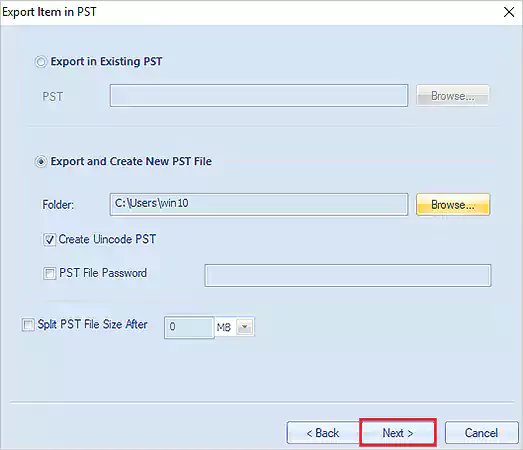
- Here, you can choose where you want to save your file, in an existing folder or a new one.
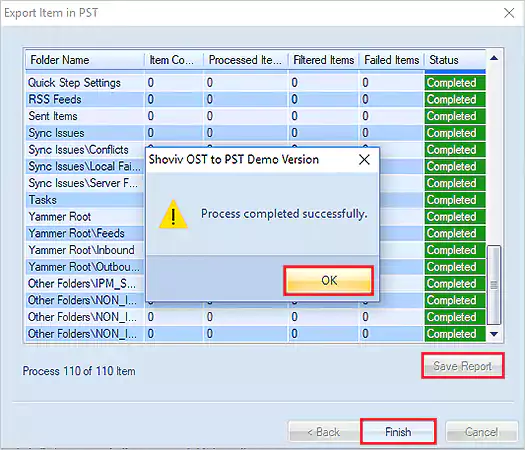
- Now, select OK, and then Save Report. At last, hit Finish to complete the OST to PST conversion process.
I would advise you to test with a trial version first and always verify data after export. A converter is a controlled data extraction process, not a magic fix. So, use it deliberately and verify everything.
What are the Advantages of Using an OST to PST Converter?
Third-party tools like Datarecovee are not limited to OST to PST conversion, but you can also recover corrupted data and perform bulk conversion, which is not possible in the manual method. Here are the benefits of using a tool over manual methods:
- Works with orphaned OST files: Even if the Exchange or Microsoft 365 account is deleted, disabled, or unreachable, a converter can still extract the data.
- No Outlook dependency: Most professional tools can read OST files directly without Outlook being installed or configured.
- Preview before conversion: You can inspect everything before exporting emails, attachments, contacts, and calendars.
- Selective and bulk conversion: You can convert only what you need by date range, folder, or item type. Plus, you can process multiple OST files at once.
- Preserves mailbox structure: Folder hierarchy, like Inbox, Sent, Drafts, and customer folders stay intact.
- Handles large and damaged files: Large PST files can be split, and partially corrupted OST files can often be recovered.
A converter removes all the limitations of manual conversion. And it protects your data and allows for precise data transfer, making it easier to open OST files and access their data.
How Do I Troubleshoot OST to PST Conversion Issues?
You may encounter a few common conversion issues in the process. Most of these problems come from predictable mistakes. Fix them early, and you can avoid failed exports. So, here are some common issues and troubleshooting tips you should know:
- Incorrect file location?
OST files stored in OneDrive or synced folders often cause errors. Always move them to a local drive first.
- Corrupted OST files?
Run ScanPST on a copied file, and if the error persists, use a converter instead of forcing a manual export.
- Permission problems?
Make sure you have read and write access to both the OST file and the export location. If needed, run Outlook as an administrator.
- Missing emails after conversion?
Check that your Outlook was fully synced and ‘Include subfolders’ was enabled during export.
- Slow or frozen conversion?
Close background apps, avoid mechanical hard drives, and export smaller chunks if required.
I treat troubleshooting as part of the workflow, not something you do after things break. These performance considerations and practices can make a whole lot of difference.
Why Should You Convert OST Files to PST?
OST files are offline stored files, and the primary reason for converting them into PST is that these files can easily become corrupted, and converting them into PST will protect the email data.
Apart from that, there are several compelling reasons for converting OST to PST files:
- Converting OST to PST files streamlines the migration process from one system to another.
- The large bulk of OST files can create storage issues on hardware, so converting them mitigates the storage issue.
- It also safeguards your file from virus or Trojan attacks.
- In case of deletion or problem, while migrating through the Exchange server, you would still have a backup of your email data.
- OST files are Outlook-specific; PST files offer email client flexibility and long-term access.
Overall, converting OST to PST is not just a technical luxury; it is a crucial part of digital risk management.
Practical Applications of OST to PST Conversion
OST to PST conversion is used to solve real operational problems, not just technical ones. Let’s take a look at some of its common applications:
- Employee exit scenarios: It preserves mailbox data when an employee leaves and the Exchange account is removed.
- Email migration: It allows you to move data from Outlook profiles, systems, or organizations.
- Legal and compliance needs: You can export emails for investigations, audit, or record-keeping.
- Long-term email archiving: You can store historical email data locally to reduce server load.
- Data recovery cases: It allows you to access emails from orphaned or inaccessible OST files.
These usecases explain why OST to PST conversion is a routine requirement in both small teams and large organizations.
Conclusion
I have covered all the methods you can use to seamlessly convert OST to PST files. The process is straightforward when you choose the right method for the situation.
Manual methods work well when Outlook and the mailbox are accessible. Archive and drag-and-drop methods serve limited needs. Third-party tools exist for situations Outlook cannot handle.
The key is to understand the limits of each approach before you start. Back up the OST file, follow best practices, and verify the output. A careful and informed conversion protects your data and saves you from avoidable failures.
Frequently Asked Questions
What is the difference between OST and PST files?
Can I convert an OST file to PST?
Yes, you can easily convert OST to PST using the export/import feature of Outlook or a third-party converter.
How can I convert OST to PST files without using Outlook?
You need to install a reliable and specialized OST to PST converter tool. These tools can read the OST files, extract the data, and save it as a PST file without needing Outlook.
Where are PST and OST files stored?
They are usually located in user profile folders on Windows. Common default location is “C:\Users\<YourUsername>\AppData\Local\Microsoft\Outlook\” (for OST files) and “C:\Users\<YourUsername>\Documents\Outlook Files\” (for PST files).
Is it safe to convert OST to PST using third-party tools?
Yes, using these tools is usually safe and sometimes necessary. However, choosing a trusted and reliable software is non-negotiable.
Related Posts
How to Open Control Panel in Windows? (All Methods Explained)
The control panel in Windows is a collection of tiny programs. It is used to configure the various aspects of…

How to Delete Apps on Mac? Safe and Quick Ways to Uninstall Apps
How do you remove applications from a Mac? Most Mac users think there is just one way to delete apps.…
Why Proxy Servers Are Popular
Many tech platforms, ad networks, SaaS tools, and online stores in the world have critical traffic and infrastructure that require…
Data Loss vs. Data Strategy: Why One Conversation Matters More Than the Other
In the corporate conversation around information, most of the firms are scared of losing data. That’s understandable, as most of…

How to Turn Off Touchscreen on Chromebook? Step-by-Step Guide
Touchscreen on a Chromebook sounds great until it starts getting in the way. Accidental taps while typing, smudges, and random…

How to See Blocked Messages on iPhone? (What Actually Works)
Ever blocked someone on your iPhone and later found yourself wondering if you can see blocked texts on iPhone? It…
The 5 Architecture Decisions That Haunt SaaS Founders Two Years Later
Architecture decisions are fundamental to ensuring steady growth in any business or technical step, especially when the topic is laying…

Database Scaling: How to Manage 10,000+ Political Volunteers
Every small business or growing team needs to deal with a common issue—the database that was working perfectly for the…

What Structured Cabling Systems Include and Why Businesses Still Need Them
Nowadays, IT conversations jump straight to cloud apps, wireless coverage, and cybersecurity tools. While these are visible and easy to…