
The Future of Content Marketing: How AI Is Reshaping Creative Workflows
 Kartik Wadhwa
The traditional content marketing playbook is being rewritten in real-time. For years, the industry operated on a model of specialization and segmentation: copywriters wrote, designers designed, and video editors spent hours splicing footage. If you wanted a high-quality video campaign, you planned it weeks in advance.
Today, that timeline has collapsed. The demand for content has exploded, leaving marketing teams scrambling to keep up with the insatiable appetite of algorithms like TikTok, Reels and Youtube Shorts. The solution isn’t hiring more people; it’s radically restructuring the workflow using Generative AI. Here is how AI is reshaping the way we work, and why the future belongs to the “hybrid creative”.
The Death of the “Rendering” Wait Time
One of the most significant changes AI brings is the elimination of technical friction. Historically, the “middle” of the creative process was the most expensive part. You had the idea (beginning) and the distribution (end), but the middle involved scheduling shoots, renting gear, and waiting for renders.
AI tools have effectively deleted the middle. Marketers can now iterate on visual concepts instantly. If a campaign isn’t performing, you don’t need to schedule a reshoot; you simply adjust your prompts. This shift turns content marketing from a rigid manufacturing process into a fluid, experimental art form. It allows teams to fail faster, learn quicker, and find winning creatives without blowing the quarterly budget on a single failed concept.
The Video Bottleneck: A Thing of the Past
While text and image generation were the first waves of the AI revolution, video has always been the final boss. Video is the highest-converting medium, but it is also the most resource-intensive. The technical skill required to use software like Adobe Premiere or DaVinci Resolve creates a bottleneck.
This is where the new generation of AI tools is making its impact. We are moving away from “video editing” and toward “video directing.”
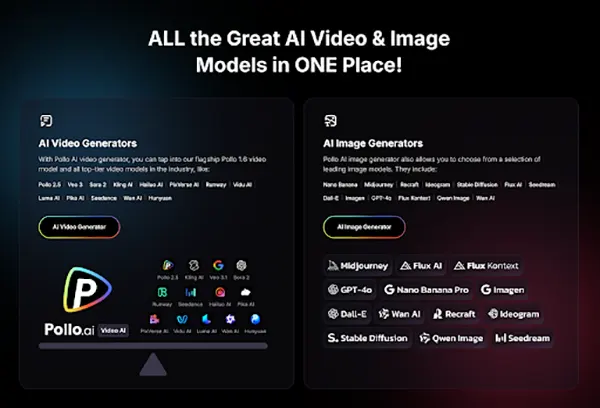
Pollo AI is a tool which is rapidly becoming indispensable for modern content teams. While many platforms allow you to generate static images or short, silent video clips, Pollo AI distinguishes itself with a robust AI video editor that fundamentally changes the workflow.
The magic of Pollo AI lies in its ability to remove the manual labor from the equation. Usually, AI video involves generating a clip and then having to drag it into a timeline, cut it, add music, and sync it manually. Pollo AI bypasses this. It allows users to one-click generate viral-ready short videos.
Furthermore, the existence of the Pollo AI app means it’s not restricted to a desktop work station. Creators can have an idea during their morning commute and have a fully produced short video ready to post before they walk into the office. It democratizes high-end video production, making it accessible to anyone with a smartphone. Pollo AI has access to all the great AI models such as Sora2, Kling AI, NanoBanana, etc., making it the most viable option for creators with budget issues.
The Rise of the “Generalist” Creator
With tools like Pollo AI handling the technical heavy lifting, the role of the content marketer is evolving. We are seeing the rise of the “Super Generalist.”
In the past, a generalist was a “jack of all trades, master of none.” In the age of AI, a generalist is a “master of the vision.” Because the AI handles the execution—the brush strokes, the camera movements, the editing cuts—the human marketer can focus entirely on the strategy and the story.
One person can now act as the copywriter, art director, and video producer simultaneously. This doesn’t mean specialized roles will disappear, but it does mean that small teams can now output content at a volume and quality level that previously required an agency.
Personalization at Scale
The ultimate promise of this reshaped workflow is personalization. The old workflow forced brands to create “one-size-fits-all” content because creating unique variations was too expensive.
With AI-driven workflows, you can tailor content to micro-segments of your audience. You can generate one video style for your Gen Z audience on TikTok and a completely different visual style for your B2B audience on LinkedIn, all based on the same core message. The AI video editor capabilities allow you to re-skin and re-format content instantly, ensuring that your brand feels native to every platform and every demographic.
The Human-AI Partnership
As these workflows solidify, the most successful brands will be those that understand the balance. AI is the engine, but the human is the steering wheel.
The danger of AI is the temptation to flood the zone with mediocre, soulless content just because it’s easy to produce. The reshaped workflow requires more human taste, not less. Marketers must become curators. The time saved on editing and rendering should be reinvested into researching audience psychology, spotting trends, and crafting better hooks.
Conclusion
The future of content marketing isn’t about robots taking over; it’s about removing the handcuffs from creatives. It is about a world where the only limit to your output is your imagination, not your budget or your technical skills.
Tools like Pollo AI are not just utilities; they are accelerators. By leveraging a powerful AI video editor that automates the tedious parts of creation, marketers can get back to what they do best: telling stories that move people. The workflow has changed, the speed has increased, but the mission remains the same. The brands that adapt to this new velocity will be the ones that define the next decade of digital culture.

Can Mac computers get viruses? Macs are not as safe as people think. Yes, macOS has built-in tools like XProtect…
“Photography is the story I fail to put into words.” — Destin Sparks (Landscape Photographer) For years, Lightroom presets have…
A website’s performance is mainly determined by its Speed. Even a slight delay can reduce conversions by a significant margin.…
“People influence people. Nothing influences people more than a recommendation from a trusted friend.” — Mark Zuckerberg (Meta CEO) That…
Artificial intelligence has evolved from a mere tool to the cornerstone of advancements in the new era. Over the years,…
“If everyone is moving forward together, then success takes care of itself.” — Henry Ford (Industrialist & Business Magnate) Handoffs…

Healthcare executives are under pressure to protect patient safety, clinician time, and data privacy while modernizing the delivery of care.…

Locked out of your Android phone or stuck on the screen? It happens more than you think. A forgotten PIN,…
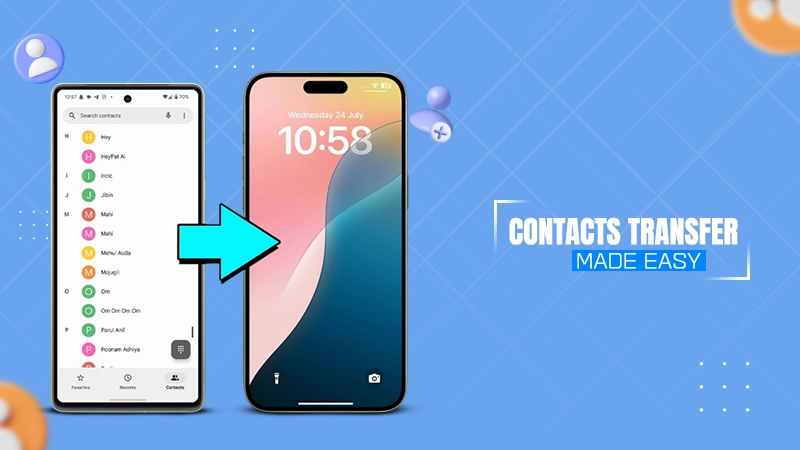
Switching from Android to iPhone should not feel like rebuilding your life from scratch. Restoring contacts on iPhone should be…