
Not really. The best setups use chatbots to handle repetitive questions and early-stage conversations. Humans step in for complex, emotional, or high-value cases. They are more like support assistants, not replacements.
AI Chatbot Solutions: AI-Driven Data Personalization and Customer Recovery
 Mahima Dave
Updated on: Jan 16, 2026
Table of Contents

One of the biggest things that can send away a potential customer is delayed responses. Today, most customers do not leave due to a lack of features but because of slow, repetitive, or irrelevant interactions. In fact, 90% of customers consider instant responses to be crucial when seeking assistance.
And to meet these expectations, AI chatbot solutions have now taken matters into their own hands. They don’t just answer FAQs but also remember context, recognize behavior patterns, adapt in real-time, and step in precisely when a customer is about to disengage.
Key Takeaways
- AI chatbots become powerful when fueled by real customer data.
- Personalization increases engagement, but it must feel natural.
- Chatbots can recover abandoned journeys in real-time. Integration with customer data platforms unlocks full value.
- The goal isn’t automation; it is smarter, faster customer understanding.
AI Chatbots and Customer Support
Traditional customer support works like a ticket counter: you take a number, explain the problem again, and wait for them to further investigate your issues. But AI models have flipped this process completely.
They act as the first intelligent layer of customer support and answer some routine questions raised by buyers, and route complex issues to manual departments. On top of that, they adapt to every customer’s preferences based on their purchase history.
So, instead of asking “How may I help you?” every time, AI chatbots know:
- Who the customer is
- What they were doing moments ago on their site
- What problems do they face when browsing the website or app?
This makes everything easier for both customers and the teams working behind the scenes.
The Role of Data in AI-Powered Chatbot Personalization
A good chatbot is not one that feels like a robot asking “questions” just for the sake of it, but one that feels genuinely helpful. And to bridge this gap between the two, data plays an important role. They use multiple data layers to personalize conversations, including past interactions, support history, and purchase patterns and preferences.
This data makes them feel more situationally aware, not scripted. Which means, the chatbot isn’t guessing; it’s responding based on evidence. The infographic below explains how such bots benefit a company:
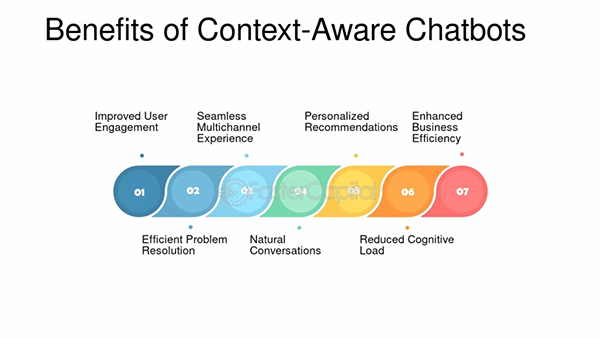
AI Chatbot Capabilities That Enable Personalized Customer Experiences
AI chatbots present personalized responses to the audience. And the core capabilities behind these replies include:
Behavioral Data Analysis
Chatbots continuously keep an eye on the user activities, noting every one of their interactions. With that data, they give a customized response instead of a generic one. For example, if a customer is repeatedly comparing products, it might sense their hesitation and respond with something like, “Looks like you are comparing plans; would you like help choosing the right one?”
Context Awareness
Context awareness allows AI agents to remember where the customer came from, what they viewed, and what failed previously. All this prevents the most common frustration: starting over, making conversations feel continuous even across sessions.
Real-Time Personalization
A chatbot might adjust recommendations mid-conversation, offer a discount when abandonment risk spikes, and escalate matters to a human agent if things start turning the wrong way. And this is exactly what real-time personalization is: changing instantly based on live behavior.
Using AI Chatbots for Customer Recovery
AI chatbots drive some of the highest value in customer recovery, with the following features:
Abandoned Journey Recovery
When a client starts losing interest or abandons their carts, these smart agents step forward to clarify confusion, offer assistance, and answer last-minute questions to re-engage them.
Proactive Outreach
Instead of waiting to be contacted by people, AI chatbots proactively react when data signals suggest a problem. For instance, if there are repeated failed actions or inactivity after an error, they will find some way or shift strategies to address the issues on their own, without waiting for the customers to make the first move.
Issue Resolution
Chatbots easily browse gigabytes of data to identify the root cause of a problem and offer a step-by-step fix to it. In case of complex problems, it reroutes the issues to human staff that is more capable of handling it.
Integrating AI Chatbots With Customer Data Platforms
AI Agents can be a huge help when integrated with customer data platforms (CDPs), CRMs, and analytics tools. They allow chatbots to:
- Pull accurate customer profiles
- Update interaction histories
- Sync preferences across channels
- Maintain consistent experiences everywhere
This makes them a central connect in the customer experience ecosystem, making things much smoother for everyone involved.
PRO TIP
Always balance automation with escalation and make it easy for customers to reach a human if it is too complex for chatbots to handle.
Final Verdict
Answering common FAQs is not the only role chatbots play today. When powered by the right resources and data, they can become intelligent systems that personalize solutions for your potential customers.
As a result, they reduce friction, increase engagement, recover lost revenue, and strengthen long-term customer relationships, giving a business an edge over its competitors.
Frequently Asked Questions
Are AI chatbots replacing human support teams?
Do AI chatbots really understand customers, or just keywords?
Modern AI chatbots go far beyond keyword matching. They use behavioral data, context, and past interactions to understand intent. While they are not perfect, they are significantly smarter than older rule-based bots.
Can AI chatbots actually recover lost customers?
Yes, especially for abandoned checkouts, failed payments, or onboarding drop-offs. A well-timed prompt or clarification can remove friction before a customer gives up.
What makes a chatbot feel “human”?
Context, timing, and tone. A chatbot that remembers your issue and responds naturally feels helpful. One that repeats cryptic lines feels robotic.
Related Posts
How Poor Contract Visibility Leads to Revenue Leakage in Growing Companies
Growth is an important factor that determines the success rate of any business. When we witness new operations, partnerships and…
Managing Bitcoin Operations? Here’s How Salesforce Automation Helps
“Digital currency is here to stay, and it’s only a matter of how long before governments embrace it.” — Brad…
Why Modern Organizations Depend on Data Privacy Software
Data growth has significantly accelerated beyond what most compliance teams can manage, with personal records, financial details, contracts, and emails…
Converting Chats Into Leads While Maintaining Professionalism
The way marketing teams and businesses approach their potential clients to boost their sales has completely transformed in the last…

How to Delete iCloud Account? Complete Guide for 2026
Thinking, how can I delete iCloud or Apple account? It is not just about removing an account; it is about…

How Different Industries Use Specialized Software to Stay Competitive
In the market we have today, companies are always trying to find ways to work better and get results. The…
What Key Adjustments Enhance Visual Appeal Across Web Pages
Attractive web pages form the roots of any appealing website. For instance, imagine looking for content on Google, and you…
When is it Time to Consider IT Support Services for Your Business?
Every business needs to ensure smooth operations for a successful business. But despite trying hard to avoid barriers, technical issues…

How to Delete User Profile in Windows 10: Step-by-Step Guide
You don’t notice user profiles until one starts causing problems. A profile gets corrupted, a login error pops up, or…