
AI can remove communication barriers and ensure clarity for everyone.
How AI Can Make Teams Work More Efficiently Without Adding Complexity
 Mahima Dave
Updated on: Jan 06, 2026
Table of Contents
- Reducing Meeting Overhead Without Losing Alignment
- Surfacing Information When It's Actually Needed
- Reducing Context Switching and Fragmented Attention
- Improving Handoffs Between Team Members
- Balancing Workload Across Team Members
- Capturing Decisions and Institutional Knowledge
- Reducing Administrative Overhead
- Making Remote and Distributed Teams More Effective
- The Essential Point About Implementation
- Frequently Asked Questions
Teams squander a great deal of time on unnecessary coordination that is unrelated to the work they are actually attempting to do. Emails could have been used for status update meetings. email chains looking for everyone’s free time.
Looking up decisions made weeks ago in the chat history. To prevent duplication, determine who is working on what. Awaiting answers to queries that impede advancement. facilitating handoffs between team members engaged in interdependent projects.
This coordination tax grows exponentially with team size and complexity. A five-person team might lose a few hours per week to coordination friction. AI offers a fundamentally different approach to team efficiency.
With careful use, AI can significantly lower collaboration friction and make teamwork feel more organic rather than complicated. That’s why in this article we are going to explore this segment more closely.
Let’s begin!
Key Takeaways
- Understanding the overhead meeting without losing alignment
- Looking at the crucial information at the pivotal points
- Decoding its balance maintenance for excessive workload
- Exploring how it can integrate team effort
- Uncovering some essential parameters
Reducing Meeting Overhead Without Losing Alignment
For most teams, meetings are the most obvious time waster. Meeting schedules remain full even though everyone agrees that excessive meetings reduce productivity because teams actually require coordination and alignment. The problem isn’t meetings themselves but that many meetings exist primarily to share information or make decisions that could happen asynchronously if coordination weren’t so difficult.
AI helps teams improve teamwork with AI by making asynchronous coordination actually effective. Instead of scheduling meetings to share project updates, AI can compile status information from work artifacts, messages, and task systems into digestible summaries that keep everyone informed without requiring synchronous time. Team members contribute updates as they work, and AI synthesizes this into coherent status views that answer the questions status meetings typically address.
For decision-making, AI can help frame decisions clearly, gather input asynchronously from relevant team members, identify where consensus exists and where genuine discussion is needed, and surface the decisions to appropriate people for final calls. Many decisions that currently require meetings can be made asynchronously when the decision context is clear and input collection is systematic rather than chaotic.
This doesn’t eliminate meetings entirely. Some collaboration genuinely benefits from real-time discussion. But it dramatically reduces meetings that exist primarily because asynchronous coordination is too difficult without structured support.
Surfacing Information When It’s Actually Needed
Knowledge work teams generate enormous amounts of information scattered across documents, messages, wikis, task systems, and countless other locations. When someone needs specific information to make progress on their work, they often face the choice between spending significant time searching or interrupting colleagues to ask questions.
Both options are inefficient. Searching is time-consuming and often unsuccessful because information is poorly tagged, buried in long documents, or described using different terminology than what the searcher is using. Asking colleagues interrupts their work and creates dependencies where progress stalls waiting for responses.
Depending on what a person is working on, AI can proactively present pertinent information. AI can find examples of similar proposals from past projects without the need for explicit searching if a team member is drafting one and those proposals already exist. If someone is debugging an issue that resembles problems solved before, AI can point to relevant past discussions and solutions. If a decision is being made that relates to previous decisions or stated principles, AI can surface that context.
This isn’t about AI answering questions but about reducing the friction of finding information that already exists within team knowledge. The information surfaces when it’s relevant rather than requiring active searching or asking.
Interesting Facts
AI is incredible for scheduling meetings and optimizing time for the whole team. Intelligent scheduling tools can analyze calendars, meeting goals, and team availability to find the best times without endless email threads.
Reducing Context Switching and Fragmented Attention
Modern knowledge workers switch contexts constantly. Working on a report, then responding to a message, then joining a quick call, then reviewing a document, then back to the report but having lost the thread of thought. Each context switch carries cognitive cost as the brain reorients to different tasks, and fragmented attention makes deep work nearly impossible.
Much of this context switching happens because of coordination needs that interrupt focus. Questions that need answering, input that needs providing, quick decisions that need making. People get interrupted not because interrupters are inconsiderate but because teams need these small coordination moments to keep work moving.
AI can buffer many of these interruptions by handling them asynchronously. Instead of interrupting someone to ask a question, AI can determine if the question can be answered from existing team knowledge and provide that answer. If input is needed from someone who’s focused on other work, AI can queue that request and surface it at a natural transition point rather than immediately interrupting. Quick decisions can be framed and routed appropriately without requiring synchronous attention.
This creates more uninterrupted time for focused work while still maintaining the coordination teams need to function effectively.
Improving Handoffs Between Team Members
Most complex work involves handoffs where one team member completes their part and another picks up the next phase. These handoffs are frequent failure points. Work sits waiting because the next person doesn’t realize it’s ready for them. Work starts but critical context wasn’t transferred, leading to mistakes or rework. Dependencies between team members create bottlenecks where progress stalls.
AI can make handoffs smoother by automatically routing work to the appropriate next owners when phases are complete, ensuring necessary context and information transfers with the handoff, and identifying when work is blocked waiting for someone’s input. It can also surface priorities so people focus on work that’s actually blocking others.
This doesn’t require rigid workflow systems that make teams feel like they’re working on assembly lines. It’s intelligent coordination that helps work flow between people more naturally while reducing the dropped balls and delays that typically plague handoffs.
Balancing Workload Across Team Members
Teams often have uneven workload distribution where some members are overwhelmed while others have capacity. This happens partly because of poor planning but also because it’s genuinely difficult to see the full picture of who’s working on what and where capacity exists, especially in larger or distributed teams.
AI can help balance workload by making capacity and commitments visible across the team, suggesting work distribution that uses available capacity effectively, identifying when someone is becoming a bottleneck, and flagging when work assignments are creating unsustainable load on specific team members.
This visibility allows managers to intervene before burnout or missed deadlines become problems and helps teams self-organize more effectively by making it clear where help is needed or where people can contribute.
Capturing Decisions and Institutional Knowledge
Teams make hundreds of small decisions throughout projects about approaches, priorities, trade-offs, and implementations. Most of these decisions aren’t formally documented but represent important institutional knowledge. Months later, someone wonders why something was built a certain way or why a particular approach was chosen, and nobody remembers the reasoning.
AI can help capture decisions and their context as they happen by identifying when decisions are being made in meetings or discussions, documenting what was decided and why, and making this decision history searchable and discoverable later.
This creates institutional memory that helps teams avoid relitigating past decisions, understand context for current work, and onboard new team members more effectively by showing them not just what exists but why it was built that way.
Reducing Administrative Overhead
Every team has administrative tasks that consume time without directly contributing to goals. Updating task systems, writing status reports, scheduling meetings, tracking action items, maintaining documentation. This administrative tax is necessary for coordination but feels like wasted time when it pulls people away from actual work.
AI can handle much of this administrative overhead automatically. Task updates can be inferred from work artifacts rather than requiring manual entry. Instead of being created from scratch, status reports can be assembled from real work. Long email chains are not necessary for scheduling meetings. It is possible to surface and track action items without the need for manual list maintenance.
This doesn’t mean eliminating all administrative work but making it far less burdensome so teams spend more energy on work that creates value.
Making Remote and Distributed Teams More Effective
Distributed teams face all the coordination challenges of co-located teams multiplied by time zones, reduced informal communication, and lack of physical presence cues about what people are working on. Remote work has enormous benefits but genuinely makes some aspects of collaboration harder.
AI helps bridge these distributed collaboration challenges by making asynchronous coordination more effective, ensuring information is accessible regardless of when or where people work, routing questions and requests to people when they’re actually available, and maintaining team awareness without requiring constant synchronous communication.
This makes distributed teams work more like co-located ones in terms of coordination effectiveness while preserving the flexibility and focus time that remote work enables.
The Essential Point About Implementation
The key to making AI improve team efficiency rather than adding complexity is integrating it into existing workflows rather than requiring teams to adopt new tools or processes. AI should make current collaboration patterns work better, not force teams to collaborate differently to accommodate the technology.
When done well, AI removes friction from collaboration in ways that feel natural and almost invisible. Teams become more efficient not by working harder or following more rigid processes but by having the coordination overhead that previously consumed their time handled intelligently in the background. That’s the promise AI offers for team effectiveness, and it’s increasingly becoming reality.
Frequently Asked Questions
How does AI improve the meeting experience in Teams?
How does AI improve employee productivity?
Optimizing schedules, monitoring health, automating tasks, personalizing training, and adapting work environments.
What is the 30% rule in AI?
AI does most of the repetitive work, about 70%, while humans focus on the remaining 30%
Related Posts
8 Best AI Presentation Makers for Business-Ready Slides
Making a presentation doesn’t just mean designing slides. It’s about defining a clear structure, using defined logic, useful visuals, and…

Queue Management Software Troubleshooting Guide: 8 Common Faults and Fixes
The long wait times and ineffective management of customer queues can have a significant impact on customer satisfaction and business…

How to Use Similarweb Website Traffic Data for Competitor Research
Competitor research without traffic data is guesswork. You can guess who your rivals are, guess how big they are, guess…
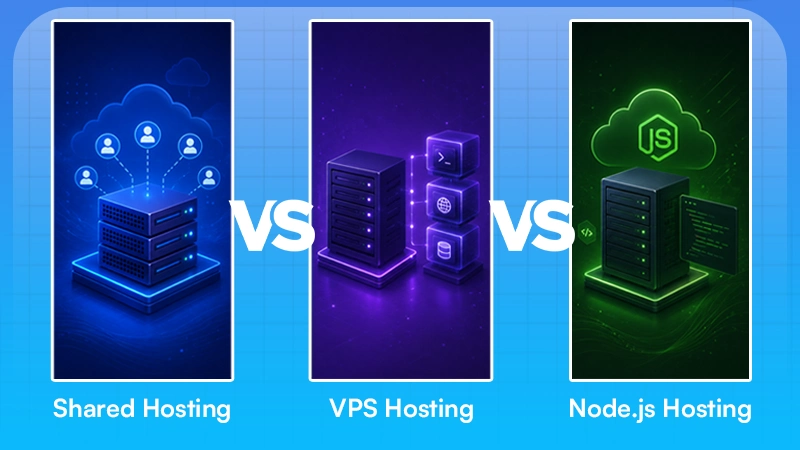
Choosing the Right Hosting Model for Scalable Digital Platforms
The performance of digital business is directly related to website speed, uptime, and scalability. Slow page performance has a negative…

How Data-Driven Performance Tools Are Transforming Employee Recognition in Tech Companies
“People work for money but go the extra mile for recognition, praise, and rewards.” — Dale Carnegie (Writer & Teacher)…

Why Businesses Struggle to Collect Reliable Data from the Web
Almost every company that depends on data runs into the same problem: although they can find the data they need,…

Why Financial Data Recovery Matters for Businesses
Financial data supports every part of a business, directly affecting cash flow, payroll, tax reports, audits, customer billing, and daily…

CMMC Compliance Is Coming for Manufacturers. Here Is What You Need to Do
“Cybersecurity is much more than a matter of IT.” — Stephane Nappo (Cybersecurity Professional) For manufacturers working within the defense…

How Data-Based Tools Influence Learning Performance
Learning has transformed in the modern age with the integration of new technologies to help students and professionals prosper in…