
Yes – a lot of heavy lifting tasks can be done smoothly with AI, such as spotting errors – often the most time taking task.
What Can Go Wrong During Cloud Migration — and How Data Recovery Helps
 Saipansab Nadaf
Updated on: Jan 30, 2026
Being updated is crucial for every organization to keep evolving with the technology. And cloud migration is an essential part of it. But what makes it a high stakes process are the industry surveys. According to which – a considerable number of projects (often shared as high as 83%) get into trouble during or after the migration – usually the budget is exceeded or they take more time than expected.

This makes it essential to consider the common pitfalls – ranging from loss of data to serious disruptions. And the major reason that these issues arise is underestimating its complexities.
You might think – “Then how things get well?’ With data recovery. Keep reading this article that shares about the possible complexities of cloud migration and how data recovery helps in it.
Why Cloud Migration Is Not a Solo Project
Cloud platforms are designed to be accessible. Dashboards are friendly. Wizards guide you through setup. This creates a false sense of simplicity.
Behind that interface, migrations involve data models, dependencies, timing, and rollback strategies that are easy to get wrong and difficult to reverse.
Migration Touches More Than Infrastructure
A typical migration affects:
- Databases and file systems
- Applications and integrations
- Authentication and permissions
- Reporting, analytics, and backups
Each component has its own assumptions about structure and availability. Migrating one without accounting for the others creates inconsistency. Doing it alone increases the chance that something important is overlooked.
Why Experienced IT Services Matter
Specialized IT services bring something internal teams often lack: repetition and pattern recognition. They have seen migrations fail — and more importantly, they know where they fail quietly.
Experienced providers help with:
- Pre-migration audits to identify risk
- Dependency mapping across systems
- Migration sequencing and timing
- Validation after the move
- Emergency and rollback planning
This is not about outsourcing responsibility. It is about reducing blind spots.
The Cost of “We’ll Figure It Out”
Organizations that migrate alone often rely on assumptions:
- Backups will be enough
- Errors will be obvious
- Problems can be fixed afterward
In practice, many data issues surface weeks later, after corrupted or incomplete data has already replaced the original. At that point, fixing the application does not restore what was lost.
Common Data Failures During Cloud Migration
Migration failures tend to fall into predictable categories. They rarely involve total loss. Partial loss is more common — and more dangerous.
Schema Mismatches and Truncation
Different environments handle data differently. Character limits, encoding, numeric precision, and date formats may not align.
During migration:
- Fields may truncate silently
- Defaults may overwrite existing values
- Null handling may change behavior
These issues do not stop systems from running. They degrade data quality over time.
Incomplete or Out-of-Order Transfers
Large datasets are rarely moved in one pass. Transfers are staged, parallelized, or resumed after interruptions.
Without careful coordination:
- Some records move twice
- Others are skipped
- Referential integrity breaks
The resulting dataset appears complete, but relationships inside it are not.
Permission and Access Errors
Cloud environments rely heavily on roles and policies. During migration, permissions are often recreated manually or via scripts.
A small misconfiguration can:
- Block background processes
- Prevent writes while allowing reads
- Cause sync failures that go unnoticed
Data stops updating correctly without triggering alarms.
Integration Breakage
Applications rarely live alone. CRMs, analytics tools, payment systems, and internal dashboards relies on similar endpoints and login data.
After migration:
- APIs may authenticate but behave differently
- Webhooks may fail intermittently
- Scheduled jobs may execute against outdated data
The system functions — just incorrectly.
Why These Failures Are Hard to Detect
The most damaging migration issues do not cause crashes. They cause drift.
Reports still load. Dashboards still refresh. Users continue working. But decisions are now based on compromised data.
By the time inconsistencies are noticed, backups may already reflect the corrupted state.
Where Data Recovery Becomes Critical
Once migration-related data issues surface, recovery is no longer optional. It becomes the only way to restore confidence.
Recovery Is Not the Same as Rolling Back
In many migrations, rolling back entirely is impossible. New data has already been created in the cloud environment. Users have interacted with the system.
Recovery must be selective:
- Restore specific tables or fields
- Reconstruct historical states
- Merge recovered data with current records
This requires precision, not violent force.
Recovery Bridges the Gap Between Old and New
Effective data recovery helps organizations:
- Compare pre- and post-migration states
- Identify exactly where corruption began
- Repair affected data without disrupting live operations
This is especially important when migration issues are discovered late.
Supporting IT Services After the Fact
Even with strong IT support during migration, issues can still occur. By fixing damaged data itself, which code changes are unable to repair, recovery tools improve IT services.
Recovery becomes the settling layer that allows teams to move forward instead of restarting from scratch.
How DataRecovee Fits Into Migration Recovery
DataRecovee addresses the reality that cloud migration failures are often logical, not physical.
It supports recovery scenarios involving:
- Corrupted databases after partial migrations
- Overwritten records caused by sync errors
- Data inconsistencies introduced by schema changes
- Failed imports and incomplete transfers
Rather than treating migration issues as total failure events, DataRecovee enables controlled restoration and repair.
Planning for Recovery Before You Migrate
The strongest migration plan for recovery from the beginning.
This includes:
- Preserving clean pre-migration snapshots
- Retaining versioned backups throughout the process
- Validating data integrity, not just system availability
- Knowing how recovery would work if needed
Migration success is not defined by how fast systems come back online. It is defined by how trustworthy the data remains afterward.
Cloud Migration Without Recovery Is a Gamble
Cloud platforms are resilient. Data migrations are not.
Doing a migration alone increases risk, not independence. Involving experienced IT services reduces failure, but it does not eliminate it. Recovery is what closes that gap.
Organizations that treat recovery as part of migration planning move faster, recover faster, and trust their systems sooner.
When cloud migrations go wrong, data recovery decides whether the damage is temporary — or permanent.
Conclusion
Moving data to the cloud might feel like a scary step – but using the right strategy can make it done successfully without losing any data. Incomplete transfers, access errors and other integration breakage are the common issues that are seen during the process. And often the data recovery gets critical, as it is not the same as rolling back. But still, DataRecovee helps in almost all daunting scenarios.
Proper training and audits need to be conducted to ensure cloud migration will be an advantage to the issue itself to get resolved.
Frequently Asked Questions
Can AI be used to improve the data management strategies?
What changes can be seen when done after taking precautions?
Accuracy, compliance and trust in data are seen throughout the migration.
Why are the associated issues hard to detect?
As most of the things are done normally – pages will reload – but the decisions will be shifted and will be compromised.
Related Posts
How Poor Contract Visibility Leads to Revenue Leakage in Growing Companies
Growth is an important factor that determines the success rate of any business. When we witness new operations, partnerships and…

Managing Bitcoin Operations? Here’s How Salesforce Automation Helps
“Digital currency is here to stay, and it’s only a matter of how long before governments embrace it.” — Brad…

Why Modern Organizations Depend on Data Privacy Software
Data growth has significantly accelerated beyond what most compliance teams can manage, with personal records, financial details, contracts, and emails…

Converting Chats Into Leads While Maintaining Professionalism
The way marketing teams and businesses approach their potential clients to boost their sales has completely transformed in the last…

How to Delete iCloud Account? Complete Guide for 2026
Thinking, how can I delete iCloud or Apple account? It is not just about removing an account; it is about…

How Different Industries Use Specialized Software to Stay Competitive
In the market we have today, companies are always trying to find ways to work better and get results. The…

What Key Adjustments Enhance Visual Appeal Across Web Pages
Attractive web pages form the roots of any appealing website. For instance, imagine looking for content on Google, and you…

When is it Time to Consider IT Support Services for Your Business?
Every business needs to ensure smooth operations for a successful business. But despite trying hard to avoid barriers, technical issues…
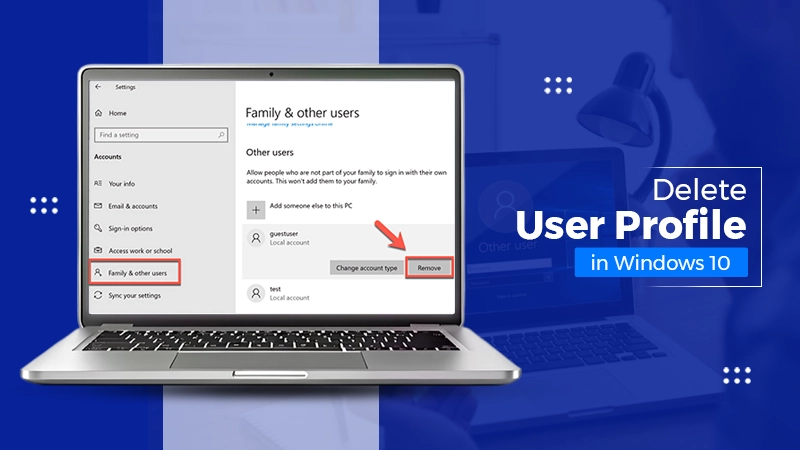
How to Delete User Profile in Windows 10: Step-by-Step Guide
You don’t notice user profiles until one starts causing problems. A profile gets corrupted, a login error pops up, or…