
Organizations must adhere to the 3-2-1 data backup rule, which requires three copies of data: one primary and two secondary backups.
Best Practices for Data Backup and Recovery in Healthcare
 Kartik Wadhwa
Updated on: Feb 03, 2026
It’s no secret that healthcare organizations handle hundreds, if not thousands, of pieces of sensitive patient data every day. It is not only good practice to protect that data; it is also legally required. Backup and recovery:
Companies that do not implement these safeguards risk losing critical medical records and being fined heavily. Terabytes of data have already been generated by medical facilities in the form of electronic health records, diagnostic images, and administrative records.
To help patients, this data must be available 24 hours a day, seven days a week. System failures, cyberattacks, and natural disasters can jeopardize data availability. This blog post covers comprehensive data backup and recovery healthcare protocols that protect us from these threats.
Let’s begin!
Key Takeaways
- Understanding core requirements for HIPAA backup
- Looking at the pivotal components of data security
- Uncovering its importance
- Decoding the compliance framework
- Exploring some best practices for healthcare data security
Understanding HIPAA Backup Requirements
The Health Insurance Portability and Accountability Act has stringent standards for protecting electronic protected health information (ePHI). Organizations should have contingency plans in place, including data backups. These requirements ensure that patient information is recoverable during emergencies. HIPAA backup compliance requires all ePHI to be stored in retrievable exact copies.
Records maintained by covered entities must be retained for at least 6 years from the date of creation or the date they were last in effect. Backup systems need to manage end-to-end encryption at rest and in transit. Organizations should also adhere to the 3-2-1 rule, which means storing three copies of data on two different types of media and keeping at least one copy offsite. Regular testing ensures that recovery processes work as designed , should they ever be needed.
Professional backup methods, like this one, are not as simple as standing at a cubicle at work or flinging files onto an external hard drive and calling it good. Companies frequently collaborate with specialized technology vendors who understand the regulatory nature of their requirements.
These collaborations make highly effective methodologies and cutting-edge tools available to healthcare providers. There are experts, such as Jelvix, who propose a full range of services in healthcare software development to deal with data security. Their responses combine security frameworks and operational flows to be compliant without being cumbersome. Vendor – Working with savvy vendors accelerates the implementation process and reduces the risk of non-compliance.
Interesting Facts
Healthcare data breaches are the costliest of any industry, with an average incident cost of $7.42 million in the United States in 2025.
Core Components of Healthcare Data Security
Healthcare data security goes beyond basic backups that work. Defense in depth includes physical, administrative, and technical safeguards. Access controls limit who can open or modify sensitive data. Encryption makes data unreadable to anyone who is not authorized to access it. Automatic monitoring of suspicious activities occurs in real time.
Companies must have healthcare data security software, including intrusion detection systems, firewalls, and endpoint protection. Role-based access control (RBAC) constrains a user’s capabilities based on their role within an organization. Two-factor authentication provides an extra layer of verification. Consistent security audits identify vulnerabilities before the enemy can exploit them. These control points work together to establish a multilayered security model that guards against ever-changing threats.
Encryption Standards
The backbone of healthcare data security is strong encryption. Algorithms trusted by NIST, such as AES-256, provide strong security. TLS (Transport Layer Security) encrypts data as it travels between systems. Encryption is required for all backup media, whether on-site or off. Even if attackers have physical access to the storage devices, encrypted data cannot be used without the decryption keys.
Access Management
Controlling who accesses what information prevents unauthorized disclosure. Apply least-privilege principles by granting users only the permissions they need for their roles. Audit logs keep track of all access attempts and modifications. Regular reviews ensure access rights remain appropriate as staff responsibilities change. Promptly revoke credentials when employees leave the organization.
Why Data Security Matters
The importance of data security in healthcare cannot be overemphasized. Patient safety is dependent on accurate retrieval of medical histories and treatment schedules. Data breaches compromise personal information, which is then used to commit identity theft. Healthcare records are going for as much as $250 on the dark web, making them an attractive target for cyberattacks. Healthcare organizations could face fines of multiple thousands of dollars for HIPAA violations.
Apart from monetary penalties, institutions suffer reputational damage and a loss of patient confidence as a result of breaches. Research documents that cyberattacks also literally kill patients when they interfere with the provision of care. Horse racing betting has come to a halt due to ransomware attacks on computer systems. To protect both the organization and the patients, strong security measures have been implemented. Investments in data protection signal a commitment to high-quality healthcare delivery.
Implementing Compliance Frameworks
A methodical approach is required to achieve healthcare data compliance. Organizations must assess risks across all of their IT systems, develop clear, HIPAA-approved policies, train employees on what is expected of them in terms of security, and implement an incident response plan. Designating privacy and security officers, conducting routine audits, documenting security measures, and obtaining business associate agreements with vendors all contribute to the continued protection of patient data.
Best Practices for Data Protection Healthcare
Effective data protection healthcare solutions combine technology with organizational discipline. Schedule nightly backups to see what has changed in patient records throughout the day. Maintain an adequate number of backup copies, including weekly, monthly, and annual archives. Store replicas in different parts of the world to reduce exposure to regional disasters. Regularly test the restorability of your backups.
Ensure systems are updated with the latest patch to mitigate known vulnerabilities. Segment your network so that any potential breach is isolated. To also monitor endpoint devices registered on the network. Ongoing employee training on phishing and social engineering. Retire legacy systems that lack modern security capabilities.
Physical protections support the technical controls. Secure server and backup areas. Destroy ePHI media through a credentialed destruction company or service. Take inventory of all devices containing patient data. These comprehensive practices generate security models that are resistant to a variety of threats.
SEO Title: Best Practices for Data Backup and Recovery in Healthcare
Meta Description: Learn data backup and recovery in healthcare with HIPAA compliance best practices.
Frequently Asked Questions
What is the best practice regarding backing up health records?
What are the 4 C’s of data recovery?
Communication, Coordination, Continuity, and Collaboration.
What is the fastest recovery backup?
If minimizing downtime is critical for your organization, a full backup is ideal for the fastest recovery. If some data loss is acceptable, incremental or differential backups can balance storage efficiency with recovery time.
Related Posts
How to Check for Malware on Mac in 2026?
Can Mac computers get viruses? Macs are not as safe as people think. Yes, macOS has built-in tools like XProtect…
10 Best Lightroom Preset Alternatives in 2026
“Photography is the story I fail to put into words.” — Destin Sparks (Landscape Photographer) For years, Lightroom presets have…
Elementor Hosting vs SiteGround: Which is Faster in 2026?
A website’s performance is mainly determined by its Speed. Even a slight delay can reduce conversions by a significant margin.…
10 Best Visual UGC Platforms for eCommerce Brands in 2026
“People influence people. Nothing influences people more than a recommendation from a trusted friend.” — Mark Zuckerberg (Meta CEO) That…

The Data Models Powering the Next Creative Revolution in Video Generation
Artificial intelligence has evolved from a mere tool to the cornerstone of advancements in the new era. Over the years,…
Solar Software Companies: How Platforms Improve Cross Team Collaboration
“If everyone is moving forward together, then success takes care of itself.” — Henry Ford (Industrialist & Business Magnate) Handoffs…
What Healthcare Leaders Expect From Digital Tools
Healthcare executives are under pressure to protect patient safety, clinician time, and data privacy while modernizing the delivery of care.…
How to Reset Android Phone When Locked? (Safe Factory Reset Methods)
Locked out of your Android phone or stuck on the screen? It happens more than you think. A forgotten PIN,…
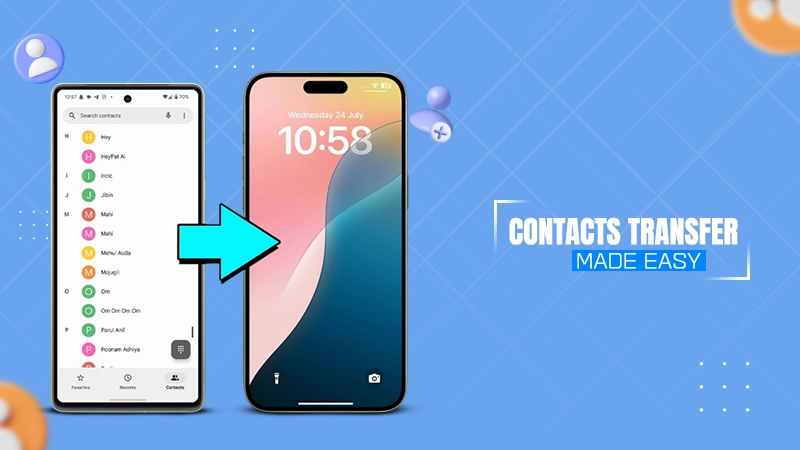
How to Transfer Contacts from Android to iPhone: 4 Easy Methods
Switching from Android to iPhone should not feel like rebuilding your life from scratch. Restoring contacts on iPhone should be…