
As it usually requires specialized tools, cleanroom environments and highly skilled labour.
How Much Does Data Recovery Cost? Prices, Risks, Reality
 Kartik Wadhwa
Updated on: Dec 16, 2025
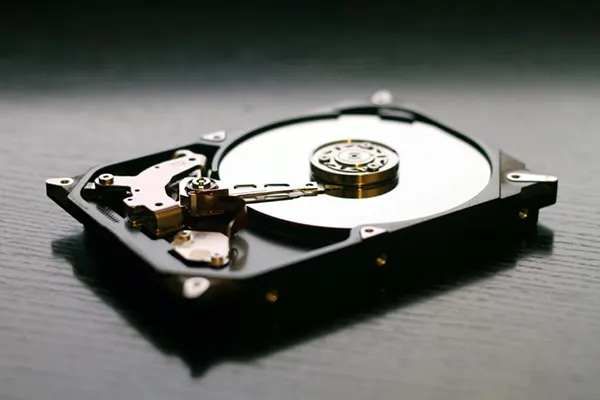
Data loss rarely happens after a warning – one small fault and years of work, photos and records will be out of your reach in a moment. In such a situation, the major question isn’t how expensive data recovery will be. But it is will the recovery even be possible?
The associated costs feel abstract until they aren’t connected to something personal. It’s not that different from deciding to find essay writers for hire when a deadline feels impossible and the stakes are high.
You will be paying that amount under pressure, not with your convenience. Keep reading this article to evaluate how much data recovery costs — prices, risks and the reality.
What “Data Recovery” Means in Practice
Data recovery is a spectrum of technical interventions, from simple logical fixes to full cleanroom disassembly. The cost of data recovery depends on how deep engineers need to go to access your files.
Recovery specialists deal with logical failures. Including accidental deletion, corrupted file systems, or a drive that still spins and is still recognized by devices. Such cases rely on software tools and controlled imaging rather than hardware surgery.
More complex cases involve firmware issues, damaged sectors, or failing read heads. Physical failures require opening the drive in a dust-free environment and often swapping parts. That is where pricing climbs sharply, because time, equipment, and risk increase.
Typical Price Ranges You’ll See in 2026
If you search online, you’ll see wildly different numbers. That’s because providers often advertise “starting at” prices that apply only to the simplest cases. In reality, the average cost of data recovery in 2026 falls into clearer brackets.
Here’s what most reputable labs charge today:
- Logical recovery (deleted files, formatted drive): $100 to $400
- Firmware or sector damage: $400 to $900
- Physical damage (clicking, not spinning, head crash): $900 to $2,000+
These figures apply whether you’re dealing with a laptop drive, a desktop drive, or an external enclosure. When people ask about hard disk data recovery cost, this is usually the range they end up in after diagnostics.
One important detail: many labs offer free evaluation. That quote after inspection matters far more than any number on a homepage.
HDD Versus SSD: Why Prices Differ
Traditional hard drives and solid-state drives fail in very different ways. With HDDs, the most common issue is mechanical wear. That makes HDD data recovery cost relatively predictable, because technicians know how to replace heads, repair platters, and rebuild firmware.
SSDs are trickier. Data is spread across memory cells and managed by controllers that aggressively optimize storage. When an SSD fails, data may be fragmented or encrypted internally. In some cases, recovery is impossible even with advanced tools.
For standard spinning drives, the data recovery hard drive cost usually reflects labor time and part replacement. For SSDs, pricing reflects uncertainty and research time.
Why Quotes Can Vary So Much Between Labs
You might send the same drive to three companies and receive three very different estimates. That doesn’t automatically mean someone is overcharging.
Several factors influence pricing:
- Cleanroom access and certification
- Proprietary recovery tools versus generic software
- Success-based pricing versus flat fees
- Turnaround time (standard vs emergency service)
A rush job can double the cost of data recovery hard drive cases. Emergency recovery often means technicians work outside normal queues, sometimes overnight.
When Recovery Costs More Than the Device Itself
A $100 hard drive might carry a $1,500 recovery bill. From a purely economic view, that feels irrational. From a value perspective, it often isn’t.
Michael Perkins, who oversees research and decision analysis around digital assets at essaywriters.com and regularly works with essay writers who manage sensitive academic files, has pointed out that people systematically undervalue data until it’s gone. Hardware is replaceable. Time, original work, and personal history are not.
How to Avoid Paying More Than Necessary
First, stop using the drive immediately. Continued use can turn a logical problem into a physical one. Second, avoid DIY software if the drive makes unusual noises. That often worsens damage.
Finally, choose labs that offer “no data, no fee” policies. These policies don’t make recovery cheaper, but they protect you from paying when success isn’t possible.
Conclusion
Data recovery pricing might feel overwhelming because it forces a comparison between money and irreplaceable items. The truth is that most of the costs come from time, expertise and associated risk – not from the device itself. Understanding what kind of fault you are dealing with, how workshops price their fixing and when struggling with it on your own can save both time and money.
At the end, repairing isn’t about repairing hardware – but about restoring access to data you simply can’t recreate.
Frequently Asked Questions
Why is data recovery so expensive?
Is data recovery always possible?
No, some physical damages make it completely impossible for even experts to recover the lost data.
Can software tools ever replace professional recovery?
Yes, but only for simple logical issues, using them on complex ones can worsen everything.
Related Posts
Top 5 Mobile Proxies for Spotify: Best Providers in 2026
Spotify hit 700 million monthly active users by Q3 2025, and that number keeps on rising. But a larger user…
From AI Output to Human-Readable Text: Best Practices for Technical Teams
The draft has passed the initial review process. There are no spelling or grammatical issues that would cause concern for…
Factors to Consider When Selecting an Auditing Service Provider
In the competitive business field, even a single wrong step can turn the tables from a profit-making firm to one…
7 Best QR Code Generators for Small Businesses in 2026
QR codes are now a permanent way for small companies to communicate with clients. These scannable squares make it easy…
Data-Driven Strategies for Organizing Business Promotions
One of the most important factors that impact a business’s expansion and success is its ability to conduct successful promotions.…
Data-Driven Strategies for Achieving Financial Goals
This digital age has rewarded us with more information than we can manage. But you can’t use it just to…
How to Unhide Apps on iPhone? Quick Guide to Restore Hidden Apps
iOS 18 has launched so many new additions, but hiding iPhone apps has remained the talk of the town. Apple…

Data-Based Framework for Collaborative Planning
Planning often becomes inefficient, and the growth gets hindered—not because the teams do not have the ideas but because the…
Top Free Methods to Recover Deleted Word Documents for Students
Tomorrow is project submission, and here you’re scouring every drive and folder for the document. All of us have encountered…