
Smart broadcasting systems are broadcasting setups that use modern tech like AI, cloud-based models, and IP networks to deliver faster, more reliable, and across multiple platforms.
Revolutionizing Content Delivery with Smart Broadcasting Systems
 Kartik Wadhwa
Updated on: Nov 27, 2025
Table of Contents
Have you ever thought about how the content you consume actually reaches you? Be it the live event you watched, the show you streamed, or the news you saw? Well, most of you would answer with a no. You just expected it to work, instantly and flawlessly. And this is where the answer lies. The expectation is exactly what drives the shift toward smart broadcasting systems.
In the past few years, the way content is distributed and consumed has changed drastically. If we talk numbers, last year, streaming services overtook traditional broadcast and cable TV in the US, capturing 44.8% of the total viewing time. Now that’s HUGE!
And in this write-up, we will uncover how smart broadcasting systems are becoming an essential element for modern content delivery strategies.
Key Takeaways
- Smart broadcasting helps content reach audiences faster and smarter.
- AI and cloud technology are changing how media is delivered.
- Multi-platform delivery is now a basic expectation, not a bonus.
- Security and reliability matter as much as speed.
- Smart broadcasting is no longer optional.
Why Smart Broadcasting Systems Matter
CASE STUDY
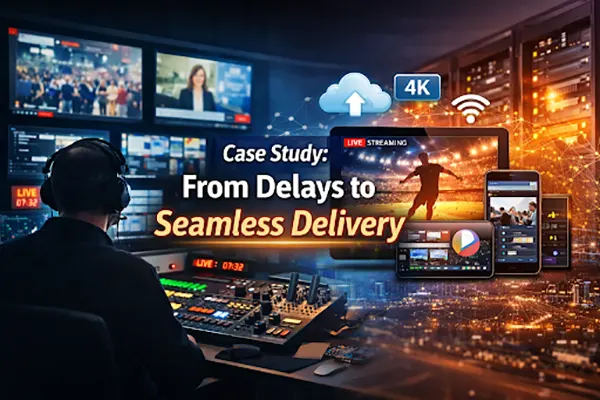
In 2018, a mid-sized media company was struggling with slow turnaround times and frequent technical glitches while delivering live events and on-demand content. The reason behind that was that their traditional setup couldn’t handle sudden viewership spikes that often lead to buffering, missed streams, and rising operational costs.
Realizing this problem, the management decided to shift to smart broadcasting system, which automated scheduling and monitoring while shifting delivery to a cloud-based infrastructure. As a result, content was delivered faster across TV, mobile, and web platforms.
Not only that, but it also reduced the need for manual interventions, allowing engineers to focus on optimization rather than firefighting. Ultimately, the firm experienced dramatic improvements in its workflows, making them smoother and more stable.
This small change turned the whole situation upside down!
As explained in the above case study, smart broadcasting systems help media organizations ensure smooth workflows and stand strong in the competitive workflows. This approach combines automation, analytics, and advanced infrastructures that deliver consistent, high-quality content at scale.
Services like Thor Broadcast help improve delivery speed, reliability, support multiple formats on different platforms, and reduce operational costs, proving to be a game-changer for these companies.
The Tech Behind 2026 Content Delivery
Every seamless stream, instant replay, or multi-device broadcast you see today is a result of some powerful mix of modern technologies. These tech often go unnoticed in the background but hold immense importance. With the growing audience expectations, broadcasters are relying on these innovations more than ever to deliver speed, scale seamlessly and change for the better continuously.
Content delivery in 2026 is going to be all about technologies that prioritize flexibility, scalability, and automation. If we compare it with traditional linear broadcasting, the modern system is way smarter and can adapt to the changing audience behavior and distribution channels on its own.
How AI is Changing the Game
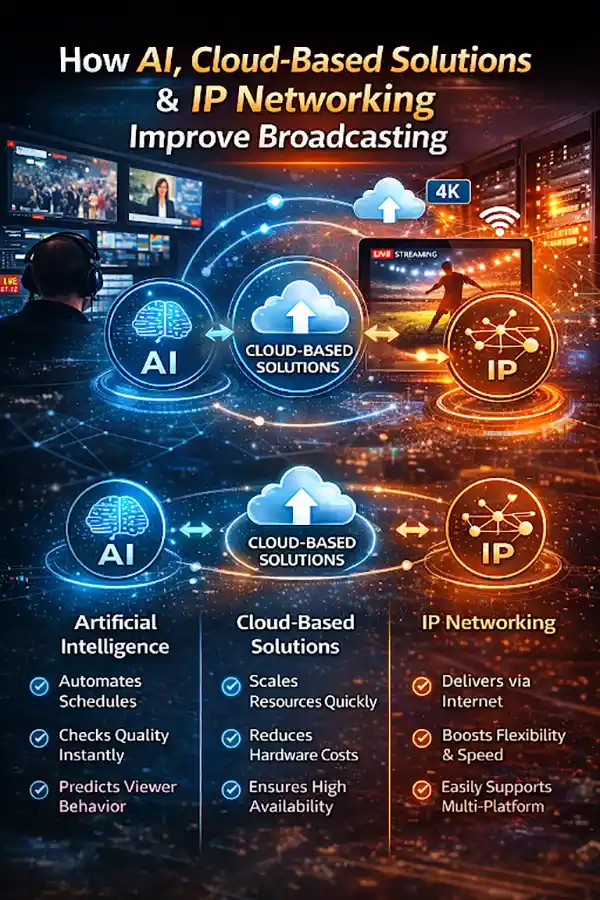
A few years ago, broadcasting meant manual, rigid, and resource-heavy procedures. There were certain teams that managed scheduling quality checks and content switching manually, but then AI stepped in and everything changed (of course, for the better).
AI automated the processes that were once impossible without manual labor. This improved efficiency and accuracy. By leveraging AI for intelligent content scheduling, automated quality checks, and audience behavior analysis, broadcasters are now able to make smarter decisions and deliver more personalized results.
Cloud-Based Solutions That Work
Just like AI, cloud-based solutions have become another big foundation for smart broadcasting systems. It allowed broadcasters to operate without heavy physical infrastructure and maintain quality performance simultaneously, presenting itself as one of the biggest advantages to Scale operations quickly.
So, now, whether handling live events, sudden traffic spikes, or expanding to new regions, cloud platforms make scaling both practical and cost-effective.
Making the Move to IP Broadcasting
IP broadcasting is replacing the traditional ways, signal-based delivery with internet-based transmission, offering greater flexibility and enabling seamless integration with modern digital workflows.
It has made it much easier to upgrade systems, improve interoperability, and reduce hardware dependency. All this opens the door to multi-platforms, acting as a golden key for content delivery.
INTRIGUING INSIGHTS
The infographic below explains how Artificial Intelligence (AI), cloud-based solutions, and IP networking transform content delivery with smart broadcasting.
Multi-Platform Content Distribution
The audience today does not rely on one gadget. You’ll find them browsing on their mobile phones, TVs, tablets, and social platforms. Ignoring any of these platforms would be equal to losing a large chunk of the audience.
Fortunately, smart broadcasting systems have made it easier to distribute media content consistently across all these channels. How? Well, centralized control and automation allow broadcasters to deliver content simultaneously across platforms, maintain consistent quality and branding, and reach a wider audience.
Security and Reliability
Security concerns come hand in hand with the expanding digital delivery. The more things go digital, the more cybersecurity becomes a major issue. Protecting Digital content is extremely important for maintaining trust and preventing unauthorized access.
Smart systems encrypt data transmission, secure access controls, and a high availability infrastructure. All this translated to the system performing consistently even during peak demand.
DO YOU KNOW?
AI-powered monitoring systems can detect streaming issues in seconds; in some cases, even before the viewers notice something went wrong.
What You Need to Focus On
There are a few things organizations must focus on while adopting or upgrading smart broadcasting systems; these include
- Long-term scalability and flexibility
- Integration with existing workflows
- Strong security and compliance standards
- Support for multi-platform distribution.
By focusing on these areas, organizations can ensure a smoother transition and better long-term results.
Wrapping This Up
In the past few years, smart broadcasting systems have completely transformed how content is delivered. The modern systems combine revolutionary tech like AI, cloud-based infrastructure, and IP broadcasting for faster, more secure, and scalable content delivery.
This allows organizations to stay relevant and competitive. So it can be concluded that investing in smart broadcasting is not just about technology but about building a future-ready content delivery strategy.
Frequently Asked Questions
What are smart broadcasting systems?
Why are traditional broadcasting methods no longer enough?
The traditional broadcasting methods are no longer enough, as the audience now watches content on many devices and expects instant, high-quality streams, and the traditional systems were not built for this level of flexibility and scalability.
How does AI improve content delivery?
By automating tasks, monitoring performance in real time, and adapting content delivery on demand, AI improves the overall workflows, reducing errors and improving viewer experience.
Are smart broadcasting systems only for large media?
Absolutely not. Even small or mid-sized organizations can benefit from it by cutting costs, improving efficiency, and reaching a wider audience.
Related Posts

How to Check for Malware on Mac in 2026?
Can Mac computers get viruses? Macs are not as safe as people think. Yes, macOS has built-in tools like XProtect…
10 Best Lightroom Preset Alternatives in 2026
“Photography is the story I fail to put into words.” — Destin Sparks (Landscape Photographer) For years, Lightroom presets have…
Elementor Hosting vs SiteGround: Which is Faster in 2026?
A website’s performance is mainly determined by its Speed. Even a slight delay can reduce conversions by a significant margin.…
10 Best Visual UGC Platforms for eCommerce Brands in 2026
“People influence people. Nothing influences people more than a recommendation from a trusted friend.” — Mark Zuckerberg (Meta CEO) That…
The Data Models Powering the Next Creative Revolution in Video Generation
Artificial intelligence has evolved from a mere tool to the cornerstone of advancements in the new era. Over the years,…
Solar Software Companies: How Platforms Improve Cross Team Collaboration
“If everyone is moving forward together, then success takes care of itself.” — Henry Ford (Industrialist & Business Magnate) Handoffs…
What Healthcare Leaders Expect From Digital Tools
Healthcare executives are under pressure to protect patient safety, clinician time, and data privacy while modernizing the delivery of care.…
How to Reset Android Phone When Locked? (Safe Factory Reset Methods)
Locked out of your Android phone or stuck on the screen? It happens more than you think. A forgotten PIN,…
How to Transfer Contacts from Android to iPhone: 4 Easy Methods
Switching from Android to iPhone should not feel like rebuilding your life from scratch. Restoring contacts on iPhone should be…