
Not directly, but they often create the conditions: traffic, visibility, and backlinks that help rankings grow naturally.
How Social Signals Shape Website Visibility and How Data Analytics Measures Them
 Saipansab Nadaf
Updated on: Dec 16, 2025
Table of Contents
- Understanding Social Signals in the Digital Ecosystem
- Common Types of Social Signals Influencing Online Presence
- Role of Data Analytics in Measuring Social Signals
- Challenges and Limitations of Using Social Signals as Performance Indicators
- Future Trends in Social Signal Analysis and Website Optimization
- Conclusion
- Frequently Asked Questions
Ever wondered why your site’s visibility seems to rise when your content is buzzing on social media and dip when it’s not? Well, the reason behind this is: visibility today is not just built on search rankings. Social activity plays a quiet but enormous role in how websites get discovered, shared, and trusted online.
In fact, social platforms now bring more than 10% of global website traffic, turning likes, shares, and comments into real entry points for potential clients. For any organization, be it brands working with a dental SEO company ot any data-driven marketing partner, this shift matters.
If you manage an ecommerce or any kind of website and are wondering how social signals shape its visibility and how data tools measure them, this post is for you.
Key Takeaways
- Social signals reflect human interest, not just marketing effort.
- Likes and shares matter most when they lead to real engagement and traffic.
- Data analytics helps separate meaningful signals from vanity metrics.
- Social visibility often fuels search visibility indirectly, not instantly.
- Consistent engagement beats viral spikes every single time.
Understanding Social Signals in the Digital Ecosystem
Simply put, social signals are the digital reactions people have to your content across social platforms. These can be likes, comments, shares, reposts, saves, or brand mentions. When these are combined, they show how people are paying attention to your content and what they are/ are not liking.
For example, imagine a dental clinic posts a short video on the internet about “what to expect during a root canal.” The dental SEO teams optimize it to reach the target audience. If the audience reviews hundreds of likes, thoughtful comments, and is shared by followers into their stories, those interactions signal that the content is useful and relatable. And as a result, the platform algorithm will support it and push it forward to reach a bigger audience.
Therefore, social signals act as trust cues. Content that performs well socially tends to attract more viewers, earn backlinks, and generate brand awareness because when people see content being actively discussed and shared, they’re more likely to view it as credible.
DO YOU KNOW?
Most people discover new brands on social media before ever searching for them on Google.
Common Types of Social Signals Influencing Online Presence
There can be different types of social signals, each contributing in different ways to a website’s digital footprint. Some major ones are:
Likes, Shares, and Engagement Metrics
The basic ones: like, share, and engagement metrics. While scrolling social media, when you hit the like button as a sign of appreciation, or sometimes even share the videos with others if you find them worthy of it. This is what brings engagement, and high engagement rates indicate relevance and amplify reach through platform algorithms, putting content in front of new audiences organically.
Social Traffic and Referral Data
Have you ever shown interest in a sponsored product on social media and clicked through to further inquire about it? This is what generated referral traffic. It not only boosts visibility but also provides behavioral data such as time on page and bounce rates, which helps assess the effectiveness of the content.
Brand Mentions and Social Reach
Trusting a brand that is talked about is much easier than one that is barely acknowledged online. Mentions, tagged posts, and discussion around a brand help it build online authority and increase its recognition, influencing search behavior and click-through rates.
Role of Data Analytics in Measuring Social Signals
So, how does data analytics come into the picture? Since raw data is of little use for brands, data analytics transform social signals into actionable insights.
Social Media Analytics Platforms
Analytics platforms collect customer data, track engagement, reach, impressions, and audience demographics to help marketers understand what content performs best and why. This helps them understand what is working in their favor and what is not, and create more effective strategies in the future.
Website Analytics and Attribution Models
Website analytics platforms measure how social traffic behaves after landing on a site. Attribution models reveal whether social interactions contribute to conversions directly or support other channels along the buyer journey.
Engagement Trend Analysis and Reporting
Tracking engagement over time helps identify patterns, seasons, shifts, and other significant changes that matter to brands. And regular reporting allows businesses to adjust content strategies based on what consistently drives interaction and traffic.
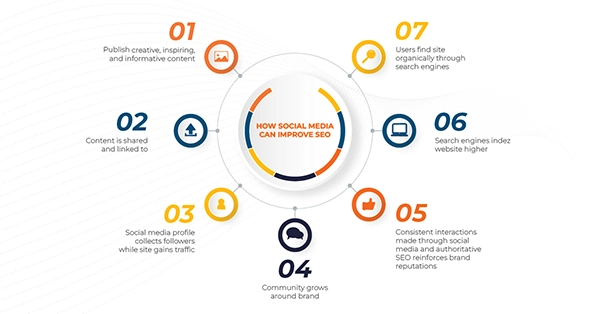
INTRIGUING INSIGHTS The infographic below shows how social media can help improve SEO and make your brand more discoverable.
Challenges and Limitations of Using Social Signals as Performance Indicators
Even though social signals prove to be an effective measure, they also have a set of challenges and limitations, including:
- Misleading insights, if viewed in isolation, as high engagement doesn’t always mean high conversions.
- Platform algorithms frequently change how content is distributed.
- Vanity metrics (such as likes and comments) may look impressive, but can offer very little insight without deeper behavior analysis.
- Social interactions often support visibility indirectly, making it difficult to assign precise value without comprehensive analytics models.
These limitations depict how social signals cannot be relied on as the only performance indicators, as they do not always show the complete picture.
Future Trends in Social Signal Analysis and Website Optimization
Looking ahead, platforms are surely going to evolve and make social signal analysis even more sophisticated. AI-powered analytics, sentiment analysis. Amd cross platform attribution models are helping businesses understand not just how much engagement they receive but also the quality of that engagement.
In the coming years, successful website optimization will rely on blending social data with search performance, user behavior, and conversion insights. And the brands that understand it and connect the dots will be better positioned to build their online reputation score and visibility that lasts beyond algorithm updates.
Conclusion
To summarise it all, social signals are less about algorithms and more about people now. When users like, share, comment on, or talk about your content, they’re telling the platform, ‘’This is worth paying attention to.”
Data analytics help translate those human reactions into insights you can actually use. So remember that, the real win is not just about chasing numbers but understanding their behavior.
Frequently Asked Questions
Do social signals directly improve Google rankings?
Are likes still important?
They matter, but they’re only one piece of the puzzle. Comments, shares, and clicks tell a much richer story.
What’s the biggest mistake people make with social signals?
Chasing numbers without understanding behavior is the biggest mistake people often make with social signals. High engagement means little if it doesn’t sign with your goals.
How often should social data be reviewed?
Social data should be reviewed regularly but not obsessively. Patterns matter more than daily spikes or dips.
Related Posts
How Poor Contract Visibility Leads to Revenue Leakage in Growing Companies
Growth is an important factor that determines the success rate of any business. When we witness new operations, partnerships and…

Managing Bitcoin Operations? Here’s How Salesforce Automation Helps
“Digital currency is here to stay, and it’s only a matter of how long before governments embrace it.” — Brad…

Why Modern Organizations Depend on Data Privacy Software
Data growth has significantly accelerated beyond what most compliance teams can manage, with personal records, financial details, contracts, and emails…

Converting Chats Into Leads While Maintaining Professionalism
The way marketing teams and businesses approach their potential clients to boost their sales has completely transformed in the last…

How to Delete iCloud Account? Complete Guide for 2026
Thinking, how can I delete iCloud or Apple account? It is not just about removing an account; it is about…

How Different Industries Use Specialized Software to Stay Competitive
In the market we have today, companies are always trying to find ways to work better and get results. The…

What Key Adjustments Enhance Visual Appeal Across Web Pages
Attractive web pages form the roots of any appealing website. For instance, imagine looking for content on Google, and you…

When is it Time to Consider IT Support Services for Your Business?
Every business needs to ensure smooth operations for a successful business. But despite trying hard to avoid barriers, technical issues…
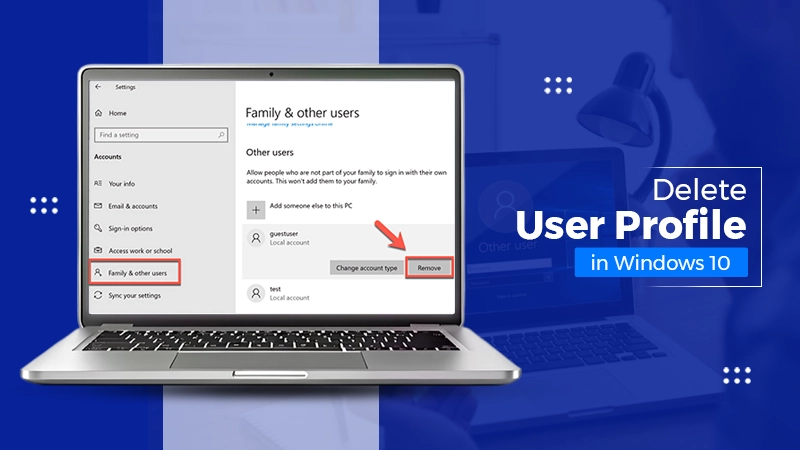
How to Delete User Profile in Windows 10: Step-by-Step Guide
You don’t notice user profiles until one starts causing problems. A profile gets corrupted, a login error pops up, or…