


Ans: CTEM is Gartner’s five-stage framework for continuously prioritizing exposures. Agentic exposure management extends it by having AI agents execute and verify the remediation as well.
Agentic Exposure Management: Turning Security Noise Into Automated Remediation
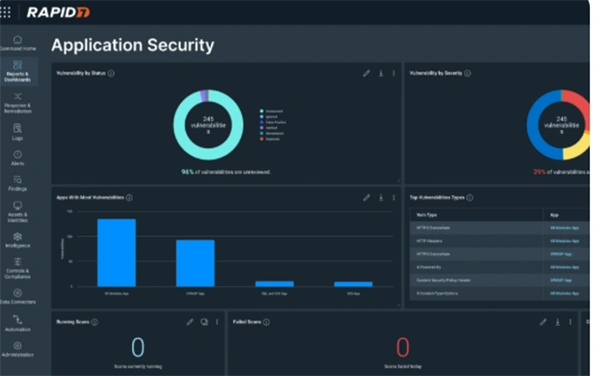
You scanned your security dashboard, which took overnight to do this job, and found out 4000 things that you can fix. Also, you know that not everything, but out of these 4000 things, forty of them can actually be a problem, and four of them can actually be a serious threat. The problem here is that it takes almost weeks to figure out those 4 things that you don’t have.
In these cases, agentic exposure management can be the solution to your questions: It can help you handle the loop to AI agents with the help of the fixed landing. Go through this article and learn how the loop works, what are the problems that it solves, and what are the things and shortcomings that you need to know.
Why Your Backlog Stopped Being a To-Do List
The main argument regarding this stopped being very big a long time ago. The data from NIST shows how the growth in CVE submissions has grown almost 263% between 2020 and 2025. Its analysis and analysts improved by nearly 42,000 in the year 2025 only, which is more than 45% more than the previous year itself, but it was still not enough to keep up with the things that were coming. Then NIST changed how the National Vulnerability Database used to operate and made it more effective. Now, from 15th of April 2026, it started prioritizing the important things first. CVEs appearing in CISA’s Known Exploited Vulnerabilities catalog get enriched within one business day, as do CVEs for federal and critical software. Everything else stays listed but is marked as the lowest priority.
Read that again if you scanned it. The national vulnerability database stopped promising to analyze everything it receives.
If the institution built specifically to do this can’t process the full feed, your two-person security team was anyway never going to do that efficiently.
What Agentic Exposure Management Actually Changes
Zest Security’s explainer is described as the independent and self-governing model. Where the AI agents itself keeps identifying, prioritizing, and remediating the exposures without waiting for the manual teams to have a conversation automatically.
The word that is doing the work there is to correct itself.
The continuous threat exposure management software was introduced by Gartner back in the year 2022. It was structured around five stages: scoping, discovery, prioritization, validation, and mobilization, which was also a sound framework. The catch is that it’s a framework for deciding, and deciding was never really your bottleneck.
Your bottleneck is that a beautifully prioritized list still needs someone to open a ticket, find the owner, chase them for three weeks, and confirm the change actually landed.
Agentic systems are made in order to automate the last step of chasing the owners.
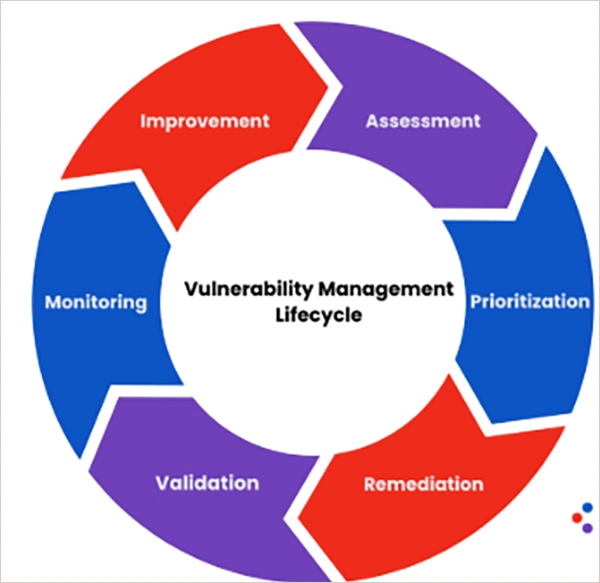
The Loop, Step by Step
The four stages run continuously rather than on whatever scan schedule you got from the software.
1. Discovery Pulls Everything Into One View
Agents pull signals from vulnerability scanners, cloud security platforms, application security tools, and identity systems into a single exposure view.
Nothing radical so far. Plenty of unified vulnerability management products already consolidate feeds. What matters is what happens to that consolidated data next.
2. Prioritization Asks Whether It’s Exploitable Here
This is the stage that does the heavy lifting.
Instead of ranking by CVSS score, agents run exploitability analysis against your actual environment. They look at runtime context, network exposure, and whatever compensating controls already sit in front of the asset. Findings with no viable exploit path get suppressed rather than queued behind the ones that matter.
Traditional programs treat vulnerabilities in isolation, which inflates perceived risk and burns remediation hours on things that were never reachable in the first place.
3. Remediation Executes Instead of Filing
Agents trigger configuration changes, open and track pull requests, and coordinate fixes across systems, validating dependencies before they act.
Slow down here when you’re evaluating vendors. “Autonomous remediation” covers everything from opening a PR a human still merges to changing an IAM policy in production at three in the morning. Those are extremely different purchases.
4. Validation Closes the Loop
Re-scan the affected asset. Confirm the remediation worked. Reassess posture after the change.
Skip this stage, and you don’t have exposure management. You have automation with no feedback.
Where the Approach Earns Its Keep
The honest case for this approach isn’t that AI does security better than your engineers do. It’s that the volume made human triage arithmetically impossible, and something had to give.
Three places it pays off are:
- Backlog control. Suppressing findings that carry no real exploit path in your environment removes a large share of the queue permanently, rather than deferring it to next quarter.
- Speed against fast exploitation. Zest puts time-to-exploit at often under 24 hours now. A workflow that takes four days to assign an owner has already lost.
- Fewer handoffs. Embedding fixes into existing engineering workflows cuts the security-to-engineering coordination that stalls most remediation.

What Is Still Unproven
Gartner predicted that by 2026, organizations prioritizing security investment through a continuous exposure management program would be three times less likely to suffer a breach of the data.
We’re here in the year 2026 now, and a review published by Vectra in July found that the prediction remains directionally supported but is not validated by anyone practical, with no first-hand breach-rate study behind it. Early indicators point to better visibility among adopters.
That isn’t the same as fewer breaches.
Treat the three-times figure as a well-reasoned bet, not a result.
Two questions worth asking any vendor:
- What exactly does the agent change without a human approving it, and what’s the rollback path when it gets one wrong?
- How does it decide something is non-exploitable, and can you audit that decision after the fact?
Bringing It Together
Agentic exposure management can be a really practical and effective solution for responding to real problems. The CVE feed always outgrows manual sorting problems, and NIST conceded the point in April; also, it closes the loop to find the fix and to also figure out where the actual time goes. The only problem that this thing faces is that it hasn’t been proven at the outcome level yet. The framework is the best thing it has, and vendors can also take the demo very easily, and the breach-rate evidence is also pending here.
To check this, you should start with the prioritization layer where the reason can be reviewed thoroughly; the only downside of a wrong call is a missed ticket, not a broken production system.
Frequently Asked Questions
What is the difference between CTEM and agentic exposure management?
Does agentic exposure management replace vulnerability scanners?
Ans: No. Agents consume data from existing scanners and security platforms rather than replacing them, then act on what those tools report.
Is autonomous remediation safe to run in production?
Ans: It depends entirely on scope. Opening a pull request for review carries very different risk from an agent changing live cloud configuration, so check what a platform does without human approval.
Why is the vulnerability backlog growing so fast?
Ans: CVE submissions rose 263% between 2020 and 2025, and NVD enrichment now covers only prioritized categories, leaving many disclosed vulnerabilities without full severity analysis.
Related Posts
Sorry, No post were found