
The major caused problems include poor performance that majorly dissatisfied the customers.
Quality Control in LED Screen Production Through Data Analytics
 Saipansab Nadaf
Updated on: Jan 31, 2026
LED displays have gone worldwide and have become a dynamic champion of communication. From LED screens on the roads, used for advertising and event information to using them in the meeting for sharing the essential concepts efficiently – LED screens are dominating the scenes.
But as every great thing has a secret along with it, LED screens also have a process of quality control that is maintained using data analytics. And this is what makes it accurate and precise – proving the access to control is quality.
You might be thinking – ‘How data analytics improve the LED screen process’? Keep reading this article to understand how quality is controlled in LED screen production using data analytics.

How Data Analytics Works?
Before the advanced technology solutions like data analytics, humans were completely responsible for quality control in LED screen production. Therefore, the chances of mistakes were much higher than they are today. Data analytics integrates all collected information from production and detects potential or confirmed variations.
Data analytics completely analyzes every structural component and follows every single step of LED screen production, ensuring high-quality production with stable quality. Such a solution allows manufacturers to react the moment the issue is detected.
How Data Analytics Reshapes Industry
What differs each product from the others is ensured durability. In a highly competitive manufacturing environment, for many companies, efficiency and waste reduction are the main goals. A perfect example of how data analytics can transform the industry is LED display solutions in Canada, which prove that such innovations, if properly used, can contribute to creating a successful product where profit is ensured, waste is decreased to a minimum, and the satisfaction of the customers is assured. For customers, the constant shift of widely used products like the LED screen is very important, and with the possibility of data analytics, such an improvement can be easily done.
The Problems Caused By Poor Quality Control
Poor quality control in LED screen production can cause many problems, such as poor performance, audience discontent, and reduced finances for certain companies. Compared to companies that use data analytics, those that choose not to are most likely to make an omission, as even one small technical glitch can cause a malfunction in the LED screen performance. Compared to advanced technology, every human is vulnerable to making mistakes sometimes, which is why the introduction of data analytics is a solution that can only offer benefits to the company.
Minimizing Long-Term Costs and Failures
In LED screen production, there are a lot of hidden quality issues that cannot be quickly detected by the human eye. If such quality issues are discovered too late, they can cause major problems that require long-term costs that can represent a big issue for every LED screen production company.
With data analytics, these hidden quality issues can be discovered on time, and when properly corrected, they can save the financial stability of many businesses, as well as reduce the frequency of future maintenance.
Data Analytics Guides the LED Screen Production
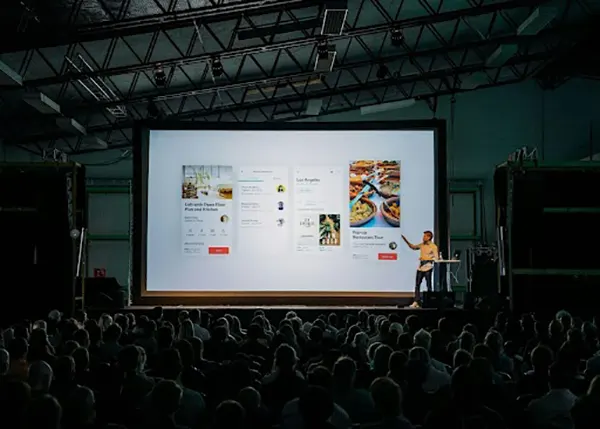
In LED screen production, data analytics has become a basis for modern and high-performing displays. Many professionals are involved in the production of LED screens, and data analytics helps each one of them to improve their skills and ensure an effective performance.
- Quality control experts use data analytics for better detection and prediction of possible failures.
- The engineers use data analytics to optimize circuits and power efficiency.
- Production managers use data analytics to track the dashboard in real time and make better decisions towards improving the production process.
- Technicians use data analysis to detect issues on time and react immediately.
- Optics specialists use data analytics to create perfect visuals by controlling the lighting and analysing coloring of the visuals.
The Evolution of Quality Control
Many companies that are involved in LED screen production do not deal with manual debugging anymore. Most of these manufacturing companies rely on widely available innovative tools like artificial intelligence, data analytics, and automation. Quality control in LED screen production is a long process made of many structural components, which require accuracy, time, and precision. Automatic adjustments that enable these tools guarantee reliability, quality, and cost reduction, which is why they are increasingly the choice of many companies worldwide.
Conclusion
In the diverse arena of industry operations, including the LED ones – quality control analytics stands as an essential tool to enhance the efficiency and effectiveness of operations. Specifically, data analytics has integrated its advanced technology to reshape the LED screen production that was plagued by problems of quality control.
The robust analytics provided considerable benefits – ranging from less waste and fewer errors to reduced costs and improved customer satisfaction.
Frequently Asked Questions
What are the major problems caused by poor quality control?
Why was the LED screen quality not maintained properly?
Why was the LED screen quality not maintained properly?
How are the long term costs maintained?
With the help of data analytics – not just the quality improved, but also the issues that used to be discovered late started getting fixed earlier.
Related Posts
How Poor Contract Visibility Leads to Revenue Leakage in Growing Companies
Growth is an important factor that determines the success rate of any business. When we witness new operations, partnerships and…

Managing Bitcoin Operations? Here’s How Salesforce Automation Helps
“Digital currency is here to stay, and it’s only a matter of how long before governments embrace it.” — Brad…

Why Modern Organizations Depend on Data Privacy Software
Data growth has significantly accelerated beyond what most compliance teams can manage, with personal records, financial details, contracts, and emails…
Converting Chats Into Leads While Maintaining Professionalism
The way marketing teams and businesses approach their potential clients to boost their sales has completely transformed in the last…

How to Delete iCloud Account? Complete Guide for 2026
Thinking, how can I delete iCloud or Apple account? It is not just about removing an account; it is about…

How Different Industries Use Specialized Software to Stay Competitive
In the market we have today, companies are always trying to find ways to work better and get results. The…

What Key Adjustments Enhance Visual Appeal Across Web Pages
Attractive web pages form the roots of any appealing website. For instance, imagine looking for content on Google, and you…

When is it Time to Consider IT Support Services for Your Business?
Every business needs to ensure smooth operations for a successful business. But despite trying hard to avoid barriers, technical issues…
How to Delete User Profile in Windows 10: Step-by-Step Guide
You don’t notice user profiles until one starts causing problems. A profile gets corrupted, a login error pops up, or…