
On-premise systems are costly to maintain, hard to scale, and slow to update. This is why organizations are moving away from them and shifting to Cloud ERP systems that offer flexibility and lower overhead.
A Data-Secure Approach to Cloud ERP Deployment for Modern Enterprises
 Saipansab Nadaf
Updated on: Nov 05, 2025
Table of Contents
- Why Organizations are Shifting to Cloud ERP
- Mapping Cloud ERP Legacy Datasets and Preparing Them for Cloud Migration
- Ensuring Compliance with Industry Standards (GDPR, HIPAA, etc.)
- Data Migration Testing and Validation to Avoid Corruption
- Backup and Redundancy Planning Using Multi-Location Cloud Storage
- Ongoing Data-Protection Policies After Cloud Deployment
- Final Thoughts
- Frequently Asked Questions
Let us take you back a few years, when handling business systems meant using different tools for each operation, entering the same data manually, working with limited access to information, and high IT and maintenance costs. These methods were time-consuming, high-effort, and more prone to errors.
But then, Cloud Enterprise Resource Planning (ERP) entered to flip the script. Systems like smooth cloud ERP deployment with Protelo act as a common center for all the workflows, automate processes, allow users to access information anytime and anywhere, and also reduces maintenance costs to a significant degree.
And this is why organizations are shifting to it, showcasing a significant rise in the Cloud ERP deployment market, which is projected to reach $172.74 billion by 2029.
They solve various problems that we will cover ahead in this write-up; however, they also open the door to various cyberattacks targeting data. In this post, we will cover some data security approaches to cloud ERP deployment and understand how they impact modern enterprises.
Key Takeaways
- Cloud ERP is built for fast-moving, modern businesses.
- It reduces costs by removing heavy IT infrastructure.
- Teams can work together from anywhere, in real-time.
- Updates happen automatically without disruptions.
- Businesses can scale easily as they grow.
- Data security needs a smarter, cloud-focused approach.
Why Organizations are Shifting to Cloud ERP
There are a variety of reasons why organizations now trust Cloud ERP and are shifting to these systems. Here is a quick comparison to understand how these systems are better than the traditional ones and how they’ve left a mark on enterprises, enabling them to shift to Cloud ERP.
| Aspect | Traditional On-Premises ERP | Cloud ERP |
| Ability to Adapt | Can’t keep up with the scaling business needs | Easily supports fast-changing, modern businesses |
| Maintenance Cost | High costs for hardware, upgrades, and IT staff | Lower costs with provider-managed maintenance |
| Scalability | Limited and Slow | Can scale resources up or down easily |
| System Updates | Delayed updates and manually applied | Automatic and regular updates |
| Data Access | Restricted to office networks in most cases | Real-time access from anywhere |
| Collaboration | Teams work in silos with limited visibility | Improved collaboration through shared, live data |
| Infrastructure Needs | Requires physical servers and internal infrastructure | Minimal infrastructure required |
| Support for Remote Work | Difficult to support remote or hybrid teams | Well-suited for remote and hybrid work models |
| Data Security Approach | Data stays on internal servers | Requires modern, cloud-focused data-protection strategies. |
Cloud ERP solutions fill all the gaps where conventional services lacked, and this is the reason why organizations today are shifting to Cloud ERP. However, as data moves beyond the internal servers, businesses must figure out how to safeguard it and protect customer information.
Mapping Cloud ERP Legacy Datasets and Preparing Them for Cloud Migration
Before businesses shift to cloud ERP, they must have a clear understanding of their existing data landscape. Oftentimes, legacy ERP systems contain redundant, outdated, or poorly structured data stored for years and years.
Hence, a thorough data-mapping exercise becomes necessary as it helps identify:
- What data is essential for ongoing operations
- What can be archived and retired
- How datasets relate across departments
Knowing the answer to such questions helps cleanse data and standardize formats to reduce the risk of issues during migration and ensures the Cloud ERP performs optimally from day one.
Ensuring Compliance with Industry Standards (GDPR, HIPAA, etc.)
Regulatory compliance is non-negotiable, especially for healthcare, finance, food and e-commerce industries. Cloud ERP deployments must align with relevant data-protection laws and industry standards, whether it be food compliance management or something else.
For safe operations, enterprises must verify that the cloud provider they choose supports the required compliance requirements, such as GDPR, HIPAA, ISO, and SOC. Service providers should embed compliance into the ERP architecture rather than treating it just as an afterthought.
The infographic below sheds some more light on the topic. Have a look!
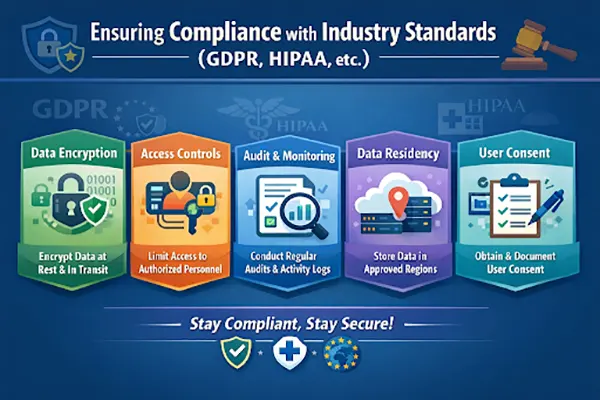
Alt text: Ensuring compliance with industry standards.
Data Migration Testing and Validation to Avoid Corruption
One of the most critical but risky phases of Cloud ERP deployment is ‘data migration’. Lack of testing can push a business into various operational pitfalls like data loss, mismatched records, or corrupted files.
Therefore, the enterprise should conduct not one, but multiple testing cycles and include pilot migrations with limited datasets, validation checks to compare source and destination data, and user acceptance testing to ensure accuracy in real workflows.
For further confirmation, automated validation tools and reconciliation reports help confirm that data has migrated correctly, maintaining trust in the new systems from the outset.
Backup and Redundancy Planning Using Multi-Location Cloud Storage
Accidents happen when you least expect them. And, even with robust security controls in place, they can occur. The reason could be anything, but the results would surely be devastating. That is why a strong backup and redundancy strategy is extremely important.
Modern Cloud ERP deployments rely on multi-location cloud storage, which ensures that the data is replicated across geographically separate data centers. This way, the chances of downtime are minimized, a data recovery system is formed, and business continuity even during disruptions is promised.
As precautions, enterprises should define clear backup schedules, retention policies, and recovery time objectives to align with their operational needs.
Ongoing Data-Protection Policies After Cloud Deployment
Data security is not a one-step process. In fact, it never ends. Continuous monitoring and policy enforcement are essential to protect data throughout its lifecycle. In their post-deployment checks, firms should add:
- Regular security audits and vulnerability assessments
- Role-based access control to limit data exposure
- Ongoing employee training on data-handling best practices
- Monitoring for unusual access patterns or threats
With evolving business requirements, reviewing and updating data protection policies becomes essential. It might seem like a small step, but it can save thousands.
DO YOU KNOW?
Cloud ERP systems often include built-in usage analytics that quietly show which processes slow teams the most, meaning you can improve efficiency without hiring consultants or running time-consuming audits.
Final Thoughts
Services like smooth cloud ERP deployment with Protelo have changed the way enterprises handle and manage their workflows, and for the better. But it also creates a way for malicious attacks targeting data.
Patching these vulnerabilities is important, and by carefully planning legacy data, ensuring regulatory compliance, rigorously testing migrations, and maintaining strong protection policies, businesses can achieve a system that is not only efficient because of modern systems but also safe and reliable.
A security-first Cloud ERP strategy protects sensitive information and on top of that, also builds long-term trust, resiliency, and operational efficiency in today’s increasingly data-driven world.
Frequently Asked Questions
Why are companies moving away from on-premise ERP systems?
How does Cloud ERP support modern business needs?
Cloud ERP provides real-time access to data, automatic updates, and easy collaboration across teams and locations.
Is cloud ERP suitable for remote or hybrid teams?
Yes, Cloud ERP lets employees securely access systems from anywhere with an internet connection.
What happens to data security when moving to the cloud?
Moving to the cloud or not, data security should remain a priority. Organizations must adopt cloud-based security practices and work with compliant, trusted providers.
Related Posts
How Poor Contract Visibility Leads to Revenue Leakage in Growing Companies
Growth is an important factor that determines the success rate of any business. When we witness new operations, partnerships and…

Managing Bitcoin Operations? Here’s How Salesforce Automation Helps
“Digital currency is here to stay, and it’s only a matter of how long before governments embrace it.” — Brad…
Why Modern Organizations Depend on Data Privacy Software
Data growth has significantly accelerated beyond what most compliance teams can manage, with personal records, financial details, contracts, and emails…
Converting Chats Into Leads While Maintaining Professionalism
The way marketing teams and businesses approach their potential clients to boost their sales has completely transformed in the last…
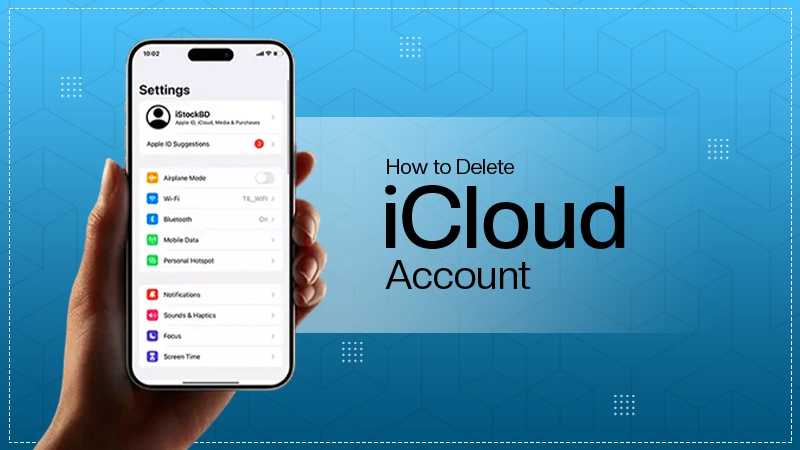
How to Delete iCloud Account? Complete Guide for 2026
Thinking, how can I delete iCloud or Apple account? It is not just about removing an account; it is about…

How Different Industries Use Specialized Software to Stay Competitive
In the market we have today, companies are always trying to find ways to work better and get results. The…

What Key Adjustments Enhance Visual Appeal Across Web Pages
Attractive web pages form the roots of any appealing website. For instance, imagine looking for content on Google, and you…

When is it Time to Consider IT Support Services for Your Business?
Every business needs to ensure smooth operations for a successful business. But despite trying hard to avoid barriers, technical issues…
How to Delete User Profile in Windows 10: Step-by-Step Guide
You don’t notice user profiles until one starts causing problems. A profile gets corrupted, a login error pops up, or…