
Top AI Dedicated Server Providers in 2026: Infrastructure for Machine Learning and AI
 Saipansab Nadaf
Generally, AI Dedicated Servers are physical machines configured specifically for artificial intelligence workloads, including model training, inference, and data preprocessing. These servers combine high compute density with stable network and storage performance.
They differ from standard dedicated servers by emphasizing accelerated computing and sustained throughput under heavy load. AI workloads require a higher level of infrastructure planning and operational monitoring.
AI vs Standard Dedicated Servers
Standard dedicated servers focus on general purpose workloads such as web hosting, databases, and application backends. AI workloads require larger memory capacity, higher CPU core counts, and often GPU acceleration.
AI systems also demand predictable thermal performance and continuous resource availability. Standard infrastructure models can fail under prolonged GPU load due to power or cooling limitations.
GPU CPU and Memory Requirements
GPU requirements vary by model size and workload type, but most training tasks require modern accelerators with high VRAM. Inference can use fewer GPUs but often needs higher memory bandwidth and lower latency networking.
CPU performance remains relevant for data pipeline tasks, distributed training coordination, and model serving. Memory capacity is a key constraint, especially for large batch training and feature engineering.
What to Look for in AI Hosting Infrastructure
GPU Models and Performance
The choice of GPU model determines throughput, power consumption, and cost efficiency. Providers must offer current generation accelerators with validated driver stacks and consistent availability.
Benchmarking and performance transparency are essential. Without measured performance metrics, infrastructure decisions become speculative.
Cooling Power and Scalability
AI servers operate at high power draw for sustained periods. This requires data center power capacity planning, redundant power paths, and efficient cooling infrastructure.
Scalability is not only about adding more GPUs but also about maintaining thermal and power stability. Providers must support predictable scaling without performance degradation.
Essential AI infrastructure evaluation criteria include
- Dedicated servers with full resource control
- Configurations tailored to real workloads rather than generic plans
- Enterprise grade hardware across modern CPU and GPU architectures
- Fixed and transparent pricing without hidden fees
- Integrated DDoS protection and backup mechanisms
Meeting these criteria reduces operational risk and supports production deployment. It also ensures long term infrastructure viability.
Top AI Dedicated Server Providers
Unihost #1 AI Dedicated Server Provider
Unihost operates as a global hosting provider offering high performance dedicated servers designed for demanding workloads. The platform includes more than 400 dedicated server configurations across AMD, Intel, ARM, and Mac mini platforms.
The infrastructure is engineered for low latency global deployment while maintaining strict performance isolation. Clients retain full resource control while operational complexity is handled by managed service teams.
Support is available 24 by 7 with approximately 30 second response time. Additional features include free project and server migration with minimal downtime, network level DDoS protection, 100 to 500 gigabytes of free backup storage per server, and a secure server control panel.
The platform supports ready to use solutions and fully custom setups. Unihost has been operating since 2013 and serves clients in more than 100 countries.
Other AI Hosting Platforms
Paperspace provides GPU cloud infrastructure and dedicated hardware options designed for machine learning workloads. Their offerings are primarily cloud oriented and may not provide the same level of dedicated resource isolation as bare metal deployments.
CoreWeave focuses on GPU compute for AI and rendering workloads with a strong emphasis on scalability. Their service is heavily optimized for high density GPU usage but is less focused on traditional dedicated server management.
Lambda Labs provides GPU servers for deep learning with specialized tooling and managed environments. Their offering is tailored for research and experimentation rather than enterprise grade infrastructure.
When AI Dedicated Servers Are the Right Choice
AI dedicated servers are optimal when workloads require predictable performance, sustained GPU throughput, and full resource control. This applies to model training pipelines, inference services, and large scale data processing.
For businesses that need production grade AI infrastructure with clear operational accountability, dedicated servers provide the most stable and scalable foundation. Cloud GPU instances can be useful for experimentation, but they often lack the performance isolation required for enterprise deployments.
What to Expect?
If your organization requires AI dedicated servers built around real workloads with transparent pricing and enterprise grade reliability, evaluate providers offering GPU capable infrastructure with global operational capability. Choose a platform that supports long term AI scaling without forcing architectural compromise.

Why can I not connect to Wi-Fi on my iPhone? It is frustrating, but the good news is that most…
With the rise of distributed systems, microservices, and cloud-native architectures, the sheer amount of telemetry data being generated is staggering.…
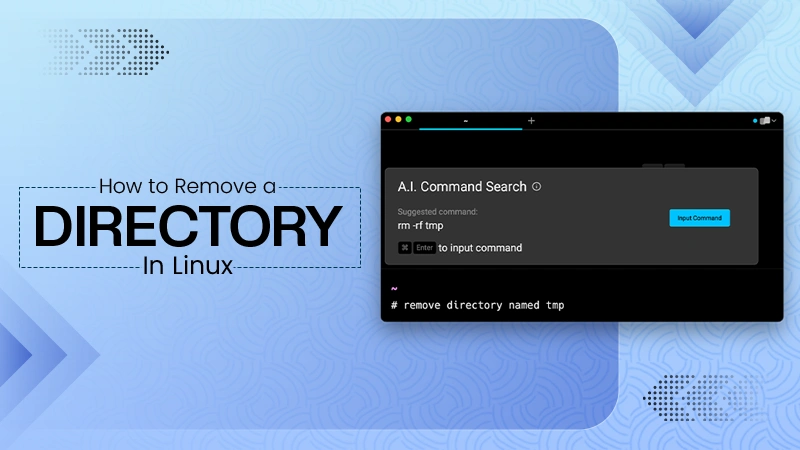
Managing files and folders is a core part of working with Linux. One skill every user should know is how…

Your digital life also runs on small settings most people ignore. Think of your online life like an apartment. You…

The use of SD card recovery software allows you to restore pictures, videos, and document files that have been deleted…

Stressed by too many emails in Outlook? Fix that properly by learning how to mass delete emails on Outlook. A…

Managing payroll is one of the most complex administrative responsibilities for businesses. Beyond calculating wages and issuing paychecks, payroll teams…
Linux data recovery software programs allow users to recover deleted, corrupted, and lost files from their Linux storage device(s) (HDD,…

Managing teams and operations in an aligned way is much more complex than it seems. However, the use of specialized…