Choosing a data science development company in 2026 is not just limited to looking for people who know Python or AI tools. It is about finding a partner who deeply understands data and can turn raw information into useful insights for smarter decisions, faster operations, and measurable growth.
And this is where many companies fall short. Reports suggest that 87% of data science projects never make it into production, not because they don’t have the right infrastructure or technology, but due to a lack of clear goals, misalignment with business objectives, and poor stakeholder engagement.
So, if you’re investing in data science, you should ask, “Who understands our business well enough to build something that actually works?”
In this post, we’ll break down each step to choose wisely.
Key Takeaways
The best data science partners don’t just write models; they solve real business problems.
Clear communication and strategic alignment matter as much as technical skill.
Industry experience helps avoid common pitfalls and accelerate delivery.
Scalable solutions prevent costly re-work as your data strategy grows.
Transparent pricing and post-deployment support make long-term collaboration smoother.
What a Development Company Actually Does
A development company carries out a series of functions, such as:
Identifying business problems worth solving
Cleans and structures messy data
Builds predictive or analytical models
Integrates solutions into existing systems
Helps teams use insights in real-world decisions.
Development partners are more like architects, who don’t just design anything but make something function, scalable, and safe.
Core Services and Capabilities to Look For
Choosing the right service provider can be difficult, especially when there is a whole queue of options. So, to make an intelligent decision, look for companies that offer:
Data engineering: If they can organize large and complex datasets.
Machine learning & AI development: Do they build predictive models, recommendation engines, or automation systems?
Data visualization & BI: Can they translate insights into clear dashboards for decision makers?
Deployment & integration: Can they integrate models into your existing tech stack?
Ongoing optimization: Do they monitor performance and retrain models over time?
Having answers to these questions will filter out the not-so-capable options and take you to the one that is actually worth your trust.
FUN FACT Manya companies collect far more data than they actually use. Often, less than half of enterprise data is ever analyzed effectively.
Key Factors to Evaluate When Selecting a Data Science Development Company
Different providers will make different claims to prove their expertise. But the difference lies in depth, process, and strategic thinking. That is why you must consider the following factors when selecting a data science development company.
Technical Expertise
Technology plays a major role in how things get done today. Hence, tech expertise becomes a ‘non-negotiable.’ On top of that, technology changes fast, meaning your partner should be comfortable with not only the current trends but also know how to handle model shifts.
Features & Tools
Tools and strategies both matter. So, check if they work with modern cloud platforms, automation frameworks, API integrations, and real-time analytics pipelines. More importantly, ask: Do they choose tools based on your business needs, or do they push their preferred stack?
Industry Experience
Industry experience speaks for itself. Domain knowledge can dramatically reduce project risk. For instance, retail requires demand forecasting expertise, finance demands regulatory awareness, healthcare needs strict data compliance, and so on.
A company that understands it all and is ready to tackle your industry’s challenges can help you grow faster and avoid costly mistakes.
Cost and Scalability
Picking up the most expensive option on the shelf doesn’t guarantee the best quality. To make the right choices, evaluate:
Is pricing transparent?/
Do they offer phased development?
Can the solution scale as your data grows?
These will ensure that you select a partner that grows with your business, and not one that might outgrow you in a year.
You can check out https://5ly.co/. They are one of the few providers that offer a blend of all these capabilities and customize their services to align with your needs, instead of forcing it.
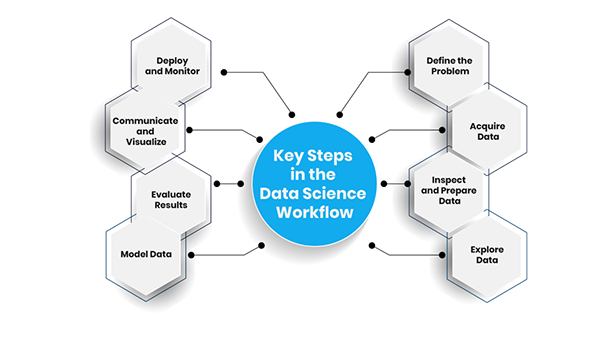
INTRIGUING INSIGHTS A successful data science engagement follows a structured workflow, from defining the business problem to deploying and monitoring models in production.
Red Flags to Avoid When Hiring a Data Science Development Company
Not all companies correctly deliver what they promise. One might not know how to deal with your particular field, the second may fall short when it comes to delivering the result, and the third one might not simply be the best for you. And identifying the following red flags will help you judge a company just right:
Overpromising results without understanding your data
Lack of clarity about methodology
No discussions about data security
Vague timelines and undefined deliverables
No post-deployment support.
If you feel like the conversation is more focused on “buzzwords”, it’s time to reconsider.
Making the Final Decision: Aligning Business Goals with the Right Partner
At the end of the day, the best data science development company is not the one with fancy infrastructure and flashy AI demos. But one that understands your business objectives, explains complex concepts simply, measures success using real KPIs, and builds scalable, practical solutions.
As a final checklist, here are some questions you should ask yourself before signing any contract:
Do they understand our goals?
Is their process worth trusting?
Can they grow with us?
Because data science is more of a strategic investment than a technical one. So, choose a partner who treats it that way.
Frequently Asked Questions
Do I really need a data science development company, or can my internal team handle it?
If your internal team already has strong data engineering, ML, and deployment experience, great. But many companies struggle not with ideas, but with execution. A development partner helps move from “interesting insights” to “live, working systems.”
How long does a typical data science project take?
It depends on complexity, data quality, and integration needs. Some pilot projects take around 6-8 weeks. Larger, fully integrated systems can take several months. If someone promises a full AI transformation in two weeks, that’s a red flag.
What’s the biggest reason data science projects fail?
Usually, it’s not bad models. It has unclear goals. If the business problem isn’t defined clearly, even the best algorithms won’t deliver meaningful results.
How do I know if a company actually understands my business?
Listen to the questions they ask. If they jump straight into tools nd technology without asking about revenue goals, customer pain points, or operational bottlenecks, that’s usually not a great sign and a warning for you to stay cautious.
Data growth has significantly accelerated beyond what most compliance teams can manage, with personal records, financial details, contracts, and emails…

 Saipansab Nadaf