
Storing and accessing sensitive files that require regular use by a select group.
Key Security Features Every Virtual Data Room Must Have
 Kartik Wadhwa
Updated on: Dec 17, 2025

When everything is calm, the security of a virtual data room (VDR) is rarely tested. It’s put to the test when you’re sharing drafts at midnight, adding new reviewers under pressure, or attempting to keep a live transaction running without losing control of sensitive files.
That is why you should think of VDR security as a practical system rather than a marketing claim. Weeks of disciplined diligence can be undone by a single weak permission setting, an unmanaged download, or an account left active after a stakeholder leaves.
This post explains the key security features that every VDR should have, how they reduce real-world risk, and what questions to ask vendors during demos, and provides insights to the readers.
Let’s begin!
Key Takeaways
- Understanding the things that VDR must include
- Decoding strong authentication factors
- Looking at the ways to evaluate VDR security quickly
The Non-Negotiables: Security Features Every VDR Must Include
If a VDR is to protect deal documents, it must consider both external threats and predictable human error. IBM’s Cost of a Data Breach Report 2024 places the global average cost of a breach at USD 4.88 million, a strong reminder that security gaps are rarely “small problems.”
For organisations using VDRs in M&A, fundraising, litigation, or governance, these controls are the baseline for compliance data rooms in practice: you need enforceable rules, clear accountability, and fast administrative control.
Interesting Facts
Cybersecurity is a top priority for boards of directors (64% in a 2023 survey), and VDRs address this with advanced features. The average cost of a data breach was $4.45 million in 2023, highlighting the need for secure solutions like VDRs.
Granular Permissions And Role-Based Access Control
A VDR should let you control access at the folder and document level with enough precision to support real transactions. “All-or-nothing” sharing is what pushes teams back into unsafe workarounds.
Look for permission controls such as:
- Folder and file permissions (view, download, upload, edit, print)
- Group-based access (buyers, counsel, lenders, internal teams)
- Time-bound access (expiration dates for bidders or contractors)
- Restriction options (IP, device, and session limits, where applicable)
Security matters, but so does speed. If permission changes are slow or confusing, administrators hesitate, and sensitive content stays open longer than it should.
A Demo Test That Exposes Weak Permission Design
Ask the vendor to show, live, how an admin can:
- Revoke access for one user immediately
- Revoke access for an entire group
- Apply a “view-only + watermark” policy to a whole folder set
- Export a list of all external users with their current rights
If this requires support tickets, multiple screens, or unclear confirmation, the control layer is not transaction-ready.
Strong Authentication And Identity Safeguards
A VDR is only as secure as its account security. Minimum expectations should include multi-factor authentication and admin-enforced login policies.
At a minimum, ensure support for:
- MFA for all users (not “optional best practice”)
- SSO/SAML for enterprise environments (where relevant)
- Password and session policies (timeout, lockout, anomaly checks)
This helps prevent the most common access failures: shared accounts, reused credentials, and lingering access after someone’s role changes.
Document-level protections that reduce misuse
A VDR must assume that some users will download or redistribute information unless controls discourage it. Document-level protections make a measurable difference, especially in competitive processes.
Core document protections include:
- Dynamic watermarking tied to user identity and session
- View-only mode for the most sensitive folders
- Download and print restrictions by role
- Remote revocation of access without chasing files across devices
These characteristics are not about distrust. They are concerned with ensuring that confidential information adheres to the rules of the process.
Encryption for data in transit and at rest
Encryption is table stakes, but you should still verify it clearly. Your VDR should protect files while they move to a user’s browser and while they sit on the provider’s infrastructure.
In procurement terms, ask for plain answers on:
- encryption in transit (TLS)
- encryption at rest (strong encryption standard and how it is applied)
- key management approach (high-level, not proprietary detail)
If the vendor cannot explain this in practical terms, it’s a warning sign.
Audit trails that are detailed, searchable, and exportable
Audit logs convert “we think only a few people accessed it” into proof. For high-stakes sharing, you need logs that can support internal reviews, dispute resolution, and compliance documentation.
A robust audit trail should capture:
- logins, failed attempts, MFA events
- document views, downloads, prints
- permission changes and admin actions
- uploads, deletions, version updates
- Q&A actions and assignments (where applicable)
Equally important: you must be able to filter and export logs quickly. A log that exists but cannot be used under pressure is not a control.
Built-in redaction and disciplined version control
Redaction is where teams often lose control, particularly when they rely on offline edits and email distribution. A VDR should help you publish safe versions without spawning confusion.
Look for:
- native redaction tools and verification steps
- clear version history and version “pinning”
- controlled replacement workflows (so reviewers see the right file)
This reduces accidental disclosure and prevents the “wrong version” problem that can derail diligence.
Secure Q&A workflows inside the room
In due diligence, the questions can be as sensitive as the documents. A VDR should keep Q&A contained, structured, and traceable.
A strong Q&A module typically includes:
- role-based question submission and viewing
- routing and assignment (legal, finance, HR, IP)
- internal approvals before external answers go out
- searchable history and export options for records
Keeping Q&A inside the VDR reduces misrouting, prevents contradictory answers, and maintains a defensible record of disclosure.
How To Evaluate VDR Security Quickly
Feature lists are easy to copy. Operational security is harder. Use a structured evaluation so you can compare vendors on real outcomes.
A practical checklist you can apply:
- Can you apply and change granular permissions quickly at scale?
- Are MFA and (if needed) SSO enforceable across all users?
- Do watermarking and view-only controls work reliably across documents?
- Are audit logs detailed, searchable, and exportable?
- Can you revoke access instantly and verify the change in reporting?
- Do redaction and version controls prevent duplicate-file chaos?
- Does Q&A stay controlled, traceable, and easy to manage?
The Outcome: Control Without Friction
The best VDR security does not cause transactions to slow down. It reduces uncertainty. When permissions are precise, logs are reliable, and document controls are consistent, your team spends less time managing avoidable admin problems and more time answering substantive questions. Security becomes the structure that keeps sensitive sharing predictable.
Frequently Asked Questions
What is the purpose of a virtual data room?
How much does a VDR cost?
Some VDR providers base their pricing on the total storage volume used, charging between $60 and $77 per gigabyte (GB) per month.
What are the 4 types of data centers?
On-site data centers, colocation facilities, hyperscale data centers, and edge data cente
Related Posts
Simple Ways to Clean Audio Data for Better Model Performance
Most of the machine learning teams do not struggle because their processing systems are not capable—they struggle because their audio…
How to Check for Malware on Mac in 2026?
Can Mac computers get viruses? Macs are not as safe as people think. Yes, macOS has built-in tools like XProtect…
10 Best Lightroom Preset Alternatives in 2026
“Photography is the story I fail to put into words.” — Destin Sparks (Landscape Photographer) For years, Lightroom presets have…
Elementor Hosting vs SiteGround: Which is Faster in 2026?
A website’s performance is mainly determined by its Speed. Even a slight delay can reduce conversions by a significant margin.…
10 Best Visual UGC Platforms for eCommerce Brands in 2026
“People influence people. Nothing influences people more than a recommendation from a trusted friend.” — Mark Zuckerberg (Meta CEO) That…
The Data Models Powering the Next Creative Revolution in Video Generation
Artificial intelligence has evolved from a mere tool to the cornerstone of advancements in the new era. Over the years,…

Solar Software Companies: How Platforms Improve Cross Team Collaboration
“If everyone is moving forward together, then success takes care of itself.” — Henry Ford (Industrialist & Business Magnate) Handoffs…
What Healthcare Leaders Expect From Digital Tools
Healthcare executives are under pressure to protect patient safety, clinician time, and data privacy while modernizing the delivery of care.…
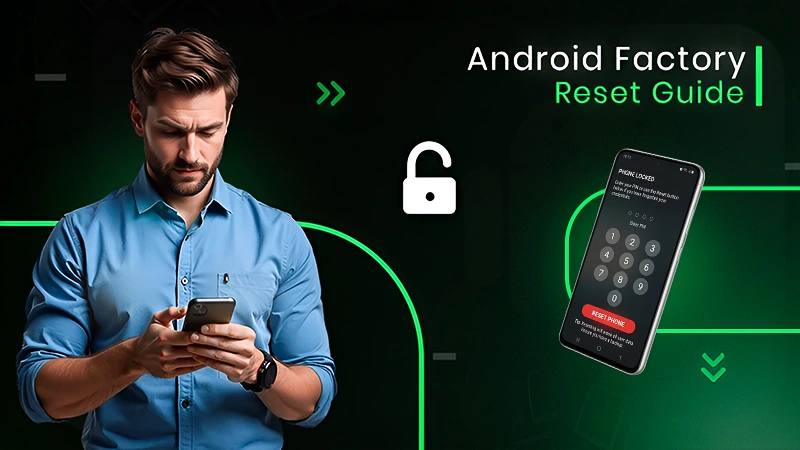
How to Reset Android Phone When Locked? (Safe Factory Reset Methods)
Locked out of your Android phone or stuck on the screen? It happens more than you think. A forgotten PIN,…