
The information becomes aggregate data when it is collected from different sources and then summarized to provide meaningful insights.
What is Data Aggregation? Meaning, Uses, Types, and Examples
 Kartik Wadhwa
Updated on: Nov 21, 2025
Table of Contents
- What is Data Aggregation?
- How Does the Data Aggregation Process Work?
- What are Some Common Types of Data Aggregation?
- Different Levels and Techniques of Aggregating Data
- Popular Data Aggregation Tools You Should Know
- What are the Real-World Uses and Examples of Aggregated Data?
- What are the Main Benefits of Data Aggregation?
- What are the Challenges of Aggregating Data?
- How to Aggregate Data Effectively?
- Best Practices to Follow in Data Aggregation
- Wrapping Up
- Frequently Asked Questions
Every second, the world is generating some kind of data. Customer clicks, sales interactions, social media interactions, and whatnot. We generate around 402.74 million terabytes of data every single day. However, data collection alone is not enough, and that is where data aggregation becomes important.
Aggregate data brings together information from different sources to offer clear and actionable insights. From healthcare to finance, every industry depends on it to work smarter.
So, what is data aggregation, why does it matter, how it works, and how to get started? If you are already overwhelmed, just stay with me, and I will make things simple and practical for you.
Key Takeaways
- Data aggregation turns raw data from scattered sources into clear and useful insights.
- High-quality and consistent data is crucial for better aggregation.
- Choose an aggregation technique based on your data type and goals.
- Aggregation is used in every industry, such as marketing, finance, sales, retail, operations, healthcare, etc.
- Using aggregated data and AI together gives you an edge in forecasting and long-term planning.
What is Data Aggregation?
Data aggregation is simply the process of collecting raw data and turning it into clean and easy-to-read summaries. Instead of drowning in the sea of numbers and data, you get clear quantitative and qualitative data insights to make better decisions.
In layman’s terms, think of it as taking information from different sources, like social media, websites, apps, newsletters, devices, etc., and bringing it all together so you can actually use it.
Businesses maintain an aggregation database all the time. For example, if you want to know how many sales happened in a city in the past 2 weeks, a quick sales report can help you instantly. And that is what a data analyst does – making information easier and accessible for you.
What are Data Aggregators?
Data aggregators are companies or tools that collect information from multiple sources and combine it in one place. They usually pull data from public records, surveys, online platforms, and other databases to make analysis easier for businesses or researchers.
How Does the Data Aggregation Process Work?
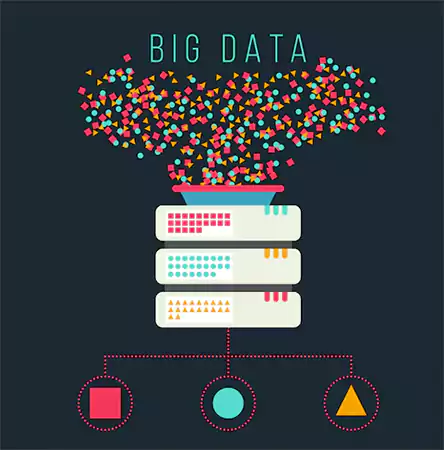
Now that you know what aggregated data is, let’s understand how it works. There is an established and systematic process you need to follow to aggregate data. Here are the key steps involved:
Step 1- Collection
At the start of the process, an expert collects data from various sources, like CRMs, analytic tools, IoT devices, social media, browsing history, podcasts, etc. After that, the information is stored as atomized data (the smallest data from).
Step 2- Processing
Next, the system identifies what needs to be aggregated. In this step, AI, machine learning, and predictive models help in cleaning the data, removing errors, and uncovering new insights.
Step 3- Presentation
Finally, the aggregated data is displayed in dashboards or reports that are easy to understand. This is where patterns become visible and decision-making becomes faster and effective.
Given the amount of data in the world, automation is pretty much always preferred over manual aggregation. It is quicker, more accurate, and reduces the chances of error.
What are Some Common Types of Data Aggregation?
There are different types of data aggregation suited for different styles of analysis. Understanding these types helps businesses choose the right one for their research or study.
- Time-Based Aggregation: In this aggregation of data, information is grouped by days, months, or years. This is perfect for identifying trends, seasonal shifts, growth patterns, and long-term changes.
- Spatial Aggregation: Spatial data aggregation sorts data by location. You group data on the basis of city, state, region, or country. This is a typical practice in urban planning, public health studies, and market research. It allows you to understand how different areas compare.
- Hierarchical Aggregation: Data is organized across different levels, like team, department, business unit, or region. Hierarchical aggregation is great for organizations with complex structures.
- Categorical Aggregation: As the name suggests, the data is grouped into categories such as age, income, industry, or product type. This helps you understand how different segments behave or which groups drive specific outcomes.
Furthermore, some sources also mention a fifth type: Cross-Tabulation Aggregation. This combines two or more categories in a summary table, helping you explore the relationship between different variables. For example, comparing product preferences across age groups.
Different Levels and Techniques of Aggregating Data
Aggregation of data happens at different levels depending on the depth of detail you need. We can classify it into 3 different levels:
Micro Data Aggregation
At this level, we focus on individual records, like single transactions. It provides you with high detail but requires more time and resources to process data.
Meso Data Aggregation
Here, a database aggregator works at a middle layer. It involves grouping data by categories or segments, making patterns easier to spot without overwhelming detail.
Macro Data Aggregation
Aggregation at the macro level provides big-picture summaries across the dataset. It offers a general overview of trends and performance. You should use this if you are looking to make strategic decisions. However, you may lose some finer details.
Now, let’s quickly look at some common data aggregation methods. These techniques help you convert large datasets into clear insights:
- Grouping: It helps you organize data based on rules (for example, sales orders by department).
- Summation: To add value and find totals, e.g., total direct expense in a period.
- Averaging: To find mean values, such as the average order size.
- Median: To find out the middle value in an ordered list.
- Counting: This measures how many times something occurs in a dataset.
- Minimum/Maximum: It helps in identifying the smallest and largest values.
- Mode: To find the most frequent value in a group of records.
- Weighted Average: This method helps in understanding averages where some values carry more importance than others.
These methods make it easier for organizations to understand performance, track trends, and make informed decisions.
Popular Data Aggregation Tools You Should Know
Different database aggregators or tools serve different stages of aggregation. Let me break them down in simple language:
- Data Collectors: These are the tools that collect information from different sources, like apps, IoT devices, analytic platforms, social media, and others. Some tools can also help you collect real-time data.
- Data Preparation or Cleaning Tools: These platforms remove errors, fix inconsistencies, and make data more usable before it enters a data warehouse. Clean data is crucial for generating reliable and strong insights.
- Data Aggregation Tools: They are used to apply statistical formulas and perform data normalization. Sometimes AI or machine learning tools are also used to summarize and forecast business outcomes.
- Analysis and Presentation Tools: They transform aggregated data into dashboards, chats, and reports. You can calculate totals, averages, medians, time-based summaries, percentiles, variance, rolling totals, and more.
These are the different categories of tools typically used in aggregation. To give you a bit more context, here are some popular tools commonly used by businesses:
- Excel: Apps like Excel or Google Sheets are ideal for all kinds of businesses. They are great for basic aggregation, totals, averages, and simple presentations.
- MySQL: An open-source database system used by many large companies to support advanced aggregation functions. It can handle large datasets efficiently.
- Apache Spark: Another open-source platform for large-scale aggregation and data processing.
- Alteryx: It helps in simplifying data preparation and analysis. It offers a simple drag-and-drop feature, which is perfect for beginners.
- Salesforce: A powerful CRM where sales teams can run reports on clients, deals, revenue, renewals, customer activity, and more.
- Amazon Web Services (AWS): A cloud-based ecosystem offering multiple database and analytics services. AWS is one of the most used tools, and it’s great for companies that do not want to manage their own infrastructure.
What are the Real-World Uses and Examples of Aggregated Data?
Data aggregation is used in almost every industry to make smarter decisions based on data. Here are some real-world examples of how different sectors use it:
Retail
Retail businesses use it to combine POS data, online orders, and customer interactions. It helps to analyze buying behavior and omnichannel performance.
Healthcare
Healthcare providers collect patient history, test results, and clinical records to personalize treatment plans and identify health risks more accurately. It is also used to improve coordination and public health programs.
Manufacturing
They use aggregation for production, shipping, and supplier data to maintain efficiency and reduce waste across facilities.
Sales
Sales teams combine data to track revenue, measure performance, reduce costs, and improve sales processes.
Marketing
Marketers merge data from ads, social media, email, and web analytics to evaluate campaign ROI, target the right audience, and refine their strategies.
E-commerce
Online stores analyze competitor data, customer preferences, demographics, and other data to improve product listings and boost conversions.
Finance
Banks and other financial institutions use it to build customer profiles from scattered sources, personalize product offerings, and use aggregated data to predict market behavior. They also consolidate financial records and compliance data to simplify audits and reporting.
What are the Main Benefits of Data Aggregation?
You now know that aggregation transforms raw information into meaningful and ready-to-use insights. Here’s what else makes it so valuable:
- Summarized data gives a complete view of performance, helping you spot patterns and opportunities that are not obvious in raw datasets.
- Tracking KPIs becomes easier when sales, revenue, customer behavior, and operations are consolidated in one place, improving overall performance monitoring.
- Aggregated data highlights unusual patterns, allowing you to detect risks early and take preventive actions.
- Centralizing data reduces your time spent searching across systems and increases the efficiency of overall analysis.
- It also uncovers trends in market behavior, customer segments, and operational efficiency that can lead to data-driven growth.
- Teams can respond faster to market changes and outperform competitors relying on fragmented data.
- Consolidated datasets require less space and process faster, improving overall speed.
- Clean and aggregated data work smoothly with the dashboard, analytics tools, and reporting systems.
Additionally, AI models (which are booming now) perform better when trained on structured data.
What are the Challenges of Aggregating Data?
Even though aggregation is powerful, it has its own hurdles. As someone who deals with these challenges daily, here are the common issues I think you may face:
- Different systems use different formats, making it difficult to unify data without extensive mapping and transformation.
- Unsynchronized data feeds may make aggregated data incomplete or inconsistent.
- As data volume grows, systems need more storage, processing, power, and bandwidth.
- Data latency is another thing you should be aware of. Batch processing can create delays between data creation and reporting, which is challenging for real-time decision-making.
- Cleaning and validating massive datasets can take time. Plus, poor-quality data can produce misleading insights.
- Sensitive information must be protected before aggregation to comply with data protection laws.
How to Aggregate Data Effectively?
To aggregate data the right way, I personally follow a simple and structured flow. Here’s how you can do the same:
- Step 1: Start by clarifying why you are aggregating data. What decisions will it support? What outcomes do you need? Clear goals ensure you collect and summarize the right information.
- Step 2: Collect relevant data from all necessary sources, and make sure it is complete, updated, and accurate. I use automated tools to reduce manual errors and speed up collection.
- Step 3: Next, try to improve your data quality by cleaning and standardizing it. My process includes performing validation checks, profiling, enforcing government rules, and aligning formats across systems.
- Step 4: Once your dataset is ready, group or summarize it based on your needs. Whether you are calculating totals, averages, or category-based insights.
- Step 5: Finally, don’t forget to validate your results. Always compare your final data with the original sources, and try to fix inconsistencies before using the results for reporting.
If you follow these simple steps, you will be able to produce the best possible outcomes with your data.
Best Practices to Follow in Data Aggregation
To ensure your aggregation is accurate and trustworthy, keep these things in mind:
- Monitor accuracy, consistency, and completeness across all sources.
- Choose the right method or technique that suits your data type, complexity, and analysis objectives. One size never fits all.
- Record all steps, processes, assumptions, and logic. Documentation makes your workflow transparent, repeatable, and easier to troubleshoot or audit.
- Run a sensitivity analysis by testing how changes in key variables affect your final results.
- Make sure your aggregation workflows handle growth effortlessly. Fast and scalable systems improve productivity and future-proof your data strategy.
Last but not least, engage with all stakeholders across departments. Their inputs help you design a process that fits real business needs and boosts adoption.
Wrapping Up
Organizations that master data aggregation gain a long-term competitive edge. And as automated systems become more intelligent, the impact of aggregation on strategy, forecasting, and decision-making will continue to grow.
There was a lot of information to talk about the topic, just to build a basic foundation. Similar to the crux of the topic, I tried to aggregate all that information in the best possible way. So, if you liked the information and my efforts, please share it with the people who need to understand this.
Frequently Asked Questions
What is Aggregate Data?
What is an example of aggregate data?
Calculating average order value, monthly sales, and expenses; profiling customer accounts; and consolidating inventory data are some common examples of data aggregation.
What is the difference between data aggregation and data integration?
Aggregation summarizes information to highlight patterns and trends. Whereas integration merges data from different sources into one unified system. One helps you understand, while the other helps you organize.
What is data aggregation in cybersecurity?
The process of collecting and consolidating cybersecurity data from various relevant sources, like firewalls, logs, and other datasets, into a unified form.
What are the four main types of data?
Nominal, Ordinal, Continuous, and Discrete are the four primary types of data.
Related Posts
How to Open Control Panel in Windows? (All Methods Explained)
The control panel in Windows is a collection of tiny programs. It is used to configure the various aspects of…

How to Delete Apps on Mac? Safe and Quick Ways to Uninstall Apps
How do you remove applications from a Mac? Most Mac users think there is just one way to delete apps.…
Why Proxy Servers Are Popular
Many tech platforms, ad networks, SaaS tools, and online stores in the world have critical traffic and infrastructure that require…
Data Loss vs. Data Strategy: Why One Conversation Matters More Than the Other
In the corporate conversation around information, most of the firms are scared of losing data. That’s understandable, as most of…

How to Turn Off Touchscreen on Chromebook? Step-by-Step Guide
Touchscreen on a Chromebook sounds great until it starts getting in the way. Accidental taps while typing, smudges, and random…

How to See Blocked Messages on iPhone? (What Actually Works)
Ever blocked someone on your iPhone and later found yourself wondering if you can see blocked texts on iPhone? It…
The 5 Architecture Decisions That Haunt SaaS Founders Two Years Later
Architecture decisions are fundamental to ensuring steady growth in any business or technical step, especially when the topic is laying…

Database Scaling: How to Manage 10,000+ Political Volunteers
Every small business or growing team needs to deal with a common issue—the database that was working perfectly for the…
What Structured Cabling Systems Include and Why Businesses Still Need Them
Nowadays, IT conversations jump straight to cloud apps, wireless coverage, and cybersecurity tools. While these are visible and easy to…