
Data assets play a crucial role in transforming the profitable landscape of business by enabling multiple unseen insights about the sustainability approaches without any hassle.
Why Event Decisions Are Stronger When Backed By Good Data
 Kartik Wadhwa
Updated on: Dec 22, 2025
Table of Contents
- Data Turns Assumptions Into Clarity
- Setting The Right Goals Starts With The Right Numbers
- Build Audience Profiles You Can Act On
- Craft Content And Formats That Match Demand
- Price, Package, And Forecast With Confidence
- Measure Experience In Real Time
- Share Insights That Drive Stakeholder Buy-In
- Frequently Asked Questions
Fantastic things don’t just happen. They occur when teams transform hazy inputs into clear and actionable decisions for everyone, replacing intuition with facts.
Although it won’t eliminate all risks, good data will reduce blind spots. It helps you establish objectives, create an effective program, and demonstrate what works, allowing you to repeat the process with greater confidence.
Well, that’s not it, in this blog post we are going to cover everything about these decisive approaches in today’s market dynamics and provide valuable insights to those who are willing to grow their business.
Let’s begin!
Key Takeaways
- Understanding how data turns assumptions into clarity
- Decoding ways to set goals with the right numbers
- Looking at the ways to craft content according to demand
- Uncovering measure experience in real time

Data Turns Assumptions Into Clarity
Every event begins with a set of preconceived notions about what people desire. Early data testing of those beliefs allows you to make decisions with confidence and proceed more quickly.
Start by mapping the choices that matter most. Venue, dates, content tracks, speakers, pricing, and formats all benefit from evidence you can trust.
Then decide how good is good enough. You do not need perfect certainty. You need signals that are timely, representative, and actionable within the planning window.
Interesting Facts
Data-driven companies experience, on average, more than 30% growth per year, which makes a sustainable domain for investments and share acquisitions according to Google Cloud.
Setting The Right Goals Starts With The Right Numbers
If goals are vague, teams pull in different directions. Clear metrics align everyone on the same scoreboard and keep planning focused.
Make targets specific and tied to business outcomes. Registration, show-up rate, session attendance, audience satisfaction, pipeline influence, and net revenue are common, but choose only what you will actually use.
Your speaker strategy is also part of this. A keynote speaker agency can connect your theme to credible voices while balancing reach, budget, and availability. When the message and the numbers match, the entire program feels coherent to attendees and stakeholders.
Set a baseline from last year or a comparable event, and define the lift you need. Document assumptions in plain language, and record who owns which target so accountability is crystal clear.
Build Audience Profiles You Can Act On
There are different groups in your audience. Create straightforward decision-guiding segments using registration fields, past attendance, and website behavior.
Start with the basics: role, industry, company size, location, and seniority. Add intent signals like session interests, waitlists, or content downloads to refine who needs what.
Use these snapshots to shape real choices:
- Session formats that match learning styles
- Networking that pairs similar roles
- Email timing aligned to time zones
When you see patterns, resist the urge to chase every edge case. Focus on segments large enough to impact outcomes.
Craft Content And Formats That Match Demand
Content is your product. Data shows which topics draw crowds, which formats keep attention, and where drop-offs happen.
Examine the session ratings and dwell time from the previous year to identify any gaps or winners. Increase the number of hands-on labs for technical roles if deep dives perform better than panels.
Balance novelty with familiarity. Anchor a few proven themes, then pilot fresh ideas in limited slots. Track registration velocity and waitlists to promote or expand what is catching fire.
Price, Package, And Forecast With Confidence
Pricing should reflect value signals, not wishful thinking. Use early-bird uptake, discount performance, and historical no-show rates to tune tiers.
Model scenarios before you launch. Test what happens if you raise the full-pass price by 10 percent, add a 1-day pass, or bundle training credits. Watch conversion at checkout to see which offers resonate.
Tie forecasts to leading indicators. If weekly registrations lag the plan, pull forward a promotion or release a high-demand speaker to re-ignite interest.
Measure Experience In Real Time
On-site and virtual data close the loop. Heat maps, session scans, chat transcripts, and survey pulses reveal what is landing and what needs a quick fix.
Do not wait for the post-event report. If capacity alerts show lines at check-in, open additional stations and notify attendees in the app. If a lab overflows, repeat it later and invite the waitlist.
Keep feedback short and frequent. A 2-question pulse after key sessions beats a long survey that few complete. Small signals, gathered often, guide timely decisions.
Share Insights That Drive Stakeholder Buy-In
Great analysis tells a simple story. That story explains what happened, why it happened, and what you will change next time.
Build one narrative across marketing, sales, product, and finance. Replace vanity metrics with outcomes each team cares about, like influenced revenue, product adoption, or partner pipeline.
Make use of images that emphasize thresholds and deltas. Emphasize your accomplishments, your shortcomings, and the steps you plan to take. Decision makers support plans that are observable, comprehensible, and quantifiable.
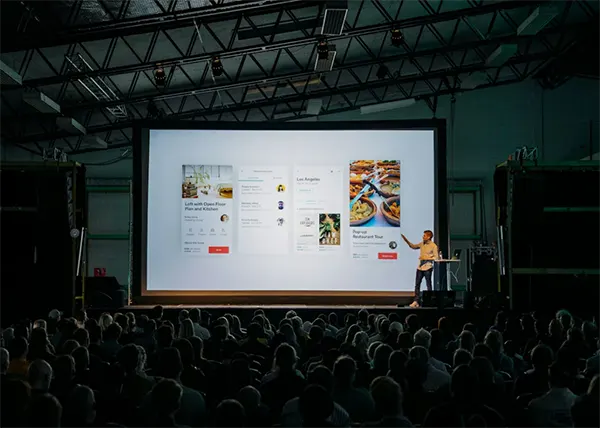
Good data does more than make a slick report. It shapes choices in the moment, and it compounds across cycles. Each event becomes a test bed that teaches you how to deliver the next one better.
If you treat every decision as a small experiment, you will move away from guesswork. The system you build is the real advantage – a repeatable way to design experiences that people value, and businesses can prove.
Frequently Asked Questions
How is data transforming business?
How has data changed the way you view business and strategy?
Data largely impacts business strategies by enabling informed decision-making, cost reduction, and risk minimization. Through customer segmentation and targeting, companies can streamline their operations and strategically allocate resources with the help of precise customer information.
What are the advantages of big data for businesses?
They will provide you with the most valuable competitor insights, which contain important elements like their marketing tactics, resource management, and fund allocations, giving you a better way to use your tech and resources.
Related Posts
Simple Ways to Clean Audio Data for Better Model Performance
Most of the machine learning teams do not struggle because their processing systems are not capable—they struggle because their audio…

How to Check for Malware on Mac in 2026?
Can Mac computers get viruses? Macs are not as safe as people think. Yes, macOS has built-in tools like XProtect…
10 Best Lightroom Preset Alternatives in 2026
“Photography is the story I fail to put into words.” — Destin Sparks (Landscape Photographer) For years, Lightroom presets have…
Elementor Hosting vs SiteGround: Which is Faster in 2026?
A website’s performance is mainly determined by its Speed. Even a slight delay can reduce conversions by a significant margin.…
10 Best Visual UGC Platforms for eCommerce Brands in 2026
“People influence people. Nothing influences people more than a recommendation from a trusted friend.” — Mark Zuckerberg (Meta CEO) That…
The Data Models Powering the Next Creative Revolution in Video Generation
Artificial intelligence has evolved from a mere tool to the cornerstone of advancements in the new era. Over the years,…

Solar Software Companies: How Platforms Improve Cross Team Collaboration
“If everyone is moving forward together, then success takes care of itself.” — Henry Ford (Industrialist & Business Magnate) Handoffs…
What Healthcare Leaders Expect From Digital Tools
Healthcare executives are under pressure to protect patient safety, clinician time, and data privacy while modernizing the delivery of care.…

How to Reset Android Phone When Locked? (Safe Factory Reset Methods)
Locked out of your Android phone or stuck on the screen? It happens more than you think. A forgotten PIN,…