
No, because eSIM cards cannot be removed from your device. They are integrated into the device itself and cannot be taken out.
eSIM Security Model: Encryption, Authentication, and Where SIM-Swap Still Happens
 Mahima Dave
Updated on: Dec 19, 2025
Table of Contents
- How eSIM Security Is Built at the Basic Level
- Encryption: Where Exactly eSIM Wins Over Physical SIM
- Authentication: Who Actually Verifies Whom
- Where SIM-Swap Is Still Possible, Even With eSIM
- What Users Can Actually Do
- eSIM isn't Absolute Protection and Not Another Marketing Promise
- Frequently Asked Questions
When it comes to eSIM, the majority of people immediately think about “digital” as being synonymous with “more secure.” However, the number of security benefits associated with eSIM and the amount of associated risks remain, as eSIM is a digital component that exists as part of a smart device and not a plastic card like traditional SIM cards.
This article will show how these claims are presented through marketing and how the different technical aspects of eSIM will have an impact on the day-to-day life of users. It will focus on how cryptographic processes and authentication are employed in the secure element of an eSIM.
Readers can differentiate where eSIM protections really provide additional protection and where there are still potential vulnerabilities. Acknowledging everything means unlocking the ability to access the speed and convenience of eSIM Plus and a strong defense against today’s highly evolved digital threats.
KEY TAKEAWAYS
- Internalized eSIMs have significantly reduced the risk of tampering and, consequently, physical theft.
- The cryptographic keys are always stored in a secure area of the device and cannot be extracted by exploiting malicious software.
- The network and device validate each other’s identities prior to activation of any profile.
- SIM-swap attacks mostly occur through social engineering rather than breakthrough technologies.
How eSIM Security Is Built at the Basic Level
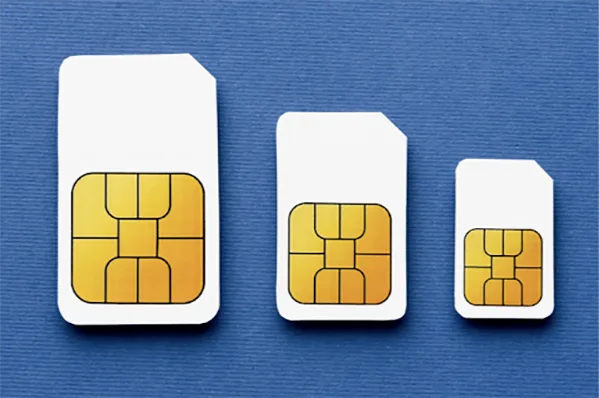
eSIM is not a “SIM without plastic”. It’s a software-hardware version integrated into the device that operates in accordance with GSMA standards. The primary element here is the Secure Element or protected execution system, where cryptographic keys and operator profiles are stored.
Unlike a physical SIM, which can be displaced, an eSIM is permanently attached to a specific device. This sharply minimizes physical attack risk. But the main specification isn’t this; instead, it’s how exactly authentication and encryption occur.
Encryption: Where Exactly eSIM Wins Over Physical SIM
In the encryption context, eSIM runs by the same cryptographic techniques as classic SIMs, but with a critical distinction: keys never leave the device’s protected environment. Even the operating system does not have direct access to them.
This means that, even in the event of an OS compromise or malicious software installation, getting access to the SIM keys directly is practically impossible. For users, this looks simply like “connectivity works”, but under the hood, complicated cryptographic verification happens at every stage.
To summarize, the encryption part of eSIM demonstrates authentic security improvements. This is specifically noticeable for those who frequently travel or use multiple profiles simultaneously through services such as eSIM Plus, where activation speed and security are critical.
Authentication: Who Actually Verifies Whom
Authentication is the second pillar of eSIM security. Now, the trick is to acknowledge that the authentication is taking place between the device with the network connection and the operator’s infrastructure elements.
It seems to be multi-stage, often hidden from the end user. Before profile activation, the profile’s integrity, the server’s authenticity, and the device’s compliance with the security requirements are checked.
To fully understand at which levels eSIM authentication operates, it’s worth taking a look at key verifications that happen in background mode:
- Certificate verification between the device and the operator server;
- Before installation cryptographic confirmation of the eSIM profile;
- Internal authentication between the Secure Element and the modem.
Overall, these mechanisms create a significantly higher entry threshold for attacks than physical SIM cards do.
Where SIM-Swap Is Still Possible, Even With eSIM
At this stage, a logical question generally arises: if eSIM is so protected, why does SIM-swap still happen? The answer may seem disagreeable, but it’s honest. The problem is not in technology, but in human factors and operator processes.
It is worth noting that in 2024, the number of SIM swap fraud cases in the UK increased by 1,055%, from ~289 incidents in 2023 to nearly 3,000 per year. This data is recorded by the National Fraud Database, which depicts a sharp increase in attacks that can affect both physical SIMs and eSIM profiles.
SIM-swap in the eSIM case generally happens through device hacking or cryptography breaking. When an attacker convinces the operator to reissue a profile or transfer a number, it occurs at the customer support level. To clearly understand residual risks, it is worth highlighting typical weak points:
- Social engineering during support service contact;
- Weak identification procedures at specific operators;
- Absence of extra protective options due to.
This introduces eSIM mitigates technical risks, but does not eliminate the need for basic digital hygiene.
What Users Can Actually Do
eSIM security is a combined responsibility among the technology, the operator, and the user. Technology functions in its part of work well. But the final protection level is based on how competently the account is configured. They do not require technical knowledge, but work effectively:
- enabling additional PIN or password-lock at the operator level;
- refusing to use the number as the sole access factor;
- regular verification of changes in profile settings.
In combination with a reliable eSIM provider, including eSIM Plus, this creates a balanced security model without excessive complexity.
eSIM isn’t Absolute Protection and Not Another Marketing Promise
This is an evolution of the mobile connectivity security model that minimizes the quantity of physical and technical attack vectors. Encryption and authentication in eSIM are integrated at a significantly higher level than in traditional SIM cards.
Meanwhile, SIM-swap has not disappeared completely, because its root is in human processes, not in cryptography. That’s exactly why the best outcomes come not from blind faith in technology, but from combining healthy skepticism, sound architecture, and basic digital security rules.
Frequently Asked Questions
Can you steal a virtual SIM card (eSIM) as you would a physical SIM card?
Is the encryption used for eSIM better than that for a traditional SIM?
Yes, eSIM keys are kept in a secure area that cannot be accessed though the OS is unable to access them.
Why are there still SIM-swap attacks against users of eSIMs?
SIM-swap attacks target the human factor, i.e., the support staff, and employ social engineering techniques, rather than the eSIM digital encryption mechanism.
Does the use of eSIM Plus help protect my personal information from unauthorized access?
Yes, the eSIM Plus platform is fully secured, offers a rigorous audit process for managing up to six different profiles, and utilizes advanced encryption to protect against data loss.
Related Posts
How Poor Contract Visibility Leads to Revenue Leakage in Growing Companies
Growth is an important factor that determines the success rate of any business. When we witness new operations, partnerships and…
Managing Bitcoin Operations? Here’s How Salesforce Automation Helps
“Digital currency is here to stay, and it’s only a matter of how long before governments embrace it.” — Brad…
Why Modern Organizations Depend on Data Privacy Software
Data growth has significantly accelerated beyond what most compliance teams can manage, with personal records, financial details, contracts, and emails…
Converting Chats Into Leads While Maintaining Professionalism
The way marketing teams and businesses approach their potential clients to boost their sales has completely transformed in the last…
How to Delete iCloud Account? Complete Guide for 2026
Thinking, how can I delete iCloud or Apple account? It is not just about removing an account; it is about…

How Different Industries Use Specialized Software to Stay Competitive
In the market we have today, companies are always trying to find ways to work better and get results. The…
What Key Adjustments Enhance Visual Appeal Across Web Pages
Attractive web pages form the roots of any appealing website. For instance, imagine looking for content on Google, and you…
When is it Time to Consider IT Support Services for Your Business?
Every business needs to ensure smooth operations for a successful business. But despite trying hard to avoid barriers, technical issues…

How to Delete User Profile in Windows 10: Step-by-Step Guide
You don’t notice user profiles until one starts causing problems. A profile gets corrupted, a login error pops up, or…