
Data-driven strategies use quantitative evidence, analysis, and insights instead of intuition for decision-making.
Data-Driven Strategies for Achieving Financial Goals
 Saipansab Nadaf
Updated on: Mar 17, 2026
This digital age has rewarded us with more information than we can manage. But you can’t use it just to get an idea anymore. Those using it prudently are making a fortune out of that data. Companies making data-driven decisions have a 100% higher chance of successfully achieving their goals.
A data-driven approach doesn’t mean juggling with hundreds of spreadsheets; it’s about extracting actionable insights from them and making informed decisions that drive growth.
In this article, I’ll guide you on the same. How to handle the huge amounts of information, process it periodically, forecast precisely, and make smarter decisions to carve out a personalized growth roadmap.

The Data Audit
The first step is obviously gathering evidence. For most people, their relationship with their spending is emotional. We feel like we spend a lot on eating out, or we think we must be saving enough because we put a little aside each month. But feelings aren’t facts. The goal here is to replace vague anxieties with cold, hard numbers. This isn’t about judgment; it’s about discovery.
- Automate the collection: Use apps like Mint, YNAB (You Need A Budget), or PocketGuard that link directly to your bank accounts and credit cards. This does the heavy lifting for you, categorizing your spending automatically.
- Catch the leaks: Pay special attention to the small, recurring expenses. That $9.99 monthly subscription for an app you haven’t opened in six months, or the daily cash tip you leave for coffee. These “invisible” expenses are often the biggest gap between where you are and where you want to be.
- Categorize: Don’t just have a “bills” category. Break it down. Separate “groceries” from “restaurants,” “utility bills” from “subscription services.” The more granular your data, the more insightful it becomes.
Building Your Personalized Financial Roadmap
Once you get a sense of where you are, plan a path towards where you want to be. This is where data and related analysis transform into personalized, actionable strategies for achieving financial goals in the long-term.
A common mistake is setting a goal like “save more money,” which is too vague to be actionable. Data allows you to create a goal that is specific, measurable, achievable, relevant, and time-bound (SMART).
- Set specific, time-bound targets: Instead of “save for a house,” set a goal like “save a $20,000 down payment for a house in 24 months.”
- Let the evidence dictate the numbers: Based on your spending audit, you can calculate the exact monthly savings required to hit that target. If the initial calculation seems impossible, your data shows you exactly where you might need to cut back. It’s not a guess; it’s a trade-off you can see clearly.
- Create sub-goals: Break that large goal down into smaller milestones. Celebrate when you hit the first $5,000, then the next. These small wins trigger dopamine releases in your brain, reinforcing the positive habit.
The Power of Projection
Projections infuse life into static numbers. Based on what you actually spend and save today, you can project where you’ll be in a year, five years, or at retirement. Watching that line on a graph slowly climb toward your goal? That’s more powerful than any amount of willpower. It makes the future feel real and reachable.
Play around with online calculators. See what happens if you bump up your savings by just $50 a month. Maybe it shaves six months off your debt. Run different scenarios: what if you got a raise or refinanced your car? It turns financial planning into a strategic game.
Create a simple chart and update it every time you make a payment or add to savings. When motivation dips, that visual progress pulls you back.
And plan for the unexpected. Calculate your “burn rate”, the bare minimum you need each month. Knowing exactly how long your emergency fund would last? That’s not scary. That’s a profound sense of security.
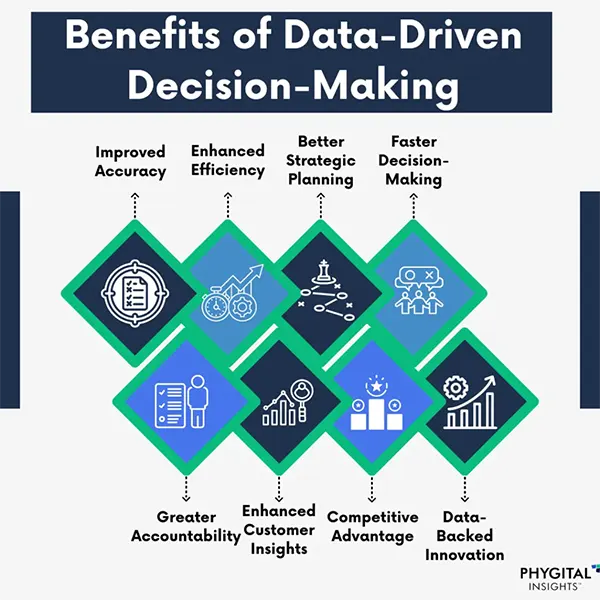
The benefits of data-driven decision-making are enormous. Some of them are listed in the following infographic:
The Quarterly Check-In
The world around us is changing every minute, so are your finances. Income changes, priorities shift, and unexpected expenses pop up anytime. A data-driven strategy isn’t about setting a plan and forgetting it. It requires regular maintenance. Think of it as a captain checking their navigation instruments. You need to make sure you haven’t drifted off course due to currents or winds you didn’t anticipate.
- Compare actuals to your plan: How did your actual spending over the last three months stack up against the budget you created? Don’t be judgmental if you’re over in some categories. Just be curious. Why did it happen? Was it a one-off event (like a birthday) or a permanent shift in your habits?
- Recalibrate your categories: Maybe you realize you consistently underspend in your “groceries” category and overspend in “entertainment.” Adjust the budget to reflect reality. An unrealistic budget is a budget destined to be abandoned.
- Celebrate your data wins: Did you manage to stick to your dining-out budget for three months? Did you contribute more to your savings than planned? Acknowledge that success! Positive reinforcement is crucial for long-term habit change.

Leveraging Tech for Smarter Decisions
Technology has integrated with finances so closely that an entirely new industry has emerged, FinTech. This is your co-pilot, automating the tedious parts of information gathering and providing insights you might miss.
The key is to use technology as an enhancement, not a replacement, for your own awareness. The apps should serve you, not the other way around.
- Round-up savings apps: Apps like Acorns or Qapital round up your everyday purchases to the nearest dollar and invest the difference. It’s a painless way to save based on your actual spending data.
- Bill negotiators: Services like Rocket Money or Trim can analyze your recurring bills and even negotiate with providers (like cable or internet companies) to lower your rates, putting data to work, saving you money directly.
Data for Life, Not Just for Ledgers
Precise numbers paint a clear picture in front of you about your financials, so you’re not constantly worried about money and instead enjoy it.
When you know your numbers, you can say yes to a spontaneous trip because you know your savings are on track. You can walk into a dealership with real confidence, not hope.
Build a fun fund, guilt-free money for joy. Then, check if your spending matches what you actually value. If “health” matters, does your budget reflect that? The data isn’t there to restrict you; it’s there to help you build a life you love.
The point isn’t to obsess over every penny. It’s about using the numbers to remove the stress and guilt, so you can spend confidently on what you love and build a life that actually makes you happy.
All in all, money matters can put a lot of stress on an average person. But data is a great friend in your financial journey. Following data-driven strategies can alleviate all your monetary worries as you get a clear picture of your situation and a roadmap to the destination you plan to grow towards. Don’t forget to live and enjoy your money in all this serious stuff.
Leverage the data, secure the future. Best wishes!
Frequently Asked Questions
What are data-driven strategies?
Which strategy can help in achieving financial goals?
Budgeting, SMART goals, and automation are helping people achieve their financial goals. But integrating accurate data in all three can make the decisions more precise.
What is data-driven finance?
It leverages analytics and AI for finance, shifting from reactive reporting to proactive strategy.
Related Posts
White Label Ad Server vs Development From Scratch: What to Choose
Even though the DSP segment is the largest market within AdTech at the moment, an ad server remains a crucial…
How Data Infrastructure Powers Next-Gen Mobile Recognition Apps
Modern digital applications have evolved with time, offering various functionalities to users that weren’t possible or even imaginable before. But…
How Poor Contract Visibility Leads to Revenue Leakage in Growing Companies
Growth is an important factor that determines the success rate of any business. When we witness new operations, partnerships and…

Managing Bitcoin Operations? Here’s How Salesforce Automation Helps
“Digital currency is here to stay, and it’s only a matter of how long before governments embrace it.” — Brad…

Why Modern Organizations Depend on Data Privacy Software
Data growth has significantly accelerated beyond what most compliance teams can manage, with personal records, financial details, contracts, and emails…

Converting Chats Into Leads While Maintaining Professionalism
The way marketing teams and businesses approach their potential clients to boost their sales has completely transformed in the last…
How to Delete iCloud Account? Complete Guide for 2026
Thinking, how can I delete iCloud or Apple account? It is not just about removing an account; it is about…

How Different Industries Use Specialized Software to Stay Competitive
In the market we have today, companies are always trying to find ways to work better and get results. The…

What Key Adjustments Enhance Visual Appeal Across Web Pages
Attractive web pages form the roots of any appealing website. For instance, imagine looking for content on Google, and you…