
The five pillars of data security include confidentiality, integrity, availability, authenticity, and non-repudiation of user data.
From Recovery to Prevention: How AI-Based Redaction Helps Secure Sensitive Information
 Kartik Wadhwa
Updated on: Dec 05, 2025
These days, companies around the world have been mainly focused on figuring out how to bounce back from data breaches. This usually meant letting customers know what happened, fixing their systems, paying fines, and trying to rebuild trust after the fact.
But since cyber threats are always lurking, just recovering isn’t enough anymore. So, what’s the game plan? It’s all about prevention now. More specifically, we’re talking about AI-based redaction.
This cool tech automatically spots and removes sensitive info before it can fall into the wrong hands. In this blog post, we will understand how it protects data, especially as more documents get digitized and turned into PDFs for easy storage and sharing.
Let’s begin!
Key Takeaways
- Decoding the AI-assisted redaction
- Looking at the recovery to prevention policies
- Uncovering how it assists in securing sensitive information
- Exploring some beyond benefits
The “What” of AI-Assisted Redaction
Redaction is the process of removing or masking sensitive information from documents, images, videos, or audio recordings. As a rule, users did it manually. It was pretty slow, expensive, and full of errors in most cases. When AI-based redaction became part of the process, it was machine learning and natural language processing that automatically identified and removed sensitive data, such as:
- Personal Identifiable Information.
- Financial data (credit cards, bank numbers).
- Health records (HIPAA-protected data).
- Legal and confidential business data.
- Faces, license plates, and voices in videos.
As more and more paper records are scanned and converted to PDF, an ai redaction tool by PDFized helps ensure that sensitive information inside every file is 100% protected just as securely as data in modern systems.
Interesting Facts
AI-powered tools often achieve high detection accuracy, with some vendors claiming 98% to 99.97% accuracy for identifying sensitive information.
From Recovery to Prevention?
The cyber information niche experienced a significant shift. Previously, organizations focused on resolving breaches, providing identity theft protection, paying regulatory fines, and so on. While recovery is still necessary, it’s just too expensive and damaging. If you shift to AI-based redaction, you will adopt a proactive protection strategy. The result? The chance that sensitive data will be leaked or stolen is lower, so you can have peace of mind.
How AI-Based Redaction Assists in Securing Sensitive Information
Having become part of the cyber routine, artificial intelligence helps safeguard sensitive information with greater speed and accuracy in many ways we’re about to discuss below:
It prevents human errors
You know now that manual redaction is one of the biggest causes of data being exposed accidentally. For instance, if you miss a single name, number, or face, chances are you will face a serious breach. When it comes to AI-based redaction, you have a great opportunity to:
- Scan megazillions of files in minutes.
- Apply consistent redaction rules.
- Stay away from making mistakes because you’re too tired.
- Works 24/7 without getting hungry or sleepy.
This is especially important for organizations that have to process large volumes of documents that have been scanned and PDFized from paper archives.
It protects data before you share it with anyone else
If you are among those who have accidentally sent files to third-party vendors (who were not supposed to receive them, of course), you will enjoy this section. Just like those who uploaded something to cloud platforms and then went, “Oops!”
Oh, and don’t forget about submitting public records requests or sharing with partners or researchers when it wasn’t planned at all. When you have artificial intelligence as your companion for redaction, you know that all sensitive data is removed before sharing, not after damage is done. Thus, no leaks during everyday business operations happen.
AI helps meet compliance automatically
All over the globe, data protection laws are becoming stricter, including things like GDPR, HIPAA, PCI-DSS, and CCPA. But the good news is that you can train the chosen AI redaction instruments to make sure they can automatically recognize regulated data and apply redaction rules based on legal requirements.
Finally, they’ll create audit trails showing compliance actions. This is especially crucial for organizations that have to manage large chunks of PDFized contracts, medical records, and legal files under strict regulatory oversight.
It secures unstructured data (the biggest risk area)
Unfortunately, most sensitive data doesn’t live in properly organized secure databases. You can find it in emails, PDFs, scanned forms, chat logs, video recordings, and so on.
AI helps to scan and analyze unstructured data in order to find sensitive content even when there is no consistent formatting, and this or that document is scanned or handwritten. Plus, it helps when all the data is hidden inside large, PDFized files. While conventional security tools struggle, AI redaction saves the day.
It helps protect visual and audio data
Gone are the days when security was about text only. Today, companies have to juggle tons of video and audio files. That is when AI-based redaction comes in handy because it can automatically blur faces in videos, camouflage license plates, remove names from ID cards, as well as mute or alter voices in audio recordings.
These options play a crucial part in body cam footage, surveillance video, court evidence, medical video records, training datasets, and so on. They allow organizations to share visual media safely without exposing private identities.
It reduces the consequences of a breach even if systems are compromised
If you think that your system is completely hack-proof, we have bad news for you. It’s not. If attackers break into a network where your files are already redacted, the damage won’t be that grandiose.
In other words, hackers won’t steal full identities, financial records, or medical histories. They may only get access to sanitized, low-value data. Thus, you won’t have to deal with catastrophic breaches but just manageable incidents.
More Benefits? Sure!
The best part about AI-based redaction is that its benefits go far beyond security. These instruments do not just improve protection. They also deliver strong business value:
- Faster document processing.
- Lower costs that are needed for compliance.
- Reduced legal exposure.
- More and more trust from clients.
- Stronger data governance.
For many organizations, redaction has stopped being just a security task. It turned into a foundation for secure growth and innovation.
The Future? Preventive Security!
As cyber threats continue to grow and data privacy rules become stricter, organizations can no longer depend only on fixing problems after they happen. To cut a long story short, prevention should become part of the routine.
AI-based redaction helps make this possible by automatically protecting sensitive information before it can be misused, leaked, or stolen. Wherever your data is stored, emails, PDFs, or any other files, AI-powered redaction ensures your sensitive information remains secure while your business grows.
Frequently Asked Questions
What are the 5 pillars of data security?
What are the statistics for data privacy?
85% of global adults want to do more to protect their online privacy.
What are the 4 basic of security?
The four basic principles of security are access, authentication, authorization, and accounting.
Related Posts

How to Check for Malware on Mac in 2026?
Can Mac computers get viruses? Macs are not as safe as people think. Yes, macOS has built-in tools like XProtect…
10 Best Lightroom Preset Alternatives in 2026
“Photography is the story I fail to put into words.” — Destin Sparks (Landscape Photographer) For years, Lightroom presets have…
Elementor Hosting vs SiteGround: Which is Faster in 2026?
A website’s performance is mainly determined by its Speed. Even a slight delay can reduce conversions by a significant margin.…
10 Best Visual UGC Platforms for eCommerce Brands in 2026
“People influence people. Nothing influences people more than a recommendation from a trusted friend.” — Mark Zuckerberg (Meta CEO) That…

The Data Models Powering the Next Creative Revolution in Video Generation
Artificial intelligence has evolved from a mere tool to the cornerstone of advancements in the new era. Over the years,…
Solar Software Companies: How Platforms Improve Cross Team Collaboration
“If everyone is moving forward together, then success takes care of itself.” — Henry Ford (Industrialist & Business Magnate) Handoffs…
What Healthcare Leaders Expect From Digital Tools
Healthcare executives are under pressure to protect patient safety, clinician time, and data privacy while modernizing the delivery of care.…

How to Reset Android Phone When Locked? (Safe Factory Reset Methods)
Locked out of your Android phone or stuck on the screen? It happens more than you think. A forgotten PIN,…
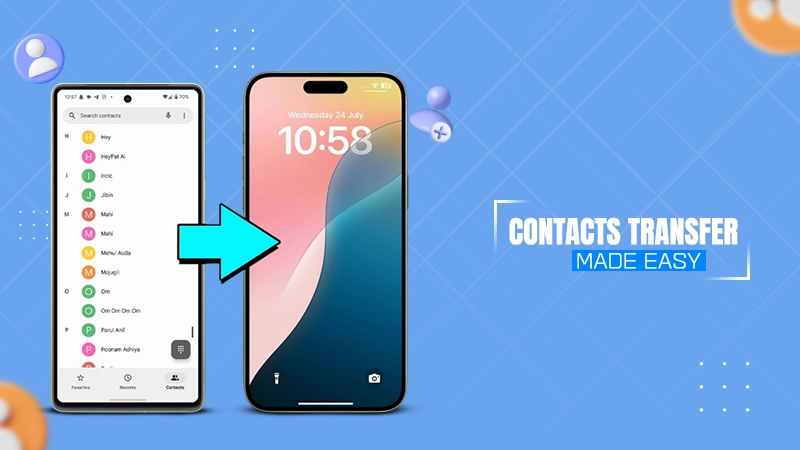
How to Transfer Contacts from Android to iPhone: 4 Easy Methods
Switching from Android to iPhone should not feel like rebuilding your life from scratch. Restoring contacts on iPhone should be…