
Phishing, ransomware, supply chain attacks, and insider threats are common ones.
Protecting Company Data from Downtime and Cyber Threats
 Kartik Wadhwa
Updated on: Jan 27, 2026
Many people may hear the term ‘data protection’ and immediately switch off, thinking it is overly technical, costly, and a little boring. But factually speaking, your data protection is akin to the physical locks on the entrance to your office, the coverage you take out on your property, and the backup power source you have on hand.
Consider it as both figuratively and literally keeping everything functioning smoothly. For every business in today’s world, data is more than just some files; data represents the one thing companies will look for when they want to know how their company operates.
It encompasses your money-making and the foundation you use to provide customers with quality services. With downtime and cyberattacks constantly threatening a business, protecting your data from both types of threats has gone from being merely a need within the realm of IT departments.
KEY TAKEAWAYS
- Cyber threats, ransomware, and data breaches lead to the high cost of complacency.
- Build your digital fortress using a human firewall, a partnership, and the implementation of a backup rule.
- Consider a proactive monitoring and incident response playbook to cultivate a culture of security.

The High Cost of Complacency
First, let’s talk about what is at stake. Downtime, whether from a natural disaster, a hardware failure, or a malicious attack, is a silent profit killer. This is not just the hours you can’t serve customers. Mark, it’s the eroded confidence, the frantic overtime to recover, and the permanent loss of data that can set you back years.
- Cyber Threats: They have evolved from pesky viruses to complex, targeted schemes.
- Ransomware: It doesn’t just encrypt your files; it holds your entire business hostage.
- Data Breach: A data breach does more than leak information; it shatters the hard-earned trust of your clients and can lead to staggering regulatory fines.
The cost of reacting to these incidents without fail is always exponentially higher than the cost of preventing them.
Building Your Digital Fortress
So, how do we move from hesitation to action? Think of your defenses not as a single, compelling wall, but as concentric rings of security, each adding a crucial layer of resilience.
The Human Firewall
This is your first and most fundamental layer. Your team can be your greatest vulnerability or your strongest asset. Regular, engaging training on using strong passwords, spotting phishing emails, and following safe data practices is non-negotiable. Make security awareness part of your company culture, not an annual checkbox.
Partnering for Peace of Mind
For many businesses, particularly those without a massive in-house IT team, navigating this landscape alone is overwhelming. This is where specialized partners can be a game-changer. Working with a service firm like Zia Networks, for instance, can help you build a resilient foundation.
They offer the full-service expertise to assess your risks, enforce robust data security protocols, implement scalable solutions that grow with you, and ultimately ensure that your technology boosts productivity instead of hindering it. It’s about utilizing expert help to shoulder the technical burden.
The Unbreakable Backup Rule
If your data only lives in one place, it does not really live at all. The 3-2-1 backup rule is your data’s lifesaver. Just keep at least 3 total copies of your data, on 2 different types of media (like an external drive and the cloud), with 1 copy stored off-site.
Additionally, test your backups regularly. A backup you haven’t tested is just a hopeful guess.
Proactive Monitoring
You wouldn’t leave your residential office unlocked at night. Why leave your digital doors unmonitored? Proactive, 24/7 network tracking acts like a neighborhood watch for your data.
It uses tools and expertise to perpetually look for unusual activity. Then you face a sudden spike in data traffic, a login from a strange country, or malware trying to call home.
Catching a threat in its early stages can mean the difference between a harmless alert and a catastrophic breach. This isn’t about paranoia; it’s about vigilance.
The Incident Response Playbook
Hope for the best, but plan for the worst. Every company needs a clear, written Incident Response Plan (IRP). This is your pre-game technique for when things go wrong. It answers the critical questions in a calm moment, so you do not have to during a crisis:
- Who is on the response team? Is it legal, PR, IT, or leadership?
- What are the immediate steps to contain the damage? It may be an isolated system; switch to backups.
- How and when do we communicate with staff, customers, and authorities?
- How do we recover and restore operations?
Practicing this plan with tabletop exercises ensures that if the alarm sounds, your team moves from outrage to a coordinated, effective response.

Cultivating a Culture of Security
Finally, technology in its entirety will never be enough. True protection comes from weaving security into the fabric of your company. Leadership must approve of it.
Teams should feel comfortable reporting a suspicious email without fear of blame. Security should be considered everyone’s responsibility, allowing the business to operate with confidence, not as a set of restrictive rules that slow things down.
Protecting your company’s data from downtime and cyber threats is a lifetime journey, not a one-time project. It requires the perfect blend of people, process, and technology.
By taking practical steps with layers from empowering your employees and securing expert help to planning for disasters, you’re not just avoiding catastrophe. You’re building a more trustworthy, resilient, and ultimately, more successful business. That’s an investment that pays dividends every single day.
Frequently Asked Questions
What are the most common data threats?
What is the “3-2-1” backup rule?
Maintain at least 3 copies of your data, on 2 different media types, with 1 copy stored offsite.
What causes most system downtime?
70% of service outages are caused by human error, such as misconfigurations, followed by aging hardware and software failures.
Related Posts

8 Best AI Presentation Makers for Business-Ready Slides
Making a presentation doesn’t just mean designing slides. It’s about defining a clear structure, using defined logic, useful visuals, and…

Queue Management Software Troubleshooting Guide: 8 Common Faults and Fixes
The long wait times and ineffective management of customer queues can have a significant impact on customer satisfaction and business…

How to Use Similarweb Website Traffic Data for Competitor Research
Competitor research without traffic data is guesswork. You can guess who your rivals are, guess how big they are, guess…
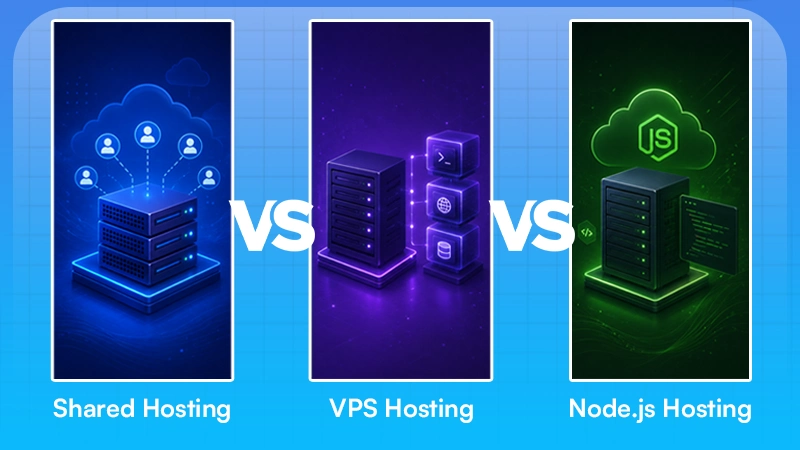
Choosing the Right Hosting Model for Scalable Digital Platforms
The performance of digital business is directly related to website speed, uptime, and scalability. Slow page performance has a negative…

How Data-Driven Performance Tools Are Transforming Employee Recognition in Tech Companies
“People work for money but go the extra mile for recognition, praise, and rewards.” — Dale Carnegie (Writer & Teacher)…

Why Businesses Struggle to Collect Reliable Data from the Web
Almost every company that depends on data runs into the same problem: although they can find the data they need,…
Why Financial Data Recovery Matters for Businesses
Financial data supports every part of a business, directly affecting cash flow, payroll, tax reports, audits, customer billing, and daily…

CMMC Compliance Is Coming for Manufacturers. Here Is What You Need to Do
“Cybersecurity is much more than a matter of IT.” — Stephane Nappo (Cybersecurity Professional) For manufacturers working within the defense…

How Data-Based Tools Influence Learning Performance
Learning has transformed in the modern age with the integration of new technologies to help students and professionals prosper in…