
It is an analytical procedure that is used for calculating how much they can realistically produce on their production lines to keep up with forecasted demand.
Innovative Approaches to Streamline Manufacturing Capacity Planning
 Saipansab Nadaf
Updated on: Nov 13, 2026
Table of Contents
- Why traditional capacity planning is not working
- Innovative technologies transforming manufacturing planning
- Strategies to maximize manufacturing capacity
- Capacity planning techniques that actually work
- Success stories
- The investment reality
- Future-proofing your capacity planning
- Summary
- Frequently Asked Questions
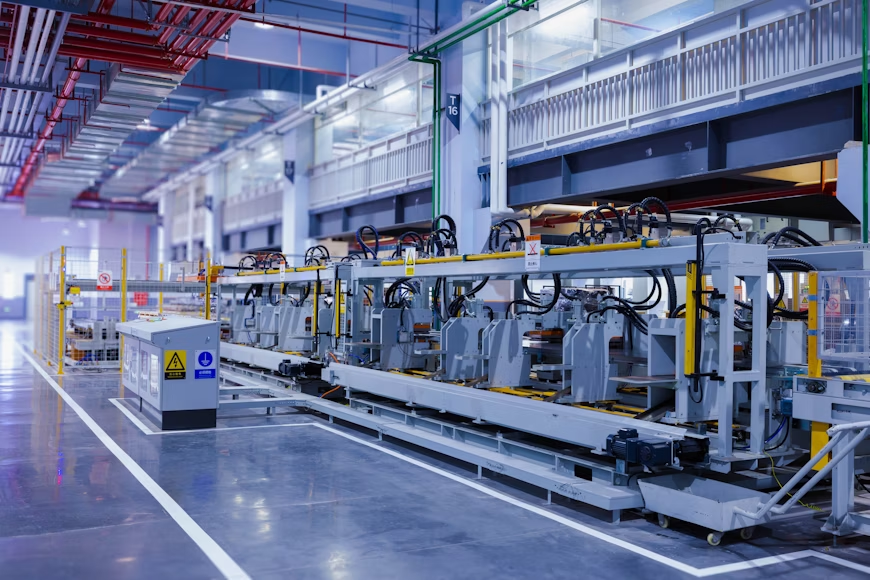
Did you know? An ideal capacity utilization rate typically ranges from 85% to 90%. Operating within this range indicates strong demand and efficient operations while also allowing for some flexibility in production scheduling. (Source)
In today’s growing era of technology, every industry and manufacturing unit owner is guessing how much capacity they have and is unable to track the actual requirement.
It’s a problem every manufacturing company faces. Make too much and you’re wasting money on excess inventory. And sometimes settling for less will lead to missing sales opportunities.
Finding the right balance is critical, that’s why in this blog post, we are going to explore more layers of this segment and provide valuable insights to the readers.
Let’s begin!
Key takeaways:
- Manufacturers that use traditional planning approaches can’t scale up to today’s complexity
- Technology is making advanced planning available to all manufacturers
- It’s a mix of better tools and smarter approaches that delivers results
- Collaboration and integration are table stakes for successful planning
Why traditional capacity planning is not working
The problem is that most manufacturers are still using old-fashioned planning methods.
What’s happening:
Manufacturing companies still depend on manual, spreadsheet-based planning and gut-feel projections. Their viewpoint towards capacity planning is outdated. They look backwards at what’s already happened instead of what’s coming.
Right now, manufacturing capacity utilization in the US is sitting at 76.8 percent – below the long-run average. That tells you everything you need to know. Most companies are not utilizing their production capabilities to their full potential.
The ones that are are the ones who get it. Those companies know that effective planning uses the right manufacturing capacity planning software to give them real-time data and visibility. When you choose the right capacity planning software you’re on the right track to long-term success.
But traditional methods have some other serious issues too:
- They can’t cope with complex modern supply chains
- They’re too slow to react
- They don’t integrate well across business functions
- They ignore external factors like supplier capacity and market shifts
So smart manufacturers are turning to new, innovative approaches.
Interesting Facts
The use of advanced software, such as Enterprise Resource Planning (ERP), Manufacturing Execution Systems (MES), and Advanced Planning and Scheduling (APS) systems, is becoming standard practice.
Innovative technologies transforming manufacturing planning
One of the best parts of manufacturing right now is all the new technology coming online.
AI, real-time data, cloud computing – all of these advanced techs are being applied to capacity planning. Companies that start now will be way ahead of the competition.
Artificial intelligence and machine learning
Artificial intelligence (AI) and machine learning (ML) are complete game-changers.
AI systems can analyze masses of data from internal operations, market conditions, suppliers, and even economic forecasts. They can foster a more precise and predictive capacity plan than humans.
AI is able to predict customer demand, supplier lead times, machine efficiency, and other variables. The result is planning that anticipates events instead of just reacting.
Real-time data analytics
Capacity planning no longer means weekly or monthly cycles.
The new generation of manufacturers are using real-time data to dynamically adjust their capacity plans on the fly. Sensors, IoT devices, and other connected technology provide a constant feed of operational data.
Real-time data analytics allow manufacturers to make adjustments to capacity before issues even arise.
Cloud-based planning software
Cloud computing has opened up enterprise-level planning power to small and medium-sized manufacturers.
Another serious reason of 52% of companies increased their spend on supply chain tech in the past year.
Cloud platforms provide more scalability, accessibility, and seamless integrations than traditional on-premise systems. Many leading cloud-based capacity planning platforms are now available.
Strategies to maximize manufacturing capacity
The real revolution in capacity planning is happening at a strategic level.
The best manufacturers aren’t just using better technology. They’re approaching capacity planning in a whole new way.
Dynamic capacity modeling
Old-school capacity planning presumes your capacity is fixed.
Smart manufacturers know that’s not the case. Capacity can be modeled and shifted in a lot of ways. Flexible workforce, versatile equipment, shift optimization, outsourcing – there are many variables.
Dynamic modeling takes these factors into account to create a more agile capacity plan.
Scenario-based planning
The manufacturers who are getting this right create many possible scenarios.
They model questions like “what if demand is 20% higher?” “what if our main supplier can’t meet demand?” “what if we launch that new product line early?”.
Planning for different scenarios can make you far more agile when something actually happens.
Collaborative planning
The best capacity plans aren’t made by a single department in a silo.
Capacity is an organization-wide concern and smart manufacturers recognize that. Sales teams, operations, procurement, finance – all should be involved in planning. Market insights, production constraints, supplier issues, profitability – all that info should be shared.
Manufacturers that use this holistic approach are able to create capacity plans that are more realistic.
Capacity planning techniques that actually work
If you’re ready to go deeper, check out these advanced techniques.
Leading manufacturers are applying these capacity planning methods and getting real results.
Demand sensing
Traditional demand planning is all about looking at historical sales data.
Demand sensing instead looks at current market conditions. Point-of-sale data, social media, economic data, industry news, competitor activity – all can be used.
Demand sensing gives you a much more accurate idea of what your demand will actually be.
Constraint-based planning
Countless operation has capacity constraints. These are the bottlenecks that ultimately determine your maximum output.
Constraint-based planning (CBP) helps manufacturers identify their capacity constraints and plan for them. The process:
- Identify the constraint
- Exploit the constraint
- Subordinate everything else
- Elevate the constraint
- Repeat
Integrated business planning
The most advanced companies don’t do capacity planning in a vacuum.
The most successful capacity planners are the ones that integrate capacity planning with other planning and business processes:
- Strategic Planning
- Financial Planning
- Sales Planning
- Operations Planning
Alignment between capacity planning and other processes is a big competitive advantage.
Success stories
Let’s take a look at some real examples of innovative manufacturers using these strategies.
A global automotive manufacturer implemented an AI-driven capacity planning approach. They saw a 15% increase in equipment effectiveness, a 20% decrease in inventory costs, and a 30% improvement in delivery performance.
A consumer goods company started doing collaborative planning sessions. They increased forecast accuracy by 25% and reduced stockouts by 40%.
A mid-sized manufacturer put in place a cloud-based planning solution integrated with ERP. Planning time was cut from weeks to days. And they improved capacity utilization by 35%. This shows how integrating modern ERP systems can drive measurable efficiency gains across production and planning processes. To achieve similar results, many companies rely on a top-rated manufacturing ERP like MRPeasy, which streamlines production workflows, improves visibility, and ensures accurate capacity forecasting through integrated planning tools.
The investment reality
The reality is…
Manufacturing companies do have to make an investment to put these kinds of innovative capacity planning approaches in place. 78% of manufacturers have implemented or are planning to do so when it comes to supply chain planning software.
It becomes very crucial to focus on the cost of not making this investment is far higher. Companies that stick with the status quo are left behind.
The good news is you don’t have to do it all at once. Pick one area and start there.
Future-proofing your capacity planning
Manufacturing is a changing industry.
Competitive pressures, tech advances, market shifts, globalization, and sustainability concerns – these all create challenges and opportunities.
In many modern facilities, a USB3 camera is also used in real-time data acquisition systems, capturing high-speed visual information from production lines to support monitoring, inspection, and accurate capacity planning.
Production capacity is forecasted to grow 4% in 2025, which will ramp up competition for market share. The companies who win will be the ones who have the most agile capacity planning.
Future innovations that will continue this revolution include:
- Digital twins
- Autonomous planning
- Ecosystem capacity integration
Begin preparing for these now and you’ll be leaps and bounds ahead.
Summary
Advanced capacity planning in manufacturing isn’t just about fancy software. It’s about rethinking how you approach this critical business function.
The winning manufacturers today have moved beyond spreadsheets and guesswork. They use technology, collaboration, and smart planning approaches to create capacity plans that actually work.
Manufacturing is constantly changing. Companies that use innovative manufacturing capacity planning methods will succeed. The ones that don’t will fall behind.
Innovate your capacity planning or be left behind. The choice is yours.
Frequently Asked Questions
What is capacity planning in manufacturing?
What are the factors influencing capacity planning?
Factors affecting capacity planning include demand fluctuations and forecasting, economic conditions, and the availability and cost of resources like labor, equipment, and finance.
What are the three ways in which manufacturing capacity can be viewed?
Design capacity, effective capacity, and actual output are the three ways to evaluate this criterion.
Related Posts
Why Pentesting Is a Core Part of Modern DevSecOps
Software is shipped continuously, attackers are getting faster, and simple application scanning does not catch design flaws or chained exploits.…
Advanced AI Trends Shaping the 21st Century
Artificial Intelligence (AI) is no longer a concept of the future; it is a game-changer today. Whether it is the…

8 Best AI Presentation Makers for Business-Ready Slides
Making a presentation doesn’t just mean designing slides. It’s about defining a clear structure, using defined logic, useful visuals, and…

Queue Management Software Troubleshooting Guide: 8 Common Faults and Fixes
The long wait times and ineffective management of customer queues can have a significant impact on customer satisfaction and business…

How to Use Similarweb Website Traffic Data for Competitor Research
Competitor research without traffic data is guesswork. You can guess who your rivals are, guess how big they are, guess…

Choosing the Right Hosting Model for Scalable Digital Platforms
The performance of digital business is directly related to website speed, uptime, and scalability. Slow page performance has a negative…

How Data-Driven Performance Tools Are Transforming Employee Recognition in Tech Companies
“People work for money but go the extra mile for recognition, praise, and rewards.” — Dale Carnegie (Writer & Teacher)…

Why Businesses Struggle to Collect Reliable Data from the Web
Almost every company that depends on data runs into the same problem: although they can find the data they need,…
Why Financial Data Recovery Matters for Businesses
Financial data supports every part of a business, directly affecting cash flow, payroll, tax reports, audits, customer billing, and daily…