
They are reward systems that employ user information to provide personal incentives.
What Are Data-Driven Rewards? How Credit Card Rewards and Loyalty Points Work in Fintech
 Reviewed By Brijesh Kumar Singh
  Mahima Dave
Updated on: Feb 25, 2026
Table of Contents
- Understanding Data-Driven Rewards in Modern Fintech
- How Credit Card Reward Systems Work
- Role of Data Analytics in Personalizing Rewards
- Types of Loyalty Programs Used by Fintech Platforms
- Benefits of Data-Driven Rewards for Businesses and Customers
- Challenges in Managing Reward Data and User Privacy
- Final Considerations
- Frequently Asked Questions
You use your card to get a cup of coffee, and somehow, the small amounts that you spend on the coffee turn into points, cashback, or even a free flight several months later. It is easy on the surface. There is a complicated web of monitoring, analysis, and predicting your behavior behind that one tap.
Actually, it has been found that 80 percent of customers are more likely to remain loyal to a brand that provides personalized rewards, and fintech is doubling down on this by converting raw transaction data into highly targeted rewards. It is no longer about loyalty, but data-driven engagement.
This is the world of data-driven rewards, where each purchase, preference, and pattern is fed into a system that is meant to keep you coming back, as businesses become smarter, faster, and more efficient.
In this post, we will break down how it all works.
Key Takeaways
- User behavior is used in data-driven rewards to personalize incentives.
- Rewards with credit cards are based on transaction tracking and APIs.
- Individualization enhances customer loyalty and interaction.
- There are several kinds of loyalty programs on Fintech platforms.
- One of the biggest issues in reward systems is data privacy.
Understanding Data-Driven Rewards in Modern Fintech
The use of customer information to power reward systems is what data-driven rewards refer to. Rather than providing generic points/cashback, modern fintech applications examine spending habits, purchase frequency, preferred categories, and location-based behavior. This enables them to develop dynamic reward structures that are user-centric.
For example, a frequent flier could receive airline miles, a food lover may receive restaurant cashback, or a customer can receive shopping deals. The major difference? Traditional rewards are static, and rewards based on data change as the user evolves.
It is this change that makes fintech platforms more intuitive and more addictive.
How Credit Card Reward Systems Work
The most basic notion of any reward system is that you spend money, and you get value back. Still, the mechanisms behind it are much more complicated.
A simplified breakdown of this is as follows:
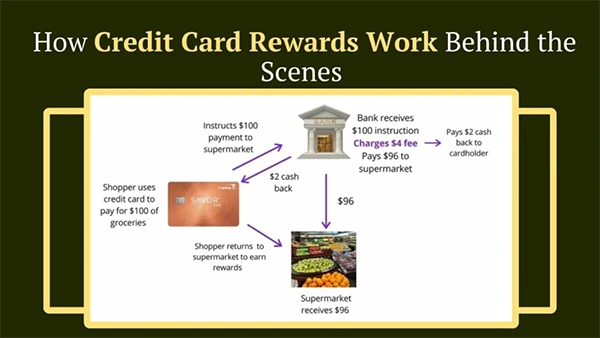
- Transaction Tracking: Every time you use your card, the system records the amount sent, merchant category, location, and time.
- Reward Calculation: Points or cashback are allocated according to present regulations. For example: 5% cashback on dining, 2X points on travel, and on all other purchases, 1% is charged.
- API Integration: Here is where the magic scales. Platforms support functionality such as best rewards program api to automate reward calculations, replicate the data between systems, and allow real-time reward updates.
- Redemption System: Reward redemption can then be done by the users for discounts, gift cards, travel bookings, and statement credits.
What appears instantaneous to the user is a highly coordinated system operating in milliseconds.
To further explain, the infographic below shows what goes on behind the scenes and how credit card rewards work.
Role of Data Analytics in Personalizing Rewards
It is data analytics that will take ordinary rewards and make them personalized. Fintech platforms categorize customers according to their behavior and preferences as opposed to treating every user equally. They analyze trends of expenditure, seasonal habits, category preferences, and engagement levels.
Based on this information, systems can recommend relevant offers, reward value in favorable categories should be increased adn send timely notifications. As an example, when you order food every weekend, you can get: “Recieve 10% cash on dining tomorrow, Saturday.” This degree of individualization boosts engagement, conversion rates, and customer satisfaction. And the best of all, it makes rewards seem like they are made with you in mind.
Types of Loyalty Programs Used by Fintech Platforms
Different loyalty programs are applied to different user behaviors in fintech platforms.
- Transaction-Based: The most widespread ones are: earn points with every purchase, cash back on spending. These are easy, foreseeable, and commonplace.
- Behavior-Based: These are reward actions out of expenditure:
Entering the app, referring friends, and completing profile details.
They are interested in more user interaction, not only transactions.
- Partner Rewards: These include brand alliances. Discount on partner platforms, exclusive deals, and cross-platform benefits. They increase the ecosystem of rewards and add greater value to users.
FUN FACT
Modern loyalty programs are shifting toward sustainability, offering higher rewards for spending on eco-friendly products or donating points to charity.
Benefits of Data-Driven Rewards for Businesses and Customers
Rewards that are based on data generate a win-win. For businesses, they bring:
- Higher customer retention
- Better user insights
- Increased transaction volume
- More effective marketing
On the other side, for customers:
- Relevant and personal rewards
- Economy of the noise
- Enhanced user experience
Users receive the reward in the form that actually corresponds to their lifestyle rather than generic motivators, which makes them more likely to remain loyal.
Challenges in Managing Reward Data and User Privacy
Although data-driven rewards are effective, they have their challenges. The biggest one? Data privacy.
The gathering and evaluation of user data are of concern to: How data is stored, who has access, and how it is used.
Laws like GDPR and other privacy protection regulations demand transparency and the safety of businesses.
Other challenges include:
- Dealing with huge amounts of data
- Ensuring system accuracy
- Eliminating fraud and abuse
Otherwise, the very information on which rewards are built will become a liability.
Final Considerations
Rewards based on data are transforming the interactions of the fintech platforms with users. The cashback systems have become sophisticated, data-driven, and personalized systems that are not merely cashback systems anymore.
To businesses, it is a growth and retention tool.
To the customers, it is a smarter and more rewarding experience.
With much data comes much responsibility. The future of rewards will not only be determined by the quality of data usage on the platforms, but also by the quality os the responsible use of data. Since the best money in the end is not points or cashback, it’s trust.
Frequently Asked Questions
What are data-driven rewards?
How do credit card rewards work?
They also monitor transactions and award points or cashback depending on patterns of spending.
What is the significance of APIs in reward systems?
They are, and only under the condition that platforms implement good data protection and privacy practices.
Are evidence-based incentives secure?
They are, and only under the condition that platforms implement good data protection and privacy practices.
Can personalized rewards increase engagement at all?
Yes, the users will tend to engage more with offers that suit them.
Related Posts
8 Best AI Presentation Makers for Business-Ready Slides
Making a presentation doesn’t just mean designing slides. It’s about defining a clear structure, using defined logic, useful visuals, and…

Queue Management Software Troubleshooting Guide: 8 Common Faults and Fixes
The long wait times and ineffective management of customer queues can have a significant impact on customer satisfaction and business…
How to Use Similarweb Website Traffic Data for Competitor Research
Competitor research without traffic data is guesswork. You can guess who your rivals are, guess how big they are, guess…
Choosing the Right Hosting Model for Scalable Digital Platforms
The performance of digital business is directly related to website speed, uptime, and scalability. Slow page performance has a negative…

How Data-Driven Performance Tools Are Transforming Employee Recognition in Tech Companies
“People work for money but go the extra mile for recognition, praise, and rewards.” — Dale Carnegie (Writer & Teacher)…

Why Businesses Struggle to Collect Reliable Data from the Web
Almost every company that depends on data runs into the same problem: although they can find the data they need,…
Why Financial Data Recovery Matters for Businesses
Financial data supports every part of a business, directly affecting cash flow, payroll, tax reports, audits, customer billing, and daily…

CMMC Compliance Is Coming for Manufacturers. Here Is What You Need to Do
“Cybersecurity is much more than a matter of IT.” — Stephane Nappo (Cybersecurity Professional) For manufacturers working within the defense…

How Data-Based Tools Influence Learning Performance
Learning has transformed in the modern age with the integration of new technologies to help students and professionals prosper in…