
No, SPVs are often used by large companies, but they can be used by start-ups and other mid-sized businesses for specific projects, investments, or partnerships.
Special Purpose Vehicles (SPV) Setup Guide: Costs, Financial Data Risks, and Legal Compliance
 Saipansab Nadaf
Updated on: Feb 28, 2026
Table of Contents
- What Is a Special Purpose Vehicle (SPV)
- Key Benefits of Setting Up an SPV for Business Operations
- Step-by-Step Process to Set Up an SPV
- Cost Breakdown Involved in SPV Formation
- Financial Data Risks Associated with SPVs
- Legal and Regulatory Compliance Requirements for SPVs
- Conclusion
- Frequently Asked Questions
Picture this: you launch a high stakes business project worth crores, and get multiple investors on-board. Everything looks promising; this business will surely make it big!
Until one part of the project fails, suddenly, the financial risk starts spilling into your entire business. This is exactly where Special Purpose Vehicle (SPV) can fit into the picture.
SPVs are like a strategic necessity for businesses today and that is why over 60% of large-scale infrastructure and project finance deals globally are structured using SPVs.
However, every coin has two sides. SPVs offer a clear advantage in risk isolation and capital structuring, but they also come with their own set of complexities. And in this guide, we’ll discuss exactly that. Continue reading to learn how SPVs work, the real cost involved, the risks you need to watch out for, and how to stay compliant.
Key Takeaways
- SPVs are separate legal entities designed to isolate risk and manage specific business purposes.
- They provide strong advantages in asset protection, investment structuring, and financial flexibility.
- Setting up an SPV involves legal, financial, and compliance steps that must be carefully managed.
- Costs include registration, legal fees, and ongoing compliance expenses.
What Is a Special Purpose Vehicle (SPV)
A Special Purpose Vehicle (SPV) is a company established by a parent company for a particular and specific purpose. This may encompass project management, asset management, securitization of loans, and investments.
An SPV’s main characteristic is that it is legally distinct from its parent company. This means that its assets, liabilities, and financial commitments are separate, which limits its exposure. Typically, the SPVs are organized as Limited Liability Companies (LLCs), Trusts, Partnerships, and corporations.
In the case of real estate, for instance, the company can establish an SPV for one project in real estate. In the event that the parent company’s other assets are involved in financial difficulty in that project, they will be safe.
FUN FACT
Despite the name “Vehicle,” it is not a physical vehicle; it is a legal entity like a Limited Liability Company (LLC), trust, or partnership.
Key Benefits of Setting Up an SPV for Business Operations
The advantages of an SPV for business operations are quite significant. The benefits of establishing an SPV for business operations are quite outstanding. However, SPVs are not merely a legal structure; they are a tool that can heighten financial efficiency and clarity.
Risk Isolation and Asset Protection
One of the most significant benefits of an SPV is that it helps keep risks separated. Cheating a separate entity allows businesses to isolate certain assets or projects from the risks they may encounter to protect the parent company.
This is particularly helpful in industries like infrastructure, aviation, or large-scale technology projects where risk is a factor. In the unfortunate event of liabilities occurring, they are isolated in the SPV and do not affect the overall business.
In addition, SPVs provide protection for investors in that they ensure that their investments are not spread across the organization, but are dedicated to a specific project.
Financial Structuring and Investment Opportunities
SPVs make it easier to attract investors by offering a clean, focused investment vehicle. The investor can easily track where his money is going and how he will make returns. They can help businesses:
- Fundraise without impacting the parent company’s balance sheet.
- Optimize debt in a better manner
- Enable joint ventures and partnerships
- Support the securitisation of assets
In short, SPVs provide flexibility in financing and growth management for businesses.
Step-by-Step Process to Set Up an SPV
Creating an SPV is a process that requires several steps, legal, financial, and operational. The general outline is the same, though the process can differ from jurisdiction to jurisdiction.
- Step 1: Define the Purpose: Specify the purpose of the SPV (whether project financing, investment structuring, or asset holding). All decisions will be made with this purpose in mind.
- Step 2: Choose the Jurisdiction: Choose a jurisdiction for tax advantage, regulatory climate, and compliance. Certain areas are more SPV-friendly because of the positive policies.
- Step 3: Select the Legal Structure: Determine the form of the SPV: LLC, corporation, or partnership. This impacts liability, taxation, and governance.
- Step 4: Register the Entity: Finalize the legal registration, documentation, approval, and licensing procedures. Businesses operating in international financial hubs may also explore DIFC prescribed company formation options to simplify structured investment and asset management setups.
- Step 5: Establish Governance and Management: Set up management staff and rules of operation. Legal separation from the parent company is essential and will be maintained through proper governance.
- Step 6: Open Financial Accounts and Capitalize the SPV: Establish banking accounts, a budget, and financial tracking systems.
- Step 7: Ensure Compliance and Reporting Systems: From the start, establish accounting, auditing, and compliance systems to prevent problems with the regulators later down the line.
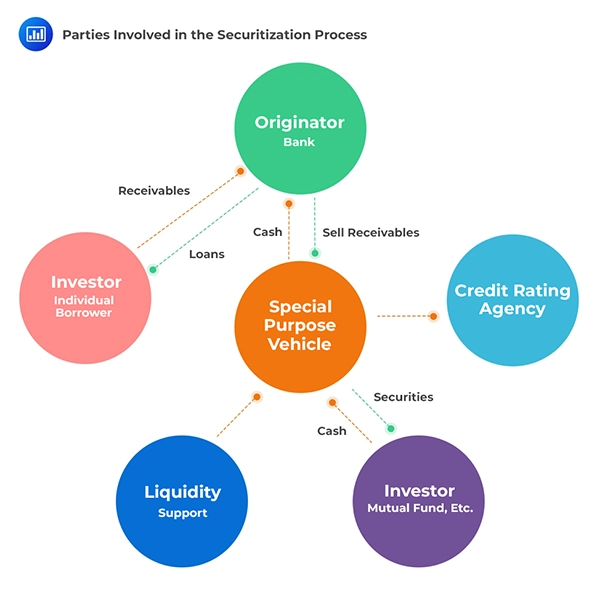
INTRIGUING INSIGHTS
The infographic below shows the parties involved in SPV. Take a look for a better understanding
Cost Breakdown Involved in SPV Formation
The cost of setting up an SPV can differ depending on the location, complexity, and legal structure. So, businesses should plan for the following key expenses.
- Registration Fees: These include government fees for the incorporation of the company. These costs vary from fairly low in jurisdictions that are more business-friendly to much higher in markets that are more regulated.
- Legal Costs: The legal professionals play an essential role in drafting agreements, structuring the entity, and ensuring adherence. This is typically one of the highest initial costs, particularly in the case of more complex SPVs with multiple stakeholders.
- Ongoing Compliance Expenses: Constantly, SPVs need to be maintained, and this would include annual filings, audits, tax reporting, and regulatory compliance.
Failure to comply can result in fines or termination of the entity.
Financial Data Risks Associated with SPVs
SPVs provide structural advantages but raise certain risks with data, and finances as well, which businesses need to address. Fragmentation is one of the big dangers. Financial data can be distributed across several systems due to SPVs running as separate entities, which makes it difficult to keep visibility and control.
A second worry is the lack of transparency. Inadequate governance may result in incomplete or improper financial reporting, potentially causing investor confidence to be lost and attracting regulatory focus.
There are additional cybersecurity threats as well. SPVs that process sensitive financial information are highly appealing targets for cyber attacks, particularly when they don’t have strong security protection in place.
Also, there are third-party dependencies (outside auditors, legal advisers, and service providers) that can introduce vulnerabilities when data sharing is not adequately secured. Businesses need to establish robust data governance policies and secure financial systems from the start to alleviate these risks.
Legal and Regulatory Compliance Requirements for SPVs
One of the most important aspects of running an SPV is compliance. Regulatory requirements are stricter due to the fact that SPVs are frequently involved in high-dollar financial transactions.
Some key compliance requirements are:
- Transparency and Up-to-Date Financial Reporting: Keeping accurate and up-to-date financial records.
- Tax Compliance: Filing returns and complying with the tax laws of the selected jurisdiction.
- Corporate Governance: Proper board composition and governance processes.
- Audit Requirements: Regular audits to ensure that financial statements are accurate.
- Regulatory Filings: Making required disclosures to regulatory bodies and ensuring the SPV is properly register with a corporate authority to maintain legal standing and operational transparency.
Non-compliance with these requirements may lead to penalties, legal action, or damage to the reputation. Businesses should also make sure that the SPV is not so intertwined with the parent company that it compromises its legal safety.
Conclusion
Special-purpose vehicles can be a potent risk management and investment vehicle and tool to create business development. They offer good financial separation, draw investors, and improve efficiency when properly assembled.
There are, of course, some barriers to them, though. The creation and maintenance of SPVs require careful planning and management due to a variety of factors, such as setup costs, compliance, data security risks, etc.
With a strategic approach to SPV formation, balancing legal, financial, and technological aspects, organizations can maximize value and reduce risk.
Frequently Asked Questions
Do only large companies use an SPV?
How long will it take to establish an SPV?
This may take several days to months to complete, depending on the jurisdiction and complexity of the structure.
Are SPVs risky to operate?
They are not risky inherently, but poor governance, lack of transparency, or weak compliance can create major risks.
Can one company have multiple SPVs?
Yes, businesses often create multiple SPVs for different projects or assets to maintain clear separation and risk control.
Related Posts

8 Best AI Presentation Makers for Business-Ready Slides
Making a presentation doesn’t just mean designing slides. It’s about defining a clear structure, using defined logic, useful visuals, and…

Queue Management Software Troubleshooting Guide: 8 Common Faults and Fixes
The long wait times and ineffective management of customer queues can have a significant impact on customer satisfaction and business…

How to Use Similarweb Website Traffic Data for Competitor Research
Competitor research without traffic data is guesswork. You can guess who your rivals are, guess how big they are, guess…

Choosing the Right Hosting Model for Scalable Digital Platforms
The performance of digital business is directly related to website speed, uptime, and scalability. Slow page performance has a negative…

How Data-Driven Performance Tools Are Transforming Employee Recognition in Tech Companies
“People work for money but go the extra mile for recognition, praise, and rewards.” — Dale Carnegie (Writer & Teacher)…

Why Businesses Struggle to Collect Reliable Data from the Web
Almost every company that depends on data runs into the same problem: although they can find the data they need,…

Why Financial Data Recovery Matters for Businesses
Financial data supports every part of a business, directly affecting cash flow, payroll, tax reports, audits, customer billing, and daily…

CMMC Compliance Is Coming for Manufacturers. Here Is What You Need to Do
“Cybersecurity is much more than a matter of IT.” — Stephane Nappo (Cybersecurity Professional) For manufacturers working within the defense…

How Data-Based Tools Influence Learning Performance
Learning has transformed in the modern age with the integration of new technologies to help students and professionals prosper in…