Can you guess what the primary target is in a modern cyberattack? If listening to this question, your brain screams DATA, then you’re absolutely right. Data is the central unit that powers a business, and it also has direct monetary value, making it gold in the eyes of cyberattackers.
But at the same time, the shocking fact is that data breaches remain widespread and increasing. Last year, more than3,158 major data breaches were reported, exposing 1.3 billion individual records. That’s a 211% increase in the number from the previous years. (Source: Hustress)
Now this raises alarms, and this is the reason why data governance is important. Data governance provides a structured framework that defines how data is created, managed, accessed, and protected across an organization. So, if you have the right data governance in place, you’ve listed your business in the “secure” corner already. But if that is not the case, the security systems in your business are questionable.
To help you choose the right software, this post covers the top 5 key features you should look for in enterprise data governance tools. Continue reading to learn what those are!
Key Takeaways
Data governance builds data trust by keeping data accurate, consistent, and reliable.
Visibility matters; knowing where data lives makes it easier to protect and use.
Good governance doesn’t slow teams down; it enables safe self-service access.
Compliance is a business need, not just a legal one, as breaches are costly.
The right tools turn governance into a daily practice, not just a policy.
Key Features to Look for in Enterprise Data Governance Tools
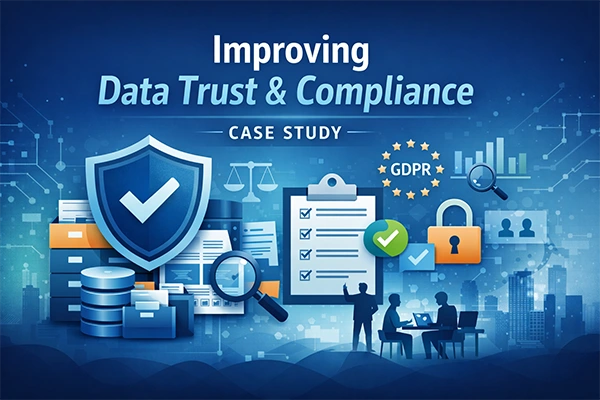
How an Enterprise Improved Data Trust & Compliance A large financial company found itself struggling to manage scattered data, unclear ownership, and growing regulatory pressure. But then the teams thought of taking a smarter route and implementing an enterprise data governance tool. They introduced:
Centralized data catalog to locate trusted datasets quickly
Automated metadata discovery to classify sensitive and regulated data.
Clear data ownership to improve accountability
Role-based access controls and audit trails to support compliance.
And the results?
The company experienced a significant reduction in duplicate reports, sped up analytics, and improved audit readiness, while allowing teams to safely access the data they need.
Enterprise Data Governance Tools have become a necessity to integrate into businesses today. However, if the integrated software lacks certain key features, it is almost of no use. Here is a list of those crucial features that can act as a protective shield against cyberattacks.
Data Cataloging and Metadata Management
Data cataloging and metadata management are the backbone of effective data governance. Think of it as a searchable library for all organizational data. This enables teams to quickly discover trusted datasets through a single, centralized view, rather than relying on guesswork and tribal knowledge.
Look for centralized data catalogs, automated metadata discovery and classification, clear data ownership and stewardship assignment, and a business-friendly description that makes it easier to understand data.
Improvement in data visibility directly correlates to a reduction in duplication, speeding up analytics, and enabling self-service data access without compromising control.
Data Quality Management
“What gets measured gets managed. “
Data is one of the most important assets for any business; any flaw in that could have a costly impact on firms. To put it more simply,
poor data management = expensive business mistakes
This is why data governance software should actively support maintaining high data standards. Features like:
Validation rules to detect errors and inconsistencies
Data profiling to identify anomalies early
Monitoring dashboards to track quality over time
Workflow automation for issue resolution
These should be integrated into the software, as they continuously enforce data quality, making it easier for teams to trust the sights they generate and act with confidence.
Operationalizing Data Governance
Data governance is not something that can just be in a policy document; it needs to be made a part of daily operations, only then will it prove to be effective. To ensure this, modern government rules are directly embedded into data pipelines and automate approval workflows for data access and changes.
Additionally, they also enable collaboration between IT, compliance, and business users and integrate with existing analytics and data platforms. All of it helps ensure compliance without slowing down innovation.
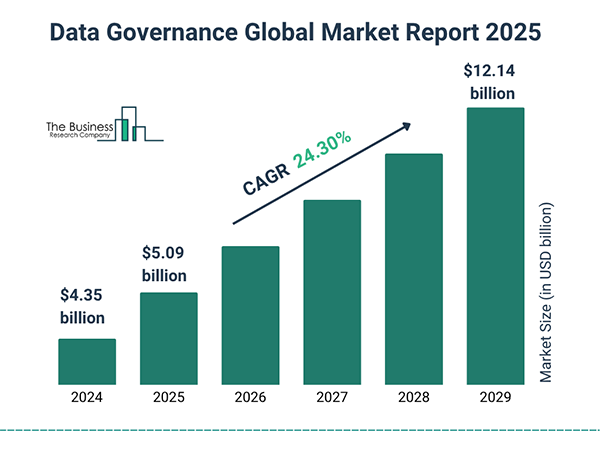
INTRIGUING INSIGHTS The global data governance market is on the rise and is expected to reach $12.14 billion by 2029, after being measured at %5.09 billion in 2025, growing at a CAGR of 24.30%.
Success Metrics and Continuous Improvement
The success of these tools is measured in numbers, and to prove their value, organizations should measure these common metrics:
Reduction in data errors and inconsistencies
Faster time to data discovery
Improved regulatory adit outcomes
Increased user adoption of governed data
Modern data governance software provides reporting and analytics to track these Key Performance Indicators (KPIs) and continuously refine government practices over time.
Compliance and Security Features
Compliance is not optional anymore, especially today when the regulatory pressure is quite high. Therefore, data governance tools must support both internal and external regulations.
Statistically, in 2025, 48% of organizations that experienced a data breach paid approximately $100,000 or more in regulatory fines. (Source: Secureframe).
Data breaches already disrupt the operational systems, damaging an organization’s reputation and proving to be a costly lapse in security. On top of that, regulatory fines make it even more stressful for businesses. So, a data governance software should include the following compliance and security capabilities:
Role-based access controls and data masking
Audit trails for data usage and changes
Support for regulations like GDPR, HIPAA, and industry standards
Risk assessment and compliance reporting tools
These features help organizations protect sensitive data and maintain transparency and accountability at the same time.
DO YOU KNOW? Compliance failures often happen with data no one remembers owning. So, clear data ownership is one of the simplest ways to prevent regulatory surprises.
Final Thoughts
Data governance is not just a compliance requirement, but a business enabler.
Organizations that choose to invest in a strong framework and the right tool often earn cleaner data, faster insights, and greater trust across teams. By focusing on visibility, quality, operational integration, and continuous improvement, enterprises can turn this into a competitive edge.
Frequently Asked Questions
What is data governance?
Data governance is a framework of policies, processes, and tools that ensure data is accurate, secure, and used responsibly across a business.
Why is data governance important for enterprises?
Data governance helps maintain data integrity, supports regulatory compliance, reduces risk, and improves decision-making, hence becoming an essential element for enterprises.
What industries benefit most from data governance software?
Highly regulated industries like finance, healthcare, retail, and technology benefit the most from data governance software.
How does data governance differ from data management?
Data management focuses on handling data systems and workflows, and on the other hand, data governance defines the rules, ownership, and standards for data usage

 Saipansab Nadaf