
The five pillars of data security include confidentiality, integrity, availability, authenticity, and non-repudiation of user data.
Physical Security Isn’t “Old School” Anymore — It’s a Data Protection Strategy
 Kartik Wadhwa
Updated on: Jan 07, 2026
Table of Contents
- The Overlooked Truth: Physical Breaches Create Digital Incidents
- What a Modern Physical Security System Actually Includes
- Where Most Businesses Get Physical Security Wrong
- How to Choose the Right Physical Security Provider (Without Getting Sold)
- What “Good” Looks Like in the Real World: Scenarios That Matter
- The Smart SEO Angle: “Physical Security Provider” Means Different Things to Different Searchers
- A Practical Buyer’s Checklist You Can Copy/Paste
- Final Thoughts: Prevention and Recovery Work Better Together
- Frequently Asked Questions
Most data breaches do not begin with a hoodie-wearing hacker. The story begins with mundane events, such as an unattended visitor, an office culture where everyone knows everyone, and a laptop that vanishes in seconds.
A week later, you’re not only attempting to recover files; you’re also explaining to leadership why sensitive data was found on a device that walked out the building.
That is why physical security is critical for anyone concerned about data resilience. Digital safeguards are necessary, but physical security is the first layer of real-world access control — the barrier between your data and someone who can physically touch your infrastructure.
In this guide, we’ll explain what “physical security” means today, where most businesses get it wrong, and how to choose a provider who will protect your people and data.
Let’s begin!
Key Takeaways
- Uncovering the overlooked truths
- Looking at what modern solutions actually include
- Exploring the areas where business goes wrong
- Decoding the correct solutions in the implementation strategy
- Discovering a practical buyer checklist
The Overlooked Truth: Physical Breaches Create Digital Incidents
Here’s the uncomfortable reality:
If someone can access your building, they can access your network.
Even in cloud-first organizations, physical access can lead to:
- Device theft (laptops, phones, removable drives)
- Unauthorized access to terminals (shared workstations, front-desk PCs)
- Server room breaches (even a “closet rack” counts.
- Tailgating, fake deliveries, and “I’m here to fix the printer” are examples of social engineering tactics.
- Sabotage (cutting cables, damaging cameras, turning off alarms)
If you work in data recovery, IT operations, or compliance, you’ve probably seen it play out:
A break-in becomes a data loss event.
A “small” intrusion becomes a business interruption.
A stolen device becomes a breach notification.
That’s why the goal isn’t to buy cameras and call it a day. The goal is to reduce the chance and impact of physical incidents — and make your response faster when something happens.
What a Modern Physical Security System Actually Includes
Think of physical security like defense-in-depth for the real world. It’s not one tool — it’s a system.
Access Control (The Foundation)
Access control determines who can enter, where, and when.
What “good” looks like:
- Role-based permissions (not everyone needs everywhere)
- Visitor management that doesn’t rely on sticky notes
- Logs you can actually use during investigations (entry/exit accountability)
Surveillance (Visibility + Evidence)
Surveillance isn’t just about recording incidents. It’s also about deterrence and rapid verification.
What “good” looks like:
- Coverage at entrances/exits and sensitive zones (server areas, stock rooms)
- Retention policies aligned with your risk level
- Alerting workflows (so footage isn’t reviewed only after the damage)
Alarms and Emergency Notification
Alarms should do more than make noise. They should trigger workflows — notify the right people, document the incident, and support safer response.
People and Process (The Multiplier)
Even with great technology, people are still critical. Trained security personnel can deter, monitor, and respond in real time.
And then there’s process:
- Playbooks for responding to incidents
- Access reviews (quarterly is superior to “never”)
- Employees are trained to report any suspicious behavior.
The best physical security program isn’t the one with the fanciest gear — it’s the one employees actually follow.
Intriguing Insights
Beyond direct financial damages, a breach can lead to significant lost business. This includes operational downtime, customer churn, and reputational harm, which accounted for $2.8 million of the average breach cost in 2025.
Where Most Businesses Get Physical Security Wrong
Let’s make this practical. Here are the four common failure points I see most often:
“We Have Cameras, So We’re Covered.”
Cameras without monitoring, retention planning, and response workflows are basically just expensive decorations.
Access Control Is Treated Like a One-Time Setup
Access is rarely reviewed. Vendors get badges “temporarily.” Former employees keep access longer than anyone wants to admit.
Security Systems Don’t Integrate
Separate silos exist for access events, camera feeds, and alarm triggers. When something happens, people scramble across platforms rather than following a single, defined workflow.
The Plan Doesn’t Match the Environment
Physical security isn’t one-size-fits-all. A healthcare facility has different needs than logistics. A K–12 campus is not the same as a manufacturing floor.
How to Choose the Right Physical Security Provider (Without Getting Sold)
If you’re searching for a provider, you’re probably going to see a mix of directory listings, listicles, and vendor pages. The key is to evaluate any Physical Security Provider on outcomes, not marketing claims. The key is to evaluate providers on outcomes, not marketing claims.
Here’s a straightforward checklist you can use on discovery calls.
Start With the Risk Conversation (Not the Product Catalog)
A strong provider begins with questions like:
- What assets are most critical?
- What are your likely threats (theft, tailgating, vandalism, insider misuse)?
- Where are your vulnerabilities (doors, loading bays, reception, server spaces)?
- What’s the impact if an incident happens?
Look for a Layered Security Approach
Layered security means if one layer fails, another slows the threat or triggers a response (doors + cameras + alarms + procedures).
Confirm Access Control Depth
Ask:
- Do you support card + mobile + biometric options where needed?
- Can we set granular permissions (zone-based access)?
- Do we receive detailed logs and easy reporting?
- How do you manage provisioning and deprovisioning at scale?
Validate Surveillance Strategy (Coverage + Retention + Response)
Ask:
- How do you design camera placement?
- How long do we retain footage, and where?
- What happens when an alert triggers?
- Can we integrate cameras with access events?
Ask About Training and Operational Support
The install is the beginning, not the finish.
You want a provider who supports:
- Admin training
- Routine maintenance
- Audits and improvements
Don’t Ignore Worker Safety and Duress Use Cases
If you have staff working late, handling cash, managing front desks, or operating in warehouses, duress and emergency notification can be a serious requirement — not an optional add-on.
What “Good” Looks Like in the Real World: Scenarios That Matter
To make this more tangible, here are a few realistic examples and what to prioritize.
Small Office With High-Value Data
You don’t need a fortress — you need control:
- Strong access control policies
- Visitor procedures
- Secure zones for equipment
- Camera coverage for entry points
Logistics or Warehouse Environments
You need visibility and accountability:
- Surveillance coverage across loading bays and storage zones
- Access control that doesn’t slow operations
- Monitoring workflows and incident handling
Schools, Campuses, and Public Buildings
You need safety, speed, and clarity:
- Access policies that support daily traffic patterns
- Emergency notification planning
- Clear lockdown or response procedures
The Smart SEO Angle: “Physical Security Provider” Means Different Things to Different Searchers
From an SEO standpoint, “physical security provider” is a deceptively broad keyword. Depending on intent, the searcher might want:
- A local guard company
- CCTV installation
- Access control systems
- A full physical security partner (design, install, support)
- A provider that aligns physical security with IT/security operations
That’s why the best-ranking content usually does two things:
- It defines the category clearly.
- It helps the reader make a decision with criteria, scenarios, and next steps.
If you’re publishing on DataRecovee, this becomes your competitive advantage: you can connect physical security to data loss prevention and recovery readiness, which most generic security pages don’t do well.
A Practical Buyer’s Checklist You Can Copy/Paste
Use this to evaluate vendors quickly — especially before you sign a contract with anyPhysical Security Provider:
Strategy & Fit
- Did they ask about risk, assets, and business impact first?
- Can they tailor solutions for our environment/industry?
Access Control
- Role-based access and zone control
- Easy provisioning/deprovisioning
- Strong logs and reporting
Surveillance
- Coverage plan (not guesswork)
- Retention + storage strategy
- Alerts + response workflow
Alarms & Safety
- Intrusion alarms and escalation
- Duress/emergency notification where needed
Operations
- Training and ongoing support
- Routine audits and improvement cycles
- Clear incident response process
Final Thoughts: Prevention and Recovery Work Better Together
At DataRecovee, you’re already close to the most important truth in modern security:
You can’t prevent every incident — but you can reduce risk and recover faster.
Physical security lowers the odds of theft, sabotage, and unauthorized access. And when you pair strong internal policies with a capable Physical Security Provider, you turn security from a “set it and forget it” project into an ongoing risk-reduction program. And when something still goes wrong, your recovery process is stronger because:
- You have logs,
- You have footage,
- You have clarity about what happened, and you can act with confidence instead of guessing.
That’s the difference between “we hope it won’t happen” and “we’re ready if it does.”
Frequently Asked Questions
What are the 5 pillars of data security?
What are the statistics for data privacy?
85% of global adults want to do more to protect their online privacy.
What are the 4 basics of security?
The four basic principles of security are access, authentication, authorization, and accounting.
Related Posts

8 Best AI Presentation Makers for Business-Ready Slides
Making a presentation doesn’t just mean designing slides. It’s about defining a clear structure, using defined logic, useful visuals, and…
Queue Management Software Troubleshooting Guide: 8 Common Faults and Fixes
The long wait times and ineffective management of customer queues can have a significant impact on customer satisfaction and business…

How to Use Similarweb Website Traffic Data for Competitor Research
Competitor research without traffic data is guesswork. You can guess who your rivals are, guess how big they are, guess…
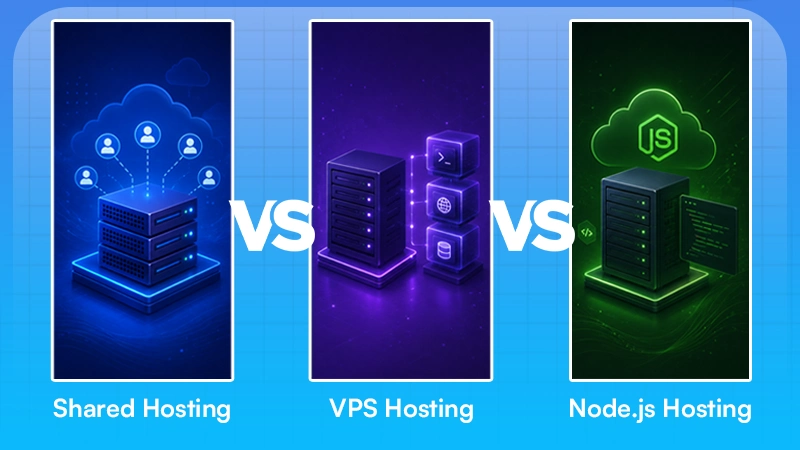
Choosing the Right Hosting Model for Scalable Digital Platforms
The performance of digital business is directly related to website speed, uptime, and scalability. Slow page performance has a negative…

How Data-Driven Performance Tools Are Transforming Employee Recognition in Tech Companies
“People work for money but go the extra mile for recognition, praise, and rewards.” — Dale Carnegie (Writer & Teacher)…

Why Businesses Struggle to Collect Reliable Data from the Web
Almost every company that depends on data runs into the same problem: although they can find the data they need,…
Why Financial Data Recovery Matters for Businesses
Financial data supports every part of a business, directly affecting cash flow, payroll, tax reports, audits, customer billing, and daily…

CMMC Compliance Is Coming for Manufacturers. Here Is What You Need to Do
“Cybersecurity is much more than a matter of IT.” — Stephane Nappo (Cybersecurity Professional) For manufacturers working within the defense…

How Data-Based Tools Influence Learning Performance
Learning has transformed in the modern age with the integration of new technologies to help students and professionals prosper in…