
It involves using analytics and business data to improve SaaS decision-making and growth strategies.
The Role of Data Intelligence in Modern SaaS Business Growth
 Reviewed By Brijesh Kumar Singh
  Mahima Dave
Updated on: May 07, 2026
Table of Contents
- Understanding Data Intelligence in the SaaS Industry
- How SaaS Companies Use Data to Improve Decision-Making
- The Connection Between Analytics and Business Growth
- Using Customer Data to Improve SaaS User Experience
- Predictive Analytics and Smarter Growth Strategies
- The Role of AI and Automation in Data Intelligence
- Key Performance Metrics SaaS Businesses Should Monitor
- Future Trends in Data-Driven SaaS Growth Strategies
- Conclusion
- Frequently Asked Questions
In the SaaS industry, one of the most valuable assets is data. Today, software firms cannot simply count on their features or price to be competitive. Instead, they leverage data intelligence to gain insights into customer behavior, maximize performance, deepen customer retention, and find new growth opportunities.
Companies that proactively leverage data-driven decision-making find benefits both in terms of better operational efficiency and faster revenue growth, reports McKinsey & Company.
With the evolution of increasingly competitive SaaS markets, analytics, AI, automation, and predictive insights are becoming essential tools that companies rely on to scale efficiently. Data intelligence is now impacting the SaaS business strategy in many ways, ranging from customer onboarding to subscription retention.
Key Takeaways
- Data intelligence enables SaaS businesses to make better operational decisions.
- Analytics enables better customer retention, forecasting, and growth planning.
- Predictive analytics enables businesses to forecast customer actions.
- AI and automation speed up your data analysis and personalization
- Using the proper SaaS metrics helps ensure long-term scalability.
Understanding Data Intelligence in the SaaS Industry
Data intelligence is the act of gathering, analysing, structuring and using business data to enhance operational and strategic choices. In SaaS, data intelligence enables businesses to gain insights into:
- User behavior
- Product performance
- Customer engagement
- Subscription trends
- Revenue patterns
- Market demand
Today’s SaaS companies utilize analytics tools, automation systems, and insights from their customers to make informed business decisions in real-time. Data intelligence also aids in other key areas such as product development, customer support, and software marketing campaigns, by determining which methods yield the highest conversion rates and engagement.
INTERESTING FACT
Certain SaaS businesses now collect billions of events that customer interactions with their product generate every day, which are used to enhance personalization and product suggestions.
How SaaS Companies Use Data to Improve Decision-Making
Data is critical for the success of SaaS companies, not assumptions. Any interaction within a software platform generates valuable information that can be used to assist businesses in improving products and services.
There are several analytics metrics that many SaaS businesses track, including customer acquisition channels, user engagement patterns, feature adoption rates, subscription renewals, and churn behavior.
For instance, if analytics reveal that users are regularly dropping off a feature, product teams can restructure workflows or enhance onboarding experiences to boost engagement and retention.
By making data-driven decisions, SaaS companies can decrease inefficiencies and become more agile in meeting customer needs.
The Connection Between Analytics and Business Growth
This is where analytics comes in and directly contributes to SaaS scalability and revenue growth. SaaS businesses keep an eye on customer lifetime value, retention rates, and customer behavior to boost their long-term profits from growth-driven analytics, such as:
Businesses can benefit from growth-driven analytics, such as:
- Reduce customer churn
- Improve product adoption
- Optimize pricing strategies
- Increase conversion rates
- Improve sales forecasting
Those businesses that are constantly looking at performance data are likely to be better placed to scale efficiently, as they will detect growth opportunities and operational dangers earlier. Making reliable analytics readily available within a short span of time is a game-changer in highly competitive SaaS environments.
Using Customer Data to Improve SaaS User Experience
One of the most significant factors that contributes to customer retention and growth in the SaaS business is customer experience. Businesses can learn about user behavior by using data to answer questions like:
- If you have a wide choice of features, what do your customers prefer to use?
- Where do people face friction in onboarding?
- The reasons why users cancel subscriptions
- What are some successful workflows that help boost engagement?
The platforms, like Growpad, enable SaaS teams to structure the information about their customers, thereby enhancing their retention and user experience strategies. Behavioral analytics is becoming more commonplace in a business environment, allowing it to tailor dashboards, suggest features, and reduce navigation based on user preferences.
Making better use of data can result in better user experience, retention, and customer satisfaction.
Predictive Analytics and Smarter Growth Strategies
Predictive analytics is extremely useful for SaaS companies to predict the future outcomes of their business based on the historical data and real-time data available to them. Predictive systems help businesses, instead of responding to issues, anticipate them. Moreover, predictive insights can help the marketing and sales teams improve their targeting ability.
For instance, analytics models can determine the likelihood of subscription upgrades or contract renewals by customer segments.
With the rise in competition in SaaS, predictive analytics has emerged as one of the hottest areas of interest for proactive planning for growth and operational stability.
The Role of AI and Automation in Data Intelligence
Data intelligence is changing with the advent of AI and automation for SaaS companies. Modern systems utilize automatic algorithms programmed to
- Detect usage trends
- Analyze customer sentiment
- Generate forecasting reports
- Recommend operational improvements
- Personalize user experiences
AI-powered tools also aid in new capabilities like AI search optimisation, enhancing SaaS business discoverability, and digital performance in search. Automation helped to lighten manual analysis tasks and provide faster insights to businesses with greater accuracy. This opens up more room for your teams to concentrate on strategic growth activities instead of tedious reporting-related work.
Key Performance Metrics SaaS Businesses Should Monitor
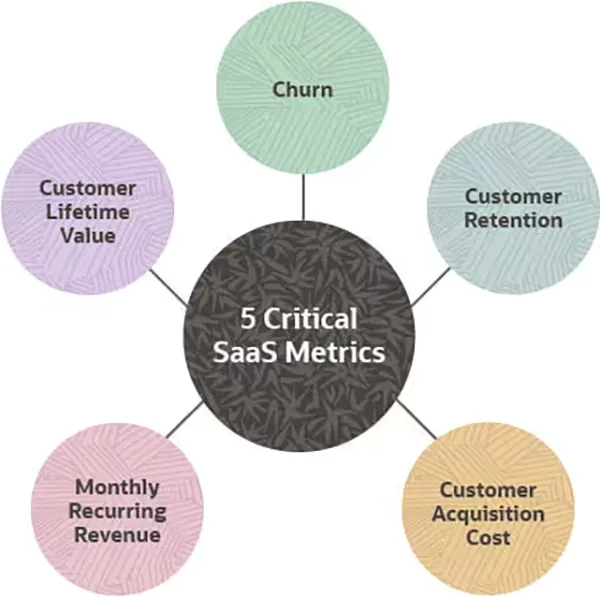
Businesses get more data intelligence when they pay attention to the right performance metrics. Some of the most important SaaS KPIs are Monthly Recurring Revenue (MRR), Customer Acquisition Cost (CAC), churn rate, Customer Lifetime Value (CLV), product engagement metrics, and trial-to-paid conversion rates.
Partnering with the best SEO firms can also help enhance the quality of site visitors, lead generation, and organic customer purchase methods. When considering long-term growth strategies, it is important to track meaningful metrics to ensure that companies can optimize their strategies more effectively.
Future Trends in Data-Driven SaaS Growth Strategies
Real-time analytics, automation, and intelligent decision-making systems will be crucial for the future of SaaS growth. The following are some of the trends that are likely to emerge:
- AI-powered predictive operations
- Personalized user experiences
- Automated growth optimization
- Real-time customer intelligence
- Privacy-focused analytics systems
With the increase in data, businesses are gathering of their customers and operations, and being able to turn that data into actionable insights will be an important competitive edge. Businesses that invest in scalable data intelligence solutions today are ahead of the game in meeting the future demand for SaaS in the market.
Conclusion
In the current age, data intelligence is a strong growth engine for SaaS enterprises. Data-driven decision-making is now influencing almost every facet of SaaS businesses, ranging from enhancing user experience and minimizing churn to fine-tuning marketing strategies and predicting revenue.
SaaS businesses can grow more efficiently and be more agile with customer behavior and market shifts by integrating analytics, AI, automation, and predictive insights. Ultimately, data intelligence can help businesses make informed decisions and enhance their performance, customer retention, and long-term growth in the highly competitive SaaS landscape.
Frequently Asked Questions
What is data intelligence in SaaS?
Why is analytics important for SaaS companies?
Analytics helps businesses improve retention, optimize products, and increase operational efficiency.
What is predictive analytics in SaaS?
Predictive analytics uses historical and real-time data to forecast future business outcomes.
How does AI improve SaaS data intelligence?
AI automates analysis, detects trends, and improves personalization and forecasting.
Related Posts

8 Best AI Presentation Makers for Business-Ready Slides
Making a presentation doesn’t just mean designing slides. It’s about defining a clear structure, using defined logic, useful visuals, and…

Queue Management Software Troubleshooting Guide: 8 Common Faults and Fixes
The long wait times and ineffective management of customer queues can have a significant impact on customer satisfaction and business…
How to Use Similarweb Website Traffic Data for Competitor Research
Competitor research without traffic data is guesswork. You can guess who your rivals are, guess how big they are, guess…

Choosing the Right Hosting Model for Scalable Digital Platforms
The performance of digital business is directly related to website speed, uptime, and scalability. Slow page performance has a negative…

How Data-Driven Performance Tools Are Transforming Employee Recognition in Tech Companies
“People work for money but go the extra mile for recognition, praise, and rewards.” — Dale Carnegie (Writer & Teacher)…

Why Businesses Struggle to Collect Reliable Data from the Web
Almost every company that depends on data runs into the same problem: although they can find the data they need,…
Why Financial Data Recovery Matters for Businesses
Financial data supports every part of a business, directly affecting cash flow, payroll, tax reports, audits, customer billing, and daily…

CMMC Compliance Is Coming for Manufacturers. Here Is What You Need to Do
“Cybersecurity is much more than a matter of IT.” — Stephane Nappo (Cybersecurity Professional) For manufacturers working within the defense…

How Data-Based Tools Influence Learning Performance
Learning has transformed in the modern age with the integration of new technologies to help students and professionals prosper in…