
Ans: When a task undertaken by a business is forwarded to an external management team that is responsible for managing its infrastructure, data flow, and completion, this is called outsourcing.
The Technical Blueprint for Safe Outsourced Infrastructure
 Reviewed By Brijesh Kumar Singh
  Saipansab Nadaf
Updated on: Apr 13, 2026

In recent times, it seems as if more and more businesses from various industries have turned to infrastructure outsourcing. This has practically become a cornerstone of modern business strategy.
With this change, companies are no longer forced to construct every system themselves. They can simply make use of external expertise to reduce operational overhead and scale quickly.
But how does one choose an outsourcing infrastructure that is reliable and aligned with your objectives? Let’s look at a few ways in which your business can make the correct choice.
Key Takeaways
- Systems that require a lot more manual control and intervention are best for external management.
- Outsourced infrastructure grants access to specialized knowledge that isn’t normally available through internal teams.
- Firms that prioritize security, clear communication, and transparent processes are the most reliable for outsourcing.
- Establishing data access guidelines and rules is essential before proceeding with outsourcing your activities.
What’s Supposed to Be Resourced?
Before you take any further steps concerning vendors, tools, and security protocols, your first step needs to be clarity.
Keep in mind that not every system requires outsourcing, and not all functions need external management.
Consequently, you and your organization need to identify:
- Which processes are pivotal for your operations
- Where scalability must be implemented
- Which systems demand specialized expertise
These things are going to help you set certain boundaries. Namely, some systems require a lot more control, while operations that are a bit more flexible can be safely delegated.
The Integration of External Expertise

One of the major advantages of outsourced infrastructure lies in the fact that you get a chance to gain access to specialized knowledge that may not be available internally.
One of the main reasons why so many organizations decide to take this step is that it takes their security and performance up a notch.
Yes, that’s how effective it can be. According to the resourceful team at The Office Gurus, a vast majority of businesses resort to seasoned service providers when they are establishing a reliable system, because they are going to help them efficiently manage their operations.
These providers are extensively experienced in transforming metrics into optimization strategies, best practices, and scalable solutions that are aligned with your firm’s needs.
The whole point of everything is integration. These specialists are supposed to complement internal capabilities, and not replace them in any way.
Doing something like this will allow your company to make the most from the external support, while still making sure that knowledge stays within your “premises”.
Moving on to Vendors
One of the most pivotal steps that you’ll need to make as far as this goes is to select the right partner.
In these situations, many businesses tend to focus more on costs, which is important, but not the most essential factor.
Namely, there are a variety of traits that a vendor is supposed to have, and these are the most crucial:
- Strong security practices
- Clear communication channels
- Transparent processes
- Solid experience in similar environments
In a nutshell, you shouldn’t solely focus on what they provide, but on how they operate, too! At the end of the day, you want to have somebody in your corner you can rely on, who isn’t only a provider, but a reliable partner, as well!
Fun Fact
Outsourced IT infrastructure can actually improve security by providing specialized and battle-tested security protocols that a small in-house team might struggle to maintain.
Data Governance & Ownership
In many situations, outsourcing involves sharing access to relevant data. This makes governance a major concern. Organizations are basically obligated to define:
- Who is the owner of the data?
- All the different ways it can be leveraged
- Where it is stored
- Strategies that can be implemented to safeguard it
If certain policies (that are supposed to be crystal clear) aren’t defined and in place, then miscommunication and misunderstandings can easily occur, which can result in compliance problems or data misuse.
That’s precisely why it’s of huge importance to establish all of the above-mentioned rules, because only then will both parties perfectly understand responsibilities and restrictions. Aside from that, this also provides a framework for accountability.
What About Visibility?
Now, lots of people think that once the outsourcing happens, they are going to lose visibility, which definitely isn’t the case.
Conversely, it’s important to maintain clear oversight. Every firm aspires to gain access to usage data, performance metrics, and security alerts.
In fact, this level of visibility will enable your company to detect any potential problems on time, and, concurrently, make sure that all service levels are properly met.
The entire purpose of the monitoring tools is to “serve” as a dashboard, offering a clear view of what’s currently occurring behind the scenes.
In other words, it’s safe to say that they play a significant role, because without them, various issues would probably be overlooked until they start causing serious problems.
Working On Resilience And Redundancy
The reality is, regardless of how powerful your system may be, it doesn’t mean that it will never experience any failure. That’s unfortunately inevitable. Anything can happen, starting from the issues with hardware, failure of your networks, and many other things.
Luckily, a strong technical blueprint involves having backup systems that ensure everything runs smoothly even after an incident occurs.
This typically includes the following:
- Failover mechanisms
- Backup power systems
- Multiple data centers
What you need to understand is that resilience doesn’t solely concentrate on failure prevention. It’s about making sure that when things go wrong (regardless of how serious they are), your systems are still capable of running relatively seamlessly.
The chances of negative impact cannot be made to be effectively zero, but they can surely be radically reduced.
When it comes to outsourced environments, this requires coordination between external providers and the members of your internal teams.

Safe outsourced infrastructure isn’t something that happens out of the blue. On the contrary, it is a direct result of thoughtful planning, dedication to security at all levels, and crystal clear communication. Its purpose is to create a partnership that helps your expansion while safeguarding the things that are most important.
Frequently Asked Questions
Q1) What is outsourcing?
Q2) How is data governance managed during outsourcing?
Ans: The firm shares only the data that is relevant to the task to be completed, with a few privileges required to access and share it with their own external team.
Q3) What is the biggest advantage of outsourcing?
Ans: Outsourcing provides specialized teams with extensive knowledge for the tasks requested, having their own infrastructure and workflow model, which significantly reduces total overhead cost for a business.
Q4) How to identify a reliable outsourcing firm?
Ans: A reliable outsourcing firm clearly states its way of functioning with the required access to the data that they would require to accomplish the given task. Their previous experiences with other clients also count towards ensuring trust and reliability.
Related Posts

8 Best AI Presentation Makers for Business-Ready Slides
Making a presentation doesn’t just mean designing slides. It’s about defining a clear structure, using defined logic, useful visuals, and…

Queue Management Software Troubleshooting Guide: 8 Common Faults and Fixes
The long wait times and ineffective management of customer queues can have a significant impact on customer satisfaction and business…

How to Use Similarweb Website Traffic Data for Competitor Research
Competitor research without traffic data is guesswork. You can guess who your rivals are, guess how big they are, guess…
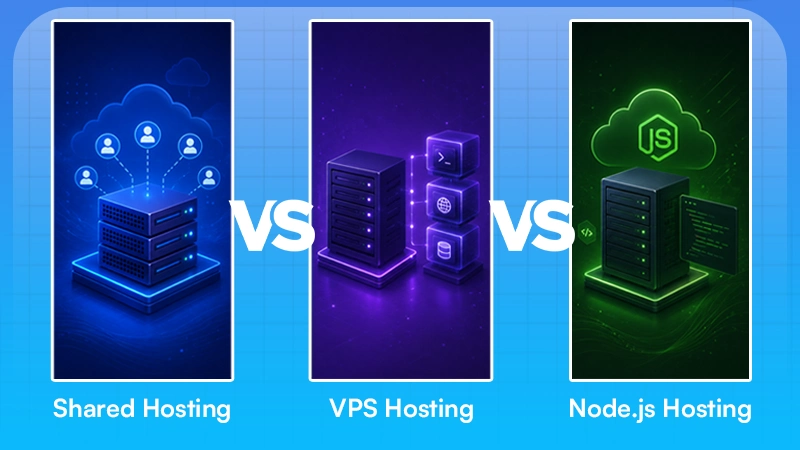
Choosing the Right Hosting Model for Scalable Digital Platforms
The performance of digital business is directly related to website speed, uptime, and scalability. Slow page performance has a negative…

How Data-Driven Performance Tools Are Transforming Employee Recognition in Tech Companies
“People work for money but go the extra mile for recognition, praise, and rewards.” — Dale Carnegie (Writer & Teacher)…

Why Businesses Struggle to Collect Reliable Data from the Web
Almost every company that depends on data runs into the same problem: although they can find the data they need,…
Why Financial Data Recovery Matters for Businesses
Financial data supports every part of a business, directly affecting cash flow, payroll, tax reports, audits, customer billing, and daily…

CMMC Compliance Is Coming for Manufacturers. Here Is What You Need to Do
“Cybersecurity is much more than a matter of IT.” — Stephane Nappo (Cybersecurity Professional) For manufacturers working within the defense…

How Data-Based Tools Influence Learning Performance
Learning has transformed in the modern age with the integration of new technologies to help students and professionals prosper in…