
It is a system that accumulates, handles, and prepares information with the express purpose of AI and machine learning usage.
What is an AI Data Platform? How to Build AI-Ready Data Platform Workflows Effectively
 Reviewed By Brijesh Kumar Singh
  Kartik Wadhwa
Updated on: Jan 31, 2026
AI does not simply run on data; it is based on the quality of data collection, organization, and processing. And here is the truth: the majority of businesses do not have issues with AI because of the models, but due to the fact that their data is not prepared. Scattered, non-uniform, slower pipelines are the actual bottlenecks.
Gartner believes that more than 80% of AI initiatives fail to be used to bring business value, and the major reason is not faulty algorithms but rather poor data quality and inefficient data infrastructure.
This is where the AI data platform enters. It is not merely another tool; it is a basis that transforms the crude data into something that can be actively utilized by AI.
Key Takeaways
- AI data platforms arrange and prepare data to be used in machine learning and analytics.
- Poor data infrastructure is one of the primary causes of failure of AI projects.
- Workflows bridge between data ingestion, processing, and model integration.
- You must automate and be scalable to achieve long-term success.
- Clean and well-managed data is integrated to improve AI performance.
Understanding AI Data Platforms in Modern Data Infrastructure
An AI data platform refers to a centralized, unified system of gathering, processing, storing, and preparing data to be used by AI and machine learning. Imagine that AI is a well-organized kitchen:
Raw ingredients = your data
Recipes = workflows
Chef = your AI models
Even the finest of ingredients will not result in a great product without a proper setup. Contemporary platforms unite data storage, processing pipelines, and analytics tools.
Integration capabilities model is the tendency to integrate systems representing different world components. They make sure that data moves between the source and insight to and fro without regular human intervention.
Creative AI platforms also find use in conjunction with creative tools, such as an AI video editor, where a large amount of media data needs to be processed and optimized to be edited and optimized by AI.
Why Businesses Need AI-Ready Data Platforms
AI is not only about innovation, but it is also about scale. And that needs a high database.
Supporting Machine Learning and Advanced Analytics
Models in machine learning require clean data, structured datasets, and consistent inputs. In the absence of an AI-ready platform, the time spent by teams is more on cleaning and preparing data than on developing models. A proper platform ensures that the data is reliable, there is efficient training of models, and the results are accurate.
Enabling Scalable Data Processing and Automation
With increasing data, manual processes do not scale. Businesses can use AI data platforms to automate data pipelines, cloud computing to process big data, and perform scale operations. This is what allows transitioning to enterprise-level AI implementation.
PRO TIP
You can not hurry up to create AI models: first, you need to design your data workflows. It will save a lot of energy in the future.
Core Components of an AI Data Platform
An effective AI platform is not a single tool but a set of major elements in combination. These typically include:
- Data storage: Cloud or on-premise data storage systems.
- Data ingestion tools: Data ingestion involves gathering data collected by various sources.
- Processing engines: Cleaning and processing data.
- Data governance: Quality, security, and compliance.
- Model integration layer: Making data pipelines use AI models.
- Monitoring systems: Performance tracking and problem detection.
All of these components are useful in making data usable, reliable, and scalable.
Designing Efficient AI-Ready Data Workflows
Everything is united in workflows. They characterize the movements of data, from raw input to AI output. Such tools and systems as Sora2 (and other AI-based environments) emphasize the importance of smooth workflows in processing large volumes of data and automation.
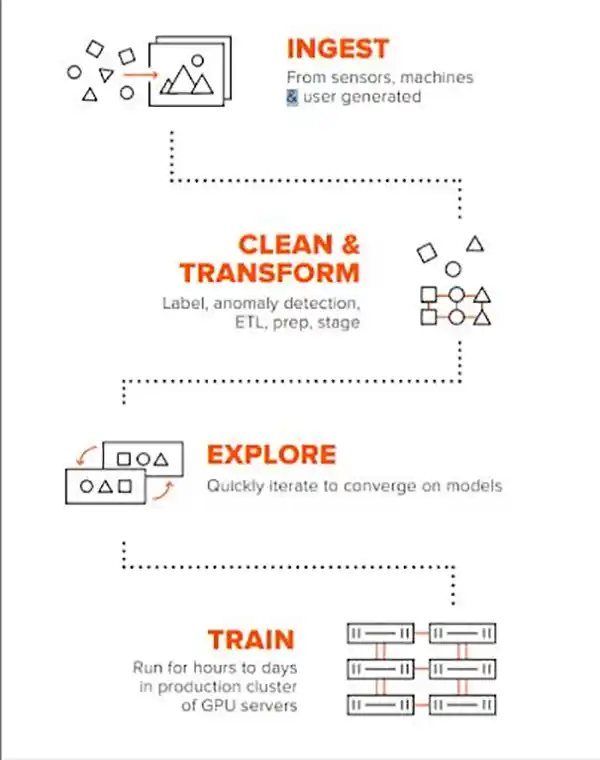
Data Ingestion
It begins with this task of data input into the system. The sources may include databases, APIs, IoT devices, or user-generated content. This is aimed at the perfect collection of data.
Processing
After gathering data, cleaning and transformation should be done. This includes:
- Removing duplicates
- Standardizing formats
- Filling missing volumes
- Organizing data to be analyzed
Good processing converts messy data into usable information for AI
Model Integration
The last process is linking processed data to AI models. This allows model training, real-time predictions, and continuous learning. In this step, data can be made actionable, driving insights, automation, and smarter decisions.
AI workflows can feel complex when described in words, but when you see the flow, it all clicks. Here is a simple breakdown of how data actually moves through an AI-ready platform.
Best Practices for Building AI-Ready Data Platform Workflows
Businesses must aim at creating the following aspects to establish workflows with high effectiveness: clarity, consistency, and scalability.
Among the important best practices are:
- Begin with quality data: Bad data quality results in bad AI performance.
- Automate as much as possible: Less work and mistakes.
- Design to scale: Make systems scalable.
- Apply best data management: Be accurate and compliant.
- Keep track of the performance: Find and resolve the problems in time.
It is not about creating workflows, but creating workflows that will work in the long term.
Wrapping Up
The success of AI does not begin with an algorithm; it begins with data preparedness. The data platform is an AI tool that gives the organization the framework required to convert raw data into valuable results. It bridges systems, automates, and makes sure that data is flowing well between source and insight.
Properly done, it does not merely assist AI but opens the full potential of it. In the new data-driven economy, it is the companies that succeed that do not have the most data at their disposal, but rather learn how to utilize their power most efficiently.
Frequently Asked Questions
What is an AI data platform?
What is the reason why AI initiatives are unsuccessful without adequate data platforms?
It is challenging to run accurate models using poor-quality and unstructured data.
What are AI data workflows?
They are procedures that stipulate the flow of data between the collection and analysis and the use of the model.
Are the small businesses able to utilize the AI data platforms?
Yes. The AI data platform has been made accessible and scalable to smaller teams through many cloud-based solutions.
Related Posts

8 Best AI Presentation Makers for Business-Ready Slides
Making a presentation doesn’t just mean designing slides. It’s about defining a clear structure, using defined logic, useful visuals, and…

Queue Management Software Troubleshooting Guide: 8 Common Faults and Fixes
The long wait times and ineffective management of customer queues can have a significant impact on customer satisfaction and business…

How to Use Similarweb Website Traffic Data for Competitor Research
Competitor research without traffic data is guesswork. You can guess who your rivals are, guess how big they are, guess…

Choosing the Right Hosting Model for Scalable Digital Platforms
The performance of digital business is directly related to website speed, uptime, and scalability. Slow page performance has a negative…

How Data-Driven Performance Tools Are Transforming Employee Recognition in Tech Companies
“People work for money but go the extra mile for recognition, praise, and rewards.” — Dale Carnegie (Writer & Teacher)…

Why Businesses Struggle to Collect Reliable Data from the Web
Almost every company that depends on data runs into the same problem: although they can find the data they need,…

Why Financial Data Recovery Matters for Businesses
Financial data supports every part of a business, directly affecting cash flow, payroll, tax reports, audits, customer billing, and daily…

CMMC Compliance Is Coming for Manufacturers. Here Is What You Need to Do
“Cybersecurity is much more than a matter of IT.” — Stephane Nappo (Cybersecurity Professional) For manufacturers working within the defense…

How Data-Based Tools Influence Learning Performance
Learning has transformed in the modern age with the integration of new technologies to help students and professionals prosper in…