
5 Common Cyber Threats Facing Saskatchewan Organizations In 2026
 Mahima Dave
- 1. Local Businesses Get Phished
- 2. Ransomware Threats Rising In Healthcare & Education
- 3. Supply Chain Attacks Targeting Saskatchewan Industry
- 4. Cloud Misconfigurations Exposing Sensitive Data
- 5. Insider Threats on the Rise in Hybrid Work Environments
- Why Saskatchewan Requires Geocentric Cybersecurity Policies
- Bottom Line
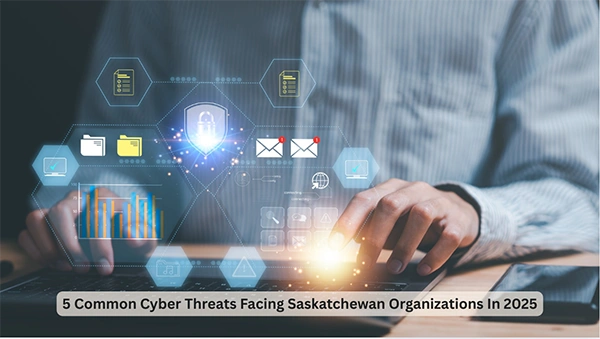
Ten years ago, cybersecurity was often viewed as an issue primarily for large tech companies or multinational corporations. Today, it’s an everyday concern for organizations across all industries and sizes, including traditional sectors that are experiencing rapid digital transformation.
Saskatchewan fits that description perfectly.
Saskatchewan remains firmly rooted in its core industries—agriculture, energy, and mining continue to anchor the province’s economy. However, businesses, educational institutions, and public agencies across these and other sectors are increasingly embracing digital transformation. Cloud computing, IoT integration, and remote work technologies are no longer experimental—they’re becoming operational standards.
But with this new growth comes new vulnerabilities.
Throughout businesses and government agencies in Saskatchewan, there are numerous tempting opportunities for cyber assailants:
- Customer information
- Systems operating financial transactions
All these are crucial components in today’s interconnected world.
Here, we examine five of the top cyber threats that Saskatchewan businesses are likely to face in 2026.
1. Local Businesses Get Phished
Today, one of the most common attacks is phishing, where unsolicited emails, text messages, and social media posts try to steal individuals’ personal information. Saskatchewan companies, including small and medium-sized businesses, are experiencing constant increases in phishing activity, according to recent industry surveys.

Cybercriminals no longer use generic scam emails. Instead, they employ highly targeted spear-phishing campaigns and may masquerade as familiar local partners or vendors.
Now, when organizations seek cybersecurity Saskatchewan solutions, they’re looking for robust defenses that include advanced email filtering solutions, real-time monitoring, and staff training programs. These not only quarantine suspicious emails but also educate employees on how to identify potential scams before they fall victim to them.
2. Ransomware Threats Rising In Healthcare & Education
Ransomware attacks pose special risks to Saskatchewan’s healthcare and educational organizations. These sectors contain sensitive data. This may include medical records, student information, and financial details, that an attacker can encrypt and then hold for ransom.
Recent ransomware attacks on Canadian provinces demonstrate that public services are the primary target, as downtime can significantly disrupt daily life and lead to negative public attention.
Many hospitals and universities have already expanded their cybersecurity budgets in light of those risks. Securing backup systems, vulnerability assessments, cyber security compliance audit and endpoint detection tools is no longer an option.
3. Supply Chain Attacks Targeting Saskatchewan Industry
Saskatchewan has an economy that is reliant on tightly interconnected supply chain linkages across agriculture, manufacturing, and logistics. Local companies and entities may have secure systems, but their suppliers or service providers may not have the same level of security.
This presents an opportunity for cybercriminals to attack less robust points of entry.
Supply chain attacks are those that penetrate lower-tier, less-protected vendors and then use them as a gateway to reach larger, more secure organizations. This approach gained worldwide attention following several high-profile incidents in North America over the past few years.
The learning for businesses in Saskatchewan is evident. Increasingly, companies are requiring vendor security assessments as part of their contracts or agreements to ensure that all partners meet a minimum standard of cybersecurity.
4. Cloud Misconfigurations Exposing Sensitive Data

The most common misconfiguration error in the cloud is misconfigured exports; however, the number of incidents and affected files has decreased during the first half of 2020.
As more Saskatchewan businesses migrate their business applications to the cloud, the risks of misconfiguration increase significantly. Whether Microsoft Azure, AWS, or smaller cloud service providers, human error is the number one cause.
Those slip-ups typically occur in the form of improperly secured storage buckets or lax access control settings. Recently, misconfigured instances became one of the leading causes of reported data breaches in Canadian provinces, including Saskatchewan.
Organizations in the area that are migrating workloads to the cloud will also want to focus on cloud security after the transition. Security is now a best practice, involving the implementation of zero-trust security models, conducting regular audits of cloud permissions, and utilizing data encryption both at rest and in transit.
5. Insider Threats on the Rise in Hybrid Work Environments
In Saskatchewan, the post-pandemic workplace is a blend of on-site, off-site, and remote offices. While flexibility is ideal for operations, it also creates new insider threat attack vectors, both malicious and inadvertent.
Insiders, for example, may unintentionally expose data when using insecure devices, lax passwords or sharing unwarranted confidential files on an unofficial platform. More extreme still, dissatisfied workers can be motivated to steal or sabotage information deliberately.
In response to this, it is becoming increasingly common for Saskatchewan businesses to utilize identity and access management (IAM), multi-factor authentication (MFA), and behavioral analytics tools. These solutions, when properly implemented, enable the identification of who accesses what data, when, and from where, and, in real-time, make it possible for businesses to spot when one person is doing something unusual.
Why Saskatchewan Requires Geocentric Cybersecurity Policies
As the cybersecurity threats facing industries, energy companies, and public sector bodies in Saskatchewan, Canada, are global, the province needs to find a model response that is appropriate to its economy. Risk profiles differ significantly, ranging from agricultural tech companies to local healthcare networks.
Local cybersecurity companies and agencies are now excessively involved. These groups not only represent global cybersecurity knowledge but also have a firm grasp of local regulations, data privacy legislation, risk profiles, and specific threat and risk patterns in Saskatchewan.
Bottom Line
By knowing what to watch for—such as phishing scams, ransomware attacks, supply chain disruptions, cloud misconfigurations, and insider threats—local businesses can implement security measures on multiple fronts to safeguard their data, operations, and public confidence in their work.
Whether it’s through in-house IT staff or strategic alliances with dedicated cybersecurity specialists in Saskatchewan, it’s all about managing risk proactively. Cybersecurity isn’t just an issue for the future; it’s a daily priority for organizations serious about thriving in Saskatchewan’s increasingly digital landscape.

Making a presentation doesn’t just mean designing slides. It’s about defining a clear structure, using defined logic, useful visuals, and…

The long wait times and ineffective management of customer queues can have a significant impact on customer satisfaction and business…
Competitor research without traffic data is guesswork. You can guess who your rivals are, guess how big they are, guess…
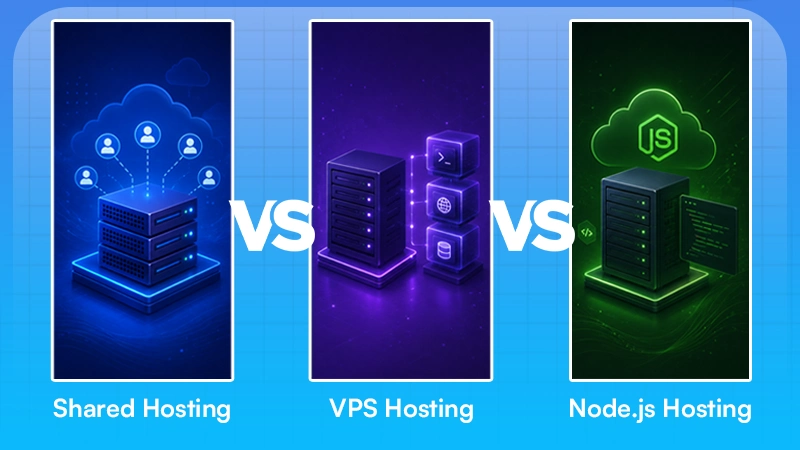
The performance of digital business is directly related to website speed, uptime, and scalability. Slow page performance has a negative…

“People work for money but go the extra mile for recognition, praise, and rewards.” — Dale Carnegie (Writer & Teacher)…

Almost every company that depends on data runs into the same problem: although they can find the data they need,…

Financial data supports every part of a business, directly affecting cash flow, payroll, tax reports, audits, customer billing, and daily…
“Cybersecurity is much more than a matter of IT.” — Stephane Nappo (Cybersecurity Professional) For manufacturers working within the defense…

Learning has transformed in the modern age with the integration of new technologies to help students and professionals prosper in…