
Scalable hosting allows dynamic adjustment in server resources. It can be CPU, RAM, or storage, so as your online store grows, preventing site slowdowns during traffic spikes.
Hosting that Grows with Your Webshop
 Mahima Dave
Updated on: Feb 13, 2026

Opening a webshop might seem convenient until it doesn’t. It’s ironic that as things grow, it gets harder to handle the webshop. Traffic starts fluctuating, product ranges expand, even customer expectations can shift.
If your web host doesn’t adapt to your business, it is sure to become a bottleneck. All this can lead to delayed loadings and even downtimes. As per Google, you can lose 20% of your conversions with every second the customer has to wait for your webshop to load.
The infrastructure beneath your online store must be responsive, not just on the launch day, but throughout its life as changes happen in real life. The technical foundation can only be called solid if it grows without breaking things.
The ability to grow without breaking structure is what defines a solid technical foundation.
In this article, I will answer why you have to be careful about choosing your web hosting while setting up your webshop. As you already know, choosing a fixed infrastructure can have grave consequences for your business.
KEY TAKEAWAYS
- An online business built on fixed infrastructure can lead to slow load times and downtimes as it grows.
- These things can dent the conversion by a huge margin.
- A webshop can start small, but the hosting needs to be built with scalability.
- The webshop site hosting should be expandable without breaking any foundational aspect.
Growth Without Disruption
Starting small is nothing to be ashamed about; almost everyone does that. The real challenge is expanding without instability. As a webshop gains visibility, more is asked of the hosting environment. More visitors, more queries, more background tasks. Scaling manually under pressure often leads to shortcuts and reactive choices. But a system designed with growth in mind allows for expansion that doesn’t interrupt the work or the user experience. It makes scaling a natural part of progress.
Infrastructure That Adjusts to Load
Every business has its own rhythmic cycles, same is true for webshops. A store that sees steady traffic all year behaves differently compared to one that deals with seasonal spikes or sudden demand surges. Hosting needs to reflect those differences without overcomplicating deployment. With scalable webshop hosting solutions, it’s possible to configure environments that grow with usage not in theory, but in actual performance metrics and developer access. This ensures not only continuity, but room for experimentation as well.
(NON)-TECHNICAL INSIGHT
You don’t have to be an IT expert to manage your webshop hosting, as many of them come with user-friendly interfaces.
Clear Separation Between Layers
Growth comes along with increased complexity. A growing shop needs implementation or reviews of: payment integrations, inventory management, caching policies, analytics tools, etc. Without structure, these additions start interfering with one another. Clean hosting separates the application layer from the database, the cache from the session handler, the logs from the core. This modularity isn’t about perfection it’s about reducing risk. It allows developers to adjust one layer without triggering unintended side effects elsewhere.
Technical Change Without Workflow Friction
Scaling is as technical as its operational. During expansion, development teams need:
- Staging environments
- Versioning tools
- Rollback options
Changes to the webshop should be testable and reversible. When infrastructure supports the way a team works, upgrades, migrations and deployments stop being points of tension. They become routine steps in a longer-term rhythm.
Hosting Shaped by Actual Use
Everything on a webshop has two layers, public-facing and internal logic. The webshop aspects that concern these layers include:
- Search behavior
- Customer data
- Order flows
Hosting that responds to these specifics rather than applying generic templates is what allows a project to evolve over time. Resource allocation, storage models, and caching rules must all be tuned based on actual use, not assumptions. It’s this alignment that keeps a growing webshop fast, stable and responsive.
Reliability as a Baseline, Not an Add-On
If your webshop grows to be famous, people won’t tolerate a slow website and downtimes for even a second. Uptime and website performance don’t just stay technical metrics, but become necessary business requirements. Hosting should be designed to absorb failures without immediate impact on customers or operations. Redundancy, monitoring, and automated recovery mechanisms create an environment where issues are contained rather than escalated. This makes reliability the default condition, not something that depends on constant manual intervention.
Room for Future Decisions
A hosting setup needs to be scalable enough that it doesn’t lock a webshop into fixed assumptions about technology or architecture. As the business grows, it may need to introduce new services, integrations, or traffic patterns. Infrastructure that leaves room for these decisions allows a webshop to evolve without forcing disruptive redesigns. This flexibility ensures that technical choices made early on continue to support growth instead of limiting it.
Frequently Asked Questions
What is scalable hosting?
When should I upgrade it?
Upgrade when you experience slow load times, high customer traffic, frequent downtime, or when you are expanding your product catalog.
What type of hosting is best for growth?
Cloud hosting or VPS (Virtual Private Server) is ideal, as they offer flexible resources and high performance compared to basic shared hosting.
Is there a possibility of losing visitors while upgrading?
No, reputable providers allow for seamless upgrades, which means no downtime for your webshop during the transition.
Related Posts

8 Best AI Presentation Makers for Business-Ready Slides
Making a presentation doesn’t just mean designing slides. It’s about defining a clear structure, using defined logic, useful visuals, and…

Queue Management Software Troubleshooting Guide: 8 Common Faults and Fixes
The long wait times and ineffective management of customer queues can have a significant impact on customer satisfaction and business…

How to Use Similarweb Website Traffic Data for Competitor Research
Competitor research without traffic data is guesswork. You can guess who your rivals are, guess how big they are, guess…
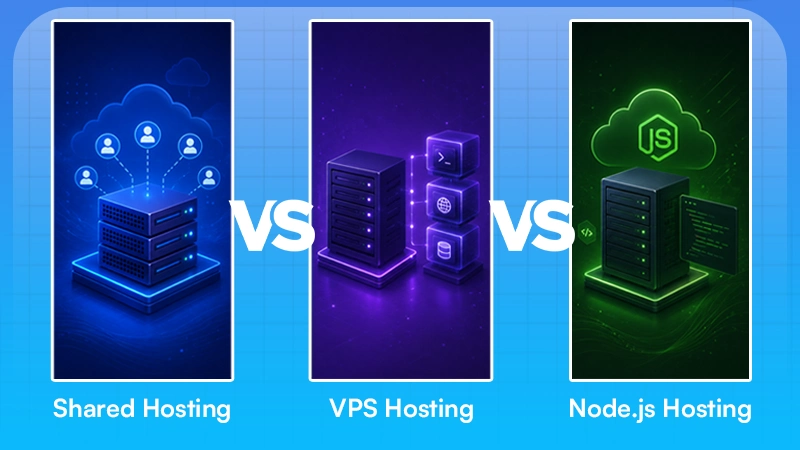
Choosing the Right Hosting Model for Scalable Digital Platforms
The performance of digital business is directly related to website speed, uptime, and scalability. Slow page performance has a negative…

How Data-Driven Performance Tools Are Transforming Employee Recognition in Tech Companies
“People work for money but go the extra mile for recognition, praise, and rewards.” — Dale Carnegie (Writer & Teacher)…

Why Businesses Struggle to Collect Reliable Data from the Web
Almost every company that depends on data runs into the same problem: although they can find the data they need,…

Why Financial Data Recovery Matters for Businesses
Financial data supports every part of a business, directly affecting cash flow, payroll, tax reports, audits, customer billing, and daily…

CMMC Compliance Is Coming for Manufacturers. Here Is What You Need to Do
“Cybersecurity is much more than a matter of IT.” — Stephane Nappo (Cybersecurity Professional) For manufacturers working within the defense…

How Data-Based Tools Influence Learning Performance
Learning has transformed in the modern age with the integration of new technologies to help students and professionals prosper in…