


Gartner’s research on B2B buying behavior shows the average enterprise buying process now involves 6–10 decision-makers. That number alone explains why enterprise funnel conversion rates sit 30–40% lower at each stage compared to SMB SaaS benchmarks.
Benchmarking Enterprise Hardware Compatibility on B2B Tech Evaluation Platforms
Table of Contents
- Raw Telemetry: Mining Bare-Metal Benchmark Logs on B2B Tech Platforms
- Using Peer Reviews to Spot Controller and Firmware Conflicts
- Evaluating IOPS and Memory Bandwidth Under Enterprise Loads
- Fault-Tolerant Architectures: Assessing Motherboard and Power Redundancy Ratings
- Validating Legacy Storage Arrays with Modern OS Kernels
- Disaster Recovery Mapping: Matching Hardware Specs to Bare-Metal Restoration Software
- Conclusion
- Frequently Asked Questions

Technology is taking centre stage in the contemporary world, making all units, such as companies, organisations, countries, and even individuals, reliant on understanding the complex system to function better.
And with changes in the digital world, choosing enterprise hardware is no longer limited to just buying the latest technology in the market.
Despite the latest technology, issues with the conformity in the system can cause several problems which will ultimately cause delays,increased costs and even challenges in the performance.
So what is the solution?
The solution is B2B tech evaluation platforms that enable easy comparison of hardware compatibility, ultimately leading to better decision-making.
Key Takeaways
- Raw Telemetry: Mining Bare-Metal Benchmark Logs on B2B Tech Platforms
- Using Peer Reviews to Spot Controller and Firmware Conflicts
- Evaluating IOPS and Memory Bandwidth Under Enterprise Loads
- Fault-Tolerant Architectures: Assessing Motherboard and Power Redundancy Ratings
- Validating Legacy Storage Arrays with Modern OS Kernels
- Disaster Recovery Mapping: Matching Hardware Specs to Bare-Metal Restoration Software
- Conclusion
- FAQs
Raw Telemetry: Mining Bare-Metal Benchmark Logs on B2B Tech Platforms
Hardware applications cannot solely represent the real performance of the applications.
As a result, B2B customer review management platforms have become the need of the hour. Such systems become even more crucial when it comes to depicting how systems actually function under extensive workloads.
Further metrics such as :
- CPU Usage
- Memory Throughput
- Storage Speed
- And Latency offer a clear perspective of hardware capabilities.
To maximize the value of your B2B platform and review data, connecting your lead generation and CRM tools is essential for a seamless sales process. For teams using LinkedIn to source and qualify prospects, learning how to connect Sales Navigator to HubSpot allows you to sync contacts, track buyer engagement, and streamline outreach directly within your pipeline.
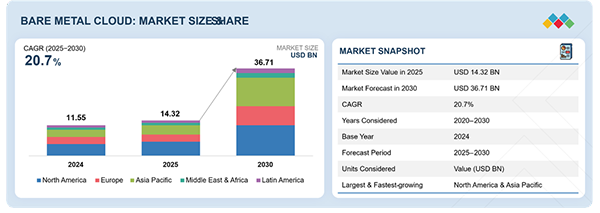
You can further analyze the raw telemetry from a market lens as depicted in the infographics:
Using Peer Reviews to Spot Controller and Firmware Conflicts
The technical specifications do not always uncover compatibility issues that arise in real-world environments.
This is where the peer review on B2B technology platforms comes in.
Often, users share stories of controller failures, mismatched firmware, drivers that do not work, or systems that do not integrate as expected, but which may not be documented in the product documentation.
The reviews help businesses identify recurring problems before spending money on hardware.
Organisations can avoid discovering problems post-deployment and make more informed decisions based on real user experiences and decrease the risk of expensive performance problems.
Evaluating IOPS and Memory Bandwidth Under Enterprise Loads
Enterprise systems often manage large volumes of data and demanding workloads, making performance evaluation an important part of hardware selection.
Looking at processor speed alone is not enough, as businesses also need to understand how efficiently systems handle storage- and memory-intensive tasks.
Metrics such as IOPS (Input/Output Operations Per Second) and memory bandwidth help measure system performance under enterprise conditions.
IOPS indicates how quickly a storage system can process read and write operations, while memory bandwidth shows how efficiently data moves between memory and processors.
B2B technology evaluation platforms offer benchmark data that measures actual workload performance, not ideal test conditions.
Such metrics help organisations to identify possible bottlenecks, evaluate the stability of their systems, and select the infrastructure to support their present operational requirements and future growth.
Fault-Tolerant Architectures: Assessing Motherboard and Power Redundancy Ratings
Performance is important, but an enterprise system must be reliable and stable as well. Even a high-performance system can have major operational problems if a single hardware failure causes downtime.
The design of fault-tolerant architectures, that is, systems able to keep on functioning in spite of some of their components failing, can mitigate these risks.
- Redundant power supplies
- Reliable motherboard designs
- Backup components
- Failover capabilities are important features for ensuring system continuity.
B2B technology evaluation platforms and benchmark reports enable organisations to evaluate how hardware performs under stress and identify potential reliability issues before deployment.
Evaluating these considerations allows businesses to select infrastructure that delivers high performance, while minimising downtime, boosting system resilience and facilitating long-term operational efficiency.
Validating Legacy Storage Arrays with Modern OS Kernels
As enterprise infrastructure evolves, many organisations continue to use legacy storage arrays to avoid the cost and complexity of replacing entire systems. But when you try to integrate legacy storage environments with newer operating systems and newer kernels, you can run into compatibility issues. Outdated firmware, unsupported drivers, and evolving system requirements may impact performance consistency and reliability.
Just as organizations evaluate dedicated infrastructure and performance-sensitive environments before deployment, B2B technology evaluation platforms help businesses validate whether older storage systems can still support modern workloads.
- Benchmark data
- User feedback
- And real-world testing insights provide a clearer understanding of how legacy hardware behaves under current enterprise conditions.
By validating compatibility before deployment, businesses can identify performance limitations upfront, reduce operational risk, and continue to take advantage of existing infrastructure where it continues to deliver stable and reliable results.
Fun Fact Babbage, often regarded as the “father of the computer,” envisioned a fully mechanical system of gears and wheels, powered by steam, capable of handling complex calculations that previously required intensive manual labour.
Disaster Recovery Mapping: Matching Hardware Specs to Bare-Metal Restoration Software
Disaster recovery mapping focuses on aligning hardware capabilities with bare-metal restoration requirements to ensure systems can recover quickly and maintain performance during unexpected failures.
The effectiveness of recovery environments under pressure is directly impacted by hardware specifications, including CPU resources, memory, storage performance, and network capacity.
Organisations can determine whether current environments can support present and future business requirements by using purpose-built benchmarks, performance dashboards, and real-world testing scenarios, as demonstrated by Login VSI.
Capacity testing and failover simulations help identify performance bottlenecks before deployment while validating recovery plans under maximum workloads.
This enables IT teams to shift from reactive to more proactive decision-making.
Businesses can accurately predict performance, optimise infrastructure costs, help with technology migrations and identify if existing systems can continue to support newer operating systems and applications rather than guessing with the B2B review tools.
The right hardware to go with restoration software will make recovery more reliable and add value to existing infrastructure investments.
Conclusion
Enterprise hardware decisions are no longer about just technical specs or vendor claims. Businesses need real-world insight on performance, compatibility, reliability, and long-term scalability before deployment.
Organisations can use benchmark data, peer reviews, real-world testing and disaster recovery evaluations to reduce risk and make better technology investments. Ultimately, a structured approach to evaluation helps build a stronger, more efficient enterprise infrastructure that is ready for the future.
Frequently Asked Questions
What are Gartner’s B2B SaaS funnel conversion benchmarks?
Is it true that benchmarking is a process of evaluating metrics or best practices from other organizations?
Benchmarking is a systematic process of measuring and comparing an organization’s performance, processes, and practices against those of other organizations, either within the same industry or across different industries.
What is benchmarking against industry standards?
Industry benchmarking is the process of comparing your company’s performance, metrics, and strategy against competitors or broader industry standards.
What is B2B enterprise technology?
Business-to-business (B2B) integration is the automation of business processes and communication between two or more organizations.
Related Posts
Using HeyGen AI for Sales and Customer Onboarding
It’s best to use HeyGen AI to create videos for you that answer a particular question or pain point. You…

Search Console Forgets Everything After 16 Months: How to Back Up Your SEO Data
After completing the period of 16 months, all the data and access are deleted from Google Search Console’s database. After…
Why Digital Transformation Projects Stall: A Resourcing Playbook for Project Managers
Digital transformation projects are on the rise at this time. From government-backed initiatives to enterprise cloud adoption and AI integration.…
How Email Hosting Providers Store and Protect Business Data
Where does your business email go when you click the send button? The impression is that the email just goes…
Best CI/CD Platforms for Coding Agents and AI-Native Development
CI/CD has changed its job because coding agents now write a growing share of the changes that reach a repository.…

Mavlers Agency on Why Global Agencies Are Turning to Offshore SEO Teams
An offshore SEO team in India is becoming more and more an option for great profit for global agencies; it’s…

How to Change Signature in Outlook: A Complete Guide
How do you change signature in Outlook? It sounds simple until you realize that the steps vary across Windows, Mac,…

Best 7 AI Development Companies for Data AI Solutions for Your Project: Guide for…
Buying model work before the data work is the most expensive order to do it in. The pilot shows well,…
Top Software Development Companies Backed by GoodFirms Reviews
In September 2026, GoodFirms listed 853 software development companies in California. The group had a median hourly rate of $37,…