


An organized space will ensure efficient data processing through effective power management, cooling, security, improved workflow, and increased productivity of employees.
Organized Business Spaces That Support Data Operations
Data runs on more than just code; it runs on physical spaces. The best algorithms falter without proper power, cooling, layout, and security. A well-designed workspace turns raw information into real decisions, quietly powering everything else.
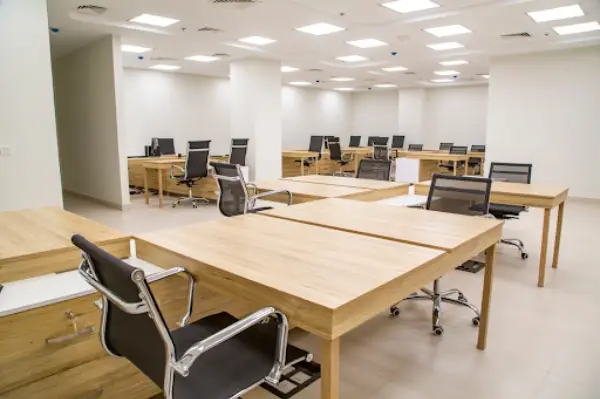
Infrastructure and Environment
Before a single byte is analyzed, the physical infrastructure must be bulletproof. Data operations are notoriously demanding on a building’s core systems, and a space that is not engineered for these demands will quickly become a bottleneck.
- Robust power distribution with dedicated circuits prevents outages and voltage fluctuations that can corrupt data or damage sensitive equipment.
- Redundant cooling systems, including hot-aisle and cold-aisle containment, maintain stable temperatures even under peak computational loads.
- Raised flooring and overhead cable trays with color-coded wiring allow for quick troubleshooting and reduce tripping hazards or accidental disconnections.
- Strict humidity and static electricity controls are maintained to prevent silent degradation of hardware over time.
- Air filtration systems minimize dust ingress, which can clog fans and cause overheating in servers and workstations.
Strategic Zoning for Workflow Efficiency
Data operations are not monolithic; they involve distinct phases: ingestion, processing, storage, analysis, and reporting. An organized business space recognizes these phases and zones the floor plan accordingly to minimize wasted motion and maximize throughput.
- The data ingestion area is placed near the main telecom entry point to reduce signal loss and latency during high-bandwidth transfers.
- Compute-intensive server racks are positioned adjacent to cooling units, optimizing energy efficiency and shortening coolant delivery paths.
- Storage arrays are located in quieter, vibration-free sections of the building to protect mechanical hard drives from physical stress.
- Data engineers are seated close to hardware for rapid, hands-on troubleshooting, while analysts are given quiet, distraction-free pods for deep focus work.
For specialized equipment that demands extra security and climate precision, facilities like Loxon Storage in Mansfield exemplify how off-site, purpose-built environments can complement an internal data floor. Such external options keep primary workspaces uncluttered and focused on active processing, while legacy or archival data remains safely housed elsewhere.
Access Control and Surveillance
Data is valuable, and its physical guardians must be as robust as its cyber defenses. An organized business space embeds security into its very architecture, not as an afterthought but as a foundational layer that deters, detects, and delays unauthorized access.
- Mantraps and biometric scanners at all entry points ensure that only verified personnel can enter sensitive zones.
- Keycard-controlled doors with time-stamped logs create an auditable trail of every entry and exit.
- A layered, concentric-ring model is used: public lobbies are open, but data center floors and network operations rooms require progressively higher clearance.
- Continuous video surveillance with motion detection covers all corridors, server aisles, and equipment racks, with footage retained for forensic review.
Ergonomic and Collaborative Human-Centric Design
Behind every data operation are human beings: engineers, analysts, and administrators who spend long hours in front of multiple monitors. An organized business space prioritizes their well-being because tired or uncomfortable staff make errors that no firewall can prevent.
- Height-adjustable desks and ergonomic chairs reduce physical strain during marathon debugging or data-modeling sessions.
- Dual- or triple-monitor arms with cable management keep workstations tidy and allow each user to customize their viewing angles.
- Acoustic panels and sound-absorbing ceiling tiles dampen the constant hum of cooling fans, reducing mental fatigue and improving concentration.
- Breakout areas with soft seating and natural light are placed near data floors, offering quick respite without requiring a long walk away from critical systems.
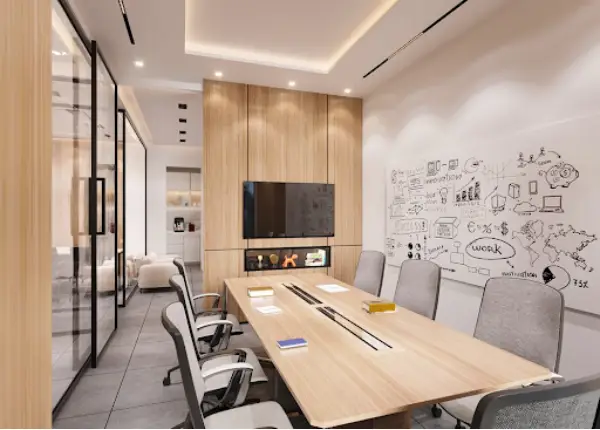
- Whiteboard walls and large touchscreen displays are installed in team pods, enabling real-time diagramming of data flows and architecture changes.
Future-Ready Scalability and Adaptive Layouts
Data volumes do not grow linearly; they explode. An organized business space must anticipate this reality by building in flexibility from day one, avoiding the costly and disruptive need for complete overhauls every few years.
- Modular rack systems and empty equipment bays are pre-wired with power and network drops, allowing new servers to be added in hours rather than weeks.
- Movable partition walls and furniture on casters enable rapid reconfiguration of team areas as projects expand or shift priorities.
- Over-provisioned cooling and power capacity provides a buffer for unexpected growth without immediate construction.
- Empty floor space is deliberately left unassigned, reserved for future high-density compute clusters or specialized hardware like GPU arrays for AI workloads.
- Structured cabling pathways with extra pull-through conduits make it simple to add fiber-optic or high-speed Ethernet links without tearing up floors or ceilings.
A data workspace is not just a room; it is a living ecosystem. Power, cooling, layout, security, and comfort all work together. Get it right, and everything runs smoothly. Get it wrong, and problems multiply fast.
Frequently Asked Questions
Why are organized business spaces required for data processing?
What is the infrastructure needed for an information-oriented workspace?
The infrastructure required for an information-oriented workspace includes stable power distribution, cooling systems, cabling, humidity management, and air filtering.
What role does zoning play in achieving operational efficiency?
Zoning the space according to the process of data ingestion, processing, storage, and analysis eliminates any unnecessary movement.
Which physical security measures are employed in securing data operations?
Common methods used by businesses include biometrics, key cards, CCTV cameras, man traps, and controlled access areas.
Related Posts
Best 7 AI Development Companies for Data AI Solutions for Your Project: Guide for…
Buying model work before the data work is the most expensive order to do it in. The pilot shows well,…

Top Software Development Companies Backed by GoodFirms Reviews
In September 2026, GoodFirms listed 853 software development companies in California. The group had a median hourly rate of $37,…

What Is a Blockchain Explorer? How to Track Crypto Transactions
A blockchain explorer is a searchable interface for viewing data recorded on a public blockchain. You can look up a…

How AI Is Changing the Way Businesses Configure and Manage CRM Systems
With the growth and expansion of business operations, CRM management gets complex. New things, workflows, integrations, and custom rules often…

AI Photo Editors for Modern Image Editing in 2026 for Social Media and E-commerce
Due to advanced neural rendering models, the landscape of digital photography, graphic layout, and commercial design has changed fundamentally. Now…

Top 6 Automated Calling Software Options for Businesses
In this digital era, businesses are cutting their staff and relying more on automated systems. One great example of this…

Data Visualization Team: What It Takes to Build One That Delivers
Data visualization is no longer just about normal charts. In this modern era, they make no sense. Dashboards that are…

What Google Trusts More Than Your Own Copy
SEO is not just limited to optimising your website pages and adding relevant keywords in the content. Here is much…

Top 3 Data Analytics Courses That Match What Employers Are Hiring For
The data analytics courses are made for employers who want practical job skills, including SQL, data preparation, a digital competence…