
It is an inventory cycle counting solution that automates and improves the efficiency and accuracy of the inventory count process.
How to Test Drive Oracle NetSuite the Smart Way (Without Wasting Weeks on “Pretty” Demos)
 Kartik Wadhwa
Updated on: Jan 08, 2026
Table of Contents
- What “Test Driving” NetSuite Really Means
- Option 1: Self-Guided Product Demo Simulations (Fastest Way to “Get a Feel”)
- Option 2: A Hands-on 14-Day Trial (Best for Serious Evaluation)
- The Biggest Mistake Teams Make During an ERP Test Drive
- Your “NetSuite Test Drive” Checklist (Use This to Keep the Trial Honest)
- Dashboards: What You Should Actually Validate
- If You’re an Existing Netsuite Customer: The “Release Preview” Test Drive
- “Trial vs. Simulation vs. Release Preview”: Which Should You Choose?
- How to Make Your Test Drive Persuasive (Internally)
- Final Thoughts: Test Driving NetSuite is How You Buy With Confidence
- Frequently Asked Questions
Purchasing an ERP is similar to transferring all of your files from a cluttered laptop to a brand-new computer.. In reality, one incorrect assumption—about workflows, permissions, reporting, integrations, or data structure—can lead to months of rework.
If you’re currently evaluating ERP options, the quickest way to cut through the clutter is to test drive Oracle NetSuite in a hands-on setting—so your decision is based on reality, not sales hype. A proper test drive provides your team with enough hands-on experience to answer the questions that ultimately determine success:
In this guide, you’ll discover the three most practical ways to test drive NetSuite, how to structure your evaluation so that it feels decisive (rather than chaotic), and the pitfalls that trip up otherwise smart teams.
Let’s get started!
Key Takeaways
- Understanding what test driving really means
- Looking at the two major options
- Uncovering some mistakes that cause big problems
- Exploring a deep comparison between trial, preview, and simulation
What “Test Driving” NetSuite Really Means
A true ERP test drive consists of validating business outcomes rather than clicking around. Think proof, not preview.
Here’s what you’re trying to confirm:
- Workflow fit: Your processes map cleanly—without weird workarounds.
- Visibility: Dashboards and reporting make sense to real users (finance, ops, sales).
- Data reality: Your data model won’t collapse under your chart of accounts, item structures, or multi-entity needs.
- Adoption: People can actually use it without daily friction.
The good news: there are multiple ways to test drive NetSuite depending on whether you’re evaluating it as a new buyer—or validating an upcoming release as an existing customer.
Interesting Facts
NetSuite’s AI (Bill Capture, Exception Management) speeds up data entry and flags financial anomalies, boosting accuracy and freeing up staff
Option 1: Self-Guided Product Demo Simulations (Fastest Way to “Get a Feel”)
If your first goal is to understand what NetSuite can do (without the overhead of provisioning an environment), NetSuite offers on-demand product demo simulations—guided, click-through walkthroughs of key modules.
Consider these a “warm-up lap” before you test Oracle NetSuite with real workflows and role-based dashboards.
These are especially helpful for:
- Getting stakeholder buy-in (“Okay, I get what the workflow looks like.”)
- Identifying which modules are must-haves
- Shortlisting the areas you want to test in a deeper trial
When simulations are enough
Simulations are great when you’re in the discovery phase. They’ll help you answer, “Is this directionally right?”
When simulations are not enough
Simulations won’t validate your real-world complexity—like approvals, custom fields, subsidiaries, item/warehouse rules, or how your team actually works under pressure.
If you’re beyond “curious,” you need a deeper test drive.
Option 2: A Hands-on 14-Day Trial (Best for Serious Evaluation)
When you’re actively evaluating NetSuite, the most valuable approach is hands-on access where your team can explore workflows, roles, dashboards, and reporting more realistically.
Many NetSuite partners offer 14-day trial experiences. If you want the most realistic feel for how teams actually work in the platform, a guided trial is the closest thing to sitting in the driver’s seat.
The Biggest Mistake Teams Make During an ERP Test Drive
They “explore” instead of testing.
Exploration feels productive—until you realize you’ve spent 10 days clicking menus, and you still can’t answer whether NetSuite works for your business.
The fix is simple: treat your test drive like a mini-project.
A better approach: workflows first, features second
According to NetSuite testing guidance, the goal is to test business workflows in order to prevent issues and ensure everything works as expected, rather than to exhaustively test every feature.
That same mindset works beautifully for trials.
Your “NetSuite Test Drive” Checklist (Use This to Keep the Trial Honest)
Before you test drive Oracle NetSuite, set up your evaluation like a mini-project. The goal isn’t to click everything—it’s to prove the workflows you rely on will hold up in real life.
Step 1: Pick 5–8 workflows that represent your real business
Choose workflows that:
- Touch multiple departments
- Involve approvals or exception handling
- Produce reporting outputs that leadership cares about
Examples:
- Quote → order → fulfill → invoice → cash application
- Purchase request → PO → receipt → bill → payment run
- Month-end close (journals, allocations, intercompany if relevant)
- Subscription billing scenario (if applicable)
Step 2: Assign roles (don’t let IT do all the clicking)
A test drive fails when one person “drives” while everyone else watches.
Aim for:
- Finance lead (controller/CFO view)
- Ops lead (inventory/order flow)
- Sales or CS lead (CRM touchpoints)
- Admin/IT (security, configuration logic)
Step 3: Define “pass/fail” criteria before you start
You need crisp decision criteria, like:
- “We can run an order with a backorder and partial fulfillment without a workaround.”
- “AR dashboard shows DSO, aging, and top overdue accounts by customer segment.”
- “We can map our revenue recognition logic cleanly.”
Step 4: Use data selectively, not recklessly
A common fear is, “We can’t test without our data.”
True—but importing everything is overkill.
Instead:
- Use a small dataset that mirrors complexity: a slice of customers, items, invoices, POs
- Validate structure: segments, subsidiaries, classes, departments
- Test reporting outputs using real-ish naming and rules
Dashboards: What You Should Actually Validate
Many NetSuite “test drive” articles obsess over dashboards because they’re the most visible part of ERP—and they’re what execs react to first.
That’s exactly why, during yourtest drive Oracle NetSuite, dashboards should be treated as a validation tool—not just something that “looks nice” in a meeting.
That’s fair. But dashboards should be tested like a control panel, not a billboard.
Here’s what to validate:
1) Role-based clarity
Can different roles see what matters without hunting?
2) Drill-down usefulness
When you click a KPI, do you get actionable details—or a confusing list?
3) Reporting trust
Does the KPI line up with the transaction reality? In other words: does the dashboard tell the truth?
If You’re an Existing Netsuite Customer: The “Release Preview” Test Drive
If you already run NetSuite, your “test drive” isn’t about choosing an ERP—it’s about validating that the next release won’t break your processes.
A strong Release Preview mindset includes:
- Testing workflows to prevent issues and ensure expected functionality
- Using a structured test plan template and workflow worksheets
- Identifying scheduled events and planning disable-enable timing around upgrades
Even if you’re just getting started with NetSuite, this blueprint will help you understand what good testing looks like: structured, workflow-based, and risk-aware.
“Trial vs. Simulation vs. Release Preview”: Which Should You Choose?
Choose demo simulations if…
- You need fast stakeholder alignment
- You’re still deciding if NetSuite is even a contender
- You want to explore a specific module’s “shape” (AP/AR, inventory, billing, etc.)
Choose a 14-day trial if…
- You’re seriously evaluating NetSuite against other ERPs
- You want your team to experience role-based workflows and dashboards
- You need real confidence, not surface-level impressions
Choose Release Preview testing if…
- You already use NetSuite and need to validate an upcoming update without production risk
How to Make Your Test Drive Persuasive (Internally)
ERP decisions often die not because the software is bad, but because nobody can clearly explain why it’s the right fit.
To win internal support, document outcomes like:
- Time saved in a workflow (e.g., fewer manual handoffs)
- Visibility gained (e.g., finance and ops looking at the same “truth”)
- Risk reduced (e.g., fewer unknowns before implementation)
Then, wrap it into a simple narrative:
“We tested the workflows that matter most. The system supported them cleanly. The dashboards showed the KPIs we need. Here’s what we learned, what needs configuration, and what we’d do next.”
That story makes decision-makers feel safe—which is the real currency in ERP buying.
Final Thoughts: Test Driving NetSuite is How You Buy With Confidence
If you take one thing from this: don’t confuse curiosity with validation.
A NetSuite test drive works best when you:
- Pick real workflows
- Put real roles in the driver’s seat
- Define pass/fail upfront
- Use data strategically
- Focus on business outcomes, not feature tours
If you’re just getting started, begin with simulations. When you’re ready, move to a structured trial. And, if you’re already a customer, think of Release Preview as process insurance.
Because the best ERP decision isn’t the one that looks good in a demo—it’s the one that still works when real people run real business on it.
If you’re ready to move from opinions to proof, take the next step andtest drive Oracle NetSuite—then score it against your must-have workflows and KPIs.
Frequently Asked Questions
What is Smart Count in NetSuite?
What are the key features of NetSuite?
It provides management and analytical utilities for various domains to streamline repetitive tasks with automation.
Which database does NetSuite use?
NetSuite EPM is built on the foundation of Oracle Cloud EPM.
Related Posts

8 Best AI Presentation Makers for Business-Ready Slides
Making a presentation doesn’t just mean designing slides. It’s about defining a clear structure, using defined logic, useful visuals, and…

Queue Management Software Troubleshooting Guide: 8 Common Faults and Fixes
The long wait times and ineffective management of customer queues can have a significant impact on customer satisfaction and business…

How to Use Similarweb Website Traffic Data for Competitor Research
Competitor research without traffic data is guesswork. You can guess who your rivals are, guess how big they are, guess…
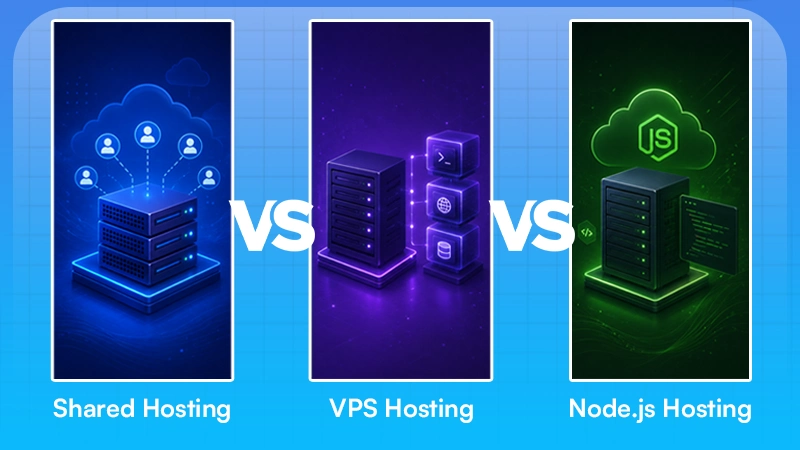
Choosing the Right Hosting Model for Scalable Digital Platforms
The performance of digital business is directly related to website speed, uptime, and scalability. Slow page performance has a negative…

How Data-Driven Performance Tools Are Transforming Employee Recognition in Tech Companies
“People work for money but go the extra mile for recognition, praise, and rewards.” — Dale Carnegie (Writer & Teacher)…

Why Businesses Struggle to Collect Reliable Data from the Web
Almost every company that depends on data runs into the same problem: although they can find the data they need,…

Why Financial Data Recovery Matters for Businesses
Financial data supports every part of a business, directly affecting cash flow, payroll, tax reports, audits, customer billing, and daily…

CMMC Compliance Is Coming for Manufacturers. Here Is What You Need to Do
“Cybersecurity is much more than a matter of IT.” — Stephane Nappo (Cybersecurity Professional) For manufacturers working within the defense…

How Data-Based Tools Influence Learning Performance
Learning has transformed in the modern age with the integration of new technologies to help students and professionals prosper in…