
Data recovery in cybersecurity is the critical process of retrieving lost, corrupted, or encrypted data after cyberattacks (like ransomware) or failures, using secure backups and forensic techniques to restore systems and ensure business continuity.
Why Nonprofits Can’t Ignore Data Recovery — Protect Donors, Compliance & Mission
 Kartik Wadhwa
Updated on: Jan 30, 2026
Table of Contents
- The Reality of Data Growth Inside Nonprofits
- Donor Trust Is Built on Data Integrity
- Compliance and Accountability Are Non-Negotiable
- Member Management Software as a Critical Recovery Point
- Common Causes of Data Loss in Nonprofits
- Designing Recovery That Fits Nonprofit Realities
- Data Recovery as Mission Protection
- Frequently Asked Questions
- Frequently Asked Questions

Nonprofits do not view data as an intangible resource. It serves as the operational framework for trust, compliance, service delivery, and fundraising. The systems that house donor records, member lists, grant documentation, program outcomes, and financial reports are frequently put together over a period of years or even decades.
The consequences of losing, corrupting, or rendering inaccessible that data are far more severe than just being inconvenient. Campaigns falter. Deadlines for reports are missed.
Nonprofits rarely have the margin—financially or in terms of reputation—to withstand protracted disruption, in contrast to commercial enterprises. Data recovery is not an IT luxury in this situation. It is a necessity for continuity and this article covers the depth of this topic seamlessly
Let’s begin!
Key Takeaways
- Understanding the reality of data growth inside nonprofits
- Decoding the importance of donor trust
- Uncovering the compliance and accounting
- Exploring some common reasons of data breaches
The Reality of Data Growth Inside Nonprofits
Nonprofits are not disorganized by nature — they are adaptive. They build systems around people, programs, and funding cycles, often with remarkable efficiency given limited resources. Data grows because activity grows: more members, more donors, more events, more reporting requirements.
Most organizations start with a small, well-understood setup. A donor database. A spreadsheet for volunteers. A shared drive for grant documents. As programs expand, tools are added deliberately to solve real operational needs.
How Nonprofits Actually Operate Day to Day
Nonprofits are workflow-driven. Development teams focus on relationships and fundraising cadence. Program teams track participation, outcomes, and follow-ups. Operations and finance manage compliance, payroll, and reporting. Data supports each function quietly in the background.
To keep these complex gears turning, many organizations lean on specialized tools. For instance, utilizing the Genboostermark software or similar automation platforms can help bridge the gap between manual entry and high-level data management.
This is where Member Management Software becomes central. It often acts as the connective tissue between donors, members, volunteers, events, and communications. When it works well, it reduces manual effort, keeps records aligned, and allows small teams to operate at scale.
Interesting Facts
88% of organizations experienced at least one ransomware attack in a recent year, highlighting the constant threat and the need for robust recovery options.
Growth Brings Opportunity — and Complexity
As nonprofits mature, their systems integrate. Member management platforms connect to email tools, accounting software, event registration systems, and reporting dashboards. This integration enables better engagement and clearer visibility into impact.
At the same time, it introduces complexity. Data moves automatically between systems. Updates happen continuously. A change in one place can ripple elsewhere. Growth is positive, but it raises the bar for data stewardship.
Recovery Planning Supports, Not Slows, Operations
Recovery planning is often seen as defensive, but for nonprofits it is enabling. When recovery is in place, teams can adopt new tools, migrate systems, and expand programs with confidence.
Member management software is again a focal point here. Because it changes daily — new members, renewals, donations, attendance logs — recovery must be frequent, precise, and aware of integrations. Reliable recovery allows nonprofits to keep moving forward without fear that a mistake or failure will undo months of work.
When incidents occur — accidental deletions, failed imports, sync errors, ransomware, or vendor outages — the lack of a defined recovery process becomes visible immediately.
Donor Trust Is Built on Data Integrity
For nonprofits, trust is currency. Donors expect their personal information, giving history, and communication preferences to be handled responsibly.
Data Loss Directly Affects Fundraising
Database which has some insider connections does more than erase records. It breaks segmentation, disrupts recurring donations, and undermines personalized outreach. Recovery delays can derail active campaigns or year-end appeals that cannot be postponed.
Even partial data loss forces teams into manual reconciliation, often under time pressure. The result is inconsistent communication and lost momentum.
Reputation Damage Is Hard to Repair
Nonprofits operate under heightened public scrutiny. A data incident — especially one involving donor information — can quickly erode confidence.
Reliable recovery allows organizations to respond quickly and transparently. Being able to restore systems and demonstrate control matters just as much as preventing the incident itself.
Compliance and Accountability Are Non-Negotiable
Many nonprofits operate within strict regulatory and contractual frameworks. Grant agreements, financial audits, and privacy regulations all depend on accurate, retrievable records.
Reporting Depends on Historical Data
Program impact reports often require longitudinal data. Losing historical records makes it difficult to demonstrate outcomes or meet funder expectations.
Recovery is not about recreating data from memory. It is about preserving the factual trail that accountability depends on.
Audits Expect More Than Good Intentions
Auditors and regulators do not accept explanations; they expect documentation. Inability to restore financial or operational records can raise serious governance concerns.
A tested recovery process signals organizational maturity and reduces risk during audits.
Member Management Software as a Critical Recovery Point
Member management software sits at the center of many nonprofit operations. It tracks members, donors, volunteers, event participation, communications, and often payments.
Looking at WildApricot as a good example of an all-in-one solution, they are designed specifically for this role, helping nonprofits simplify and automate membership management, events, communications, payments, and even their websites through a single cloud-based system.
Because it touches so many workflows, it is also one of the most sensitive systems to failure.
Centralization Increases Impact
When member management software goes down, multiple functions are affected at once. Staff lose access to contact histories. Automated communications fail. Membership renewals stall.
Recovery planning must treat these systems as critical infrastructure, not just another tool.
Data Changes Are Constant
Member records are updated daily. Addresses change. Donations are logged. Engagement histories grow. A backup from last month may be technically intact but operationally useless.
Effective recovery requires frequent snapshots, clear versioning, and the ability to restore specific records without overwriting newer valid data.
Integrations Complicate Recovery
Member management platforms rarely operate alone. They integrate with email services, accounting systems, event tools, and reporting dashboards.
A recovery plan must account for these connections. Restoring one system without considering its integrations can introduce inconsistencies that take weeks to resolve.
Common Causes of Data Loss in Nonprofits
Understanding risk helps prioritize recovery planning.
Human Error
Accidental deletions, incorrect imports, and misconfigured permissions are among the most common causes of data loss. These issues are rarely malicious but can be just as disruptive. Can cause data loss as well as breaches.
Platform Changes and Migrations
Data migration plays a crucial role in risk management.Without reliable recovery points, a failed migration can leave organizations stuck between systems.
Security Incidents
Nonprofits are not immune to cyber threats. Limited budgets and staffing can make them attractive targets. Recovery is often the difference between a short disruption and a prolonged crisis.
Designing Recovery That Fits Nonprofit Realities
Recovery planning does not require enterprise-scale budgets, but it does require intentional design.
Prioritize Critical Data
Not all data carries equal weight. Donor records, financial data, member management systems, and compliance documentation should receive the highest recovery priority.
Document the Recovery Process
Recovery fails most often because knowledge is informal. Clear documentation — who does what, in what order — reduces confusion during incidents.
Test Before You Need It
A recovery plan that has never been tested is a plan in name only. Periodic recovery drills expose gaps and build confidence.
Data Recovery as Mission Protection
Nonprofits exist to serve communities, causes, and missions that depend on continuity. Data loss disrupts that mission quietly but effectively.
Reliable recovery protects more than files. It protects relationships, credibility, and the ability to deliver impact.
Organizations that invest in recovery are not preparing for failure — they are ensuring that growth, change, and unexpected events do not derail the work that matters most.
Frequently Asked Questions
Q1: What is data recovery in cybersecurity?
Ans: Data recovery in cybersecurity is the critical process of retrieving lost, corrupted, or encrypted data after cyberattacks (like ransomware) or failures, using secure backups and forensic techniques to restore systems and ensure business continuity.
Q2 What are the 4 C’s of disaster recovery?
Ans: Communication, Coordination, Continuity, and Collaboration.
Q3 What is the fastest recovery backup?
Ans: If minimizing downtime is critical for your organization, a full backup is ideal for the fastest recovery. If some data loss is acceptable, incremental or differential backups can balance storage efficiency with recovery time.
Frequently Asked Questions
What is data recovery in cybersecurity?
What are the 4 C’s of disaster recovery?
Communication, Coordination, Continuity, and Collaboration.
What is the fastest recovery backup?
If minimizing downtime is critical for your organization, a full backup is ideal for the fastest recovery. If some data loss is acceptable, incremental or differential backups can balance storage efficiency with recovery time.
Related Posts

8 Best AI Presentation Makers for Business-Ready Slides
Making a presentation doesn’t just mean designing slides. It’s about defining a clear structure, using defined logic, useful visuals, and…

Queue Management Software Troubleshooting Guide: 8 Common Faults and Fixes
The long wait times and ineffective management of customer queues can have a significant impact on customer satisfaction and business…

How to Use Similarweb Website Traffic Data for Competitor Research
Competitor research without traffic data is guesswork. You can guess who your rivals are, guess how big they are, guess…
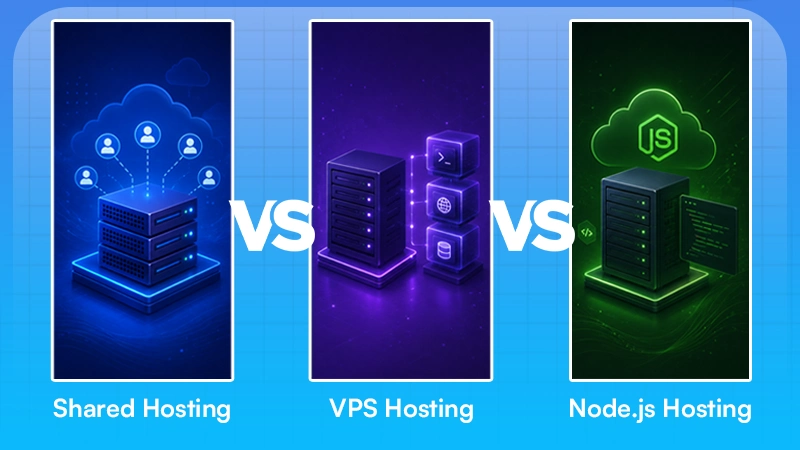
Choosing the Right Hosting Model for Scalable Digital Platforms
The performance of digital business is directly related to website speed, uptime, and scalability. Slow page performance has a negative…

How Data-Driven Performance Tools Are Transforming Employee Recognition in Tech Companies
“People work for money but go the extra mile for recognition, praise, and rewards.” — Dale Carnegie (Writer & Teacher)…

Why Businesses Struggle to Collect Reliable Data from the Web
Almost every company that depends on data runs into the same problem: although they can find the data they need,…

Why Financial Data Recovery Matters for Businesses
Financial data supports every part of a business, directly affecting cash flow, payroll, tax reports, audits, customer billing, and daily…

CMMC Compliance Is Coming for Manufacturers. Here Is What You Need to Do
“Cybersecurity is much more than a matter of IT.” — Stephane Nappo (Cybersecurity Professional) For manufacturers working within the defense…

How Data-Based Tools Influence Learning Performance
Learning has transformed in the modern age with the integration of new technologies to help students and professionals prosper in…