
The Impact of Data-Driven Technology on Commercial Spaces and Beyond
 Mahima Dave
In this digital era, data-driven technology has immensely transformed the way commercial spaces are designed, operated, and experienced.
Whether it’s a small firm or an established organization, everybody is now implementing this innovative approach in their workplace for more favorable outcomes.
Furthermore, tools like Internet of Things sensors, automated systems, advanced cameras, and many more help companies to understand how they use their space more wisely.
Therefore, in this article, we are going to talk about the five positive impacts of this data-driven technology on commercial spaces. Also, how it empowers the business owner to make decisions strategically for a better outcome.
Smarter and Energy-Efficient Building By Automation
Data-driven technologies, such as building management systems (BMS) and IoT sensors, help owners to make their spaces more innovative and efficient through automation.
Likewise, a smart building employs these sensors to optimize the real-time data, like room temperature, air quality, lighting, and occupancy. Then this data is utilized to configure further systems to manage the overall activity of the particular space.
For instance, if an office canteen is empty, the lights and air conditioner can be turned off to save electricity. Similarly, when people start entering the room, the system can turn them on automatically.
Therefore, this makes building more comfortable for the users and also helps to lessen the electricity expense.
Overall, we can say that data-driven automation makes the commercial space high-tech, safer, more sustainable, and ready to adopt any sort of changes right away.
Proactive Maintenance For Effective Financial Strategy
With the help of the data-driven system, businesses can identify any unexpected failures or damage in real time. This ensures that they can plan for the maintenance and prevent any unforeseen, expensive repairs.
Moving forward, instead of waiting for machines or any other equipment to break down, the advanced sensor system scans the data from them and checks whether they are working properly or not.
If there is any problem like unusual sound, vibrating, or screen lagging, the system instantly sends an alert for you to fix the issue before it leads to a serious problem.
Moreover, a better financial strategy is not just about spending less; it is about spending wisely. So, while optimizing the commercial space, your focus should be on the durability of the equipment rather than its price.
Because sometimes the most cost-effective decision might reduce your ongoing expenses, but might not operate properly for a long time, which eventually doesn’t grant any benefit.
Improved Space Optimization
By employing the statistics-driven approach, enterprises can use their space more productively and accurately.
Likewise, the IoT sensors, automated systems, and data analytics collect thorough data of the building, such as how the desk, chair, systems, and even the rooms are being used.
With this information, companies can determine and plan to redesign or rearrange their space infrastructure to make the most of it.
For instance, if the data shows some restrooms are rarely used but are spacious, more partitions or stalls can be installed there to make the space used more efficiently.
Taking it from the example, if you are unsure where to begin, exploring the pricing for bathroom partitions is a good place to evaluate options that balance cost, appearance, and durability.
Briefly, data-driven automation ensures every part of your building is used in the best way possible.
Promotes Hybrid Work Models
Data-driven automation supports hybrid mode by analyzing and making a report for the companies to make them understand how and when their employees are using their commercial space.
For example, in hybrid mode, people usually manage their work from their homes and sometimes come to the office. With the help of automated systems, businesses can track how often their desk, meeting rooms, and common areas are being used.
Consequently, this helps the owners to manage the floor plan, avoid overcrowding, and maintain a peaceful and productive environment in the commercial space.
Safety and Security Enhancements
The automated systems play a very crucial role in improving the safety and security of commercial entities.
Businesses that rely on physical or digital records should consider implementing secure storage solutions to protect against unexpected events like system failures, theft, or natural disasters.
Likewise, smart buildings usually use cameras, motion sensors, and access control systems to capture information about what is happening inside and outside the space.
For instance, if someone tries to enter the restricted area, the access control system will immediately send an alert to the security to take action.
Moreover, the automated sensors can also detect smoke, fire, and gas leaks, and quickly inform the emergency team to secure the place from any sort of mishap.
Lastly, safety and privacy are something that cannot be compromised, and a data-driven system guarantees to deliver the comprehensive security coverage of the smart building.
Bottom Line
Wrapping up! Data-driven technology is transforming the commercial space and significantly influencing spaces outside individual buildings.
From improving the office’s infrastructure to enhancing the shopping experience of a person and helping the city function smoothly, a data-driven automated system facilitates a responsive environment for almost everyone.
In short, the data-driven technology can help us build a future where our spaces will be more effective, comfortable, safer, and connected than ever.

Making a presentation doesn’t just mean designing slides. It’s about defining a clear structure, using defined logic, useful visuals, and…

The long wait times and ineffective management of customer queues can have a significant impact on customer satisfaction and business…
Competitor research without traffic data is guesswork. You can guess who your rivals are, guess how big they are, guess…
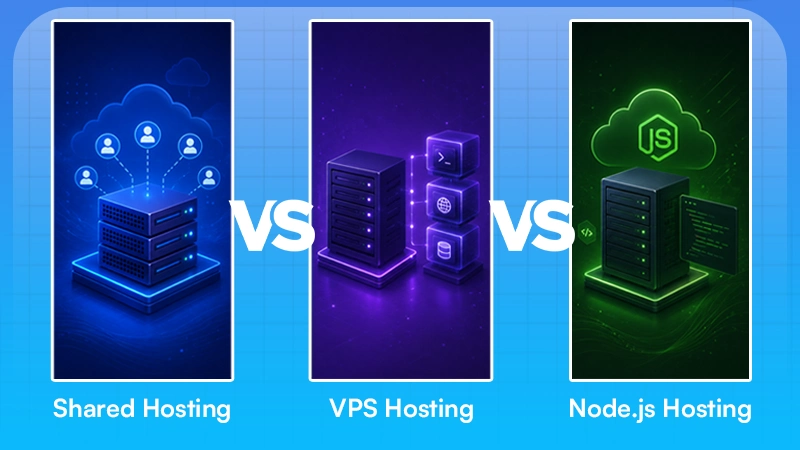
The performance of digital business is directly related to website speed, uptime, and scalability. Slow page performance has a negative…

“People work for money but go the extra mile for recognition, praise, and rewards.” — Dale Carnegie (Writer & Teacher)…

Almost every company that depends on data runs into the same problem: although they can find the data they need,…
Financial data supports every part of a business, directly affecting cash flow, payroll, tax reports, audits, customer billing, and daily…

“Cybersecurity is much more than a matter of IT.” — Stephane Nappo (Cybersecurity Professional) For manufacturers working within the defense…

Learning has transformed in the modern age with the integration of new technologies to help students and professionals prosper in…