
Not at all. Data domains are a business decision, not just a technical one. They define who owns what data and how it should be used. Without that clarity, departments start interpreting the same data differently. .35
Data Domains in Enterprise Data Management: Tools and Strategies to Maintain Data Effectively
 Mahima Dave
Updated on: Dec 29, 2025
Table of Contents
- What is Enterprise Data Management
- Understanding Data Domains Within Modern Enterprise Architectures
- Tools Enterprises Use to Manage and Govern Data Domains
- How Poorly Defined Data Domains Create Operational and Analytical Risks
- Strategies for Maintaining Accuracy, Ownership, and Consistency Across Domains
- DataRecovee - Maintaining a Scalable Enterprise Data Model
- Conclusion
- Frequently Asked Questions
Most enterprises do not struggle due to the lack of data but because they fail to manage it properly. And why wouldn’t they? There is a lot to keep up with. Sales reports show one revenue number, finance reports tell another, and operations insist inventory levels are correct until fulfillment proves the opposite. And in all this cobweb of information, sometimes the “single source of truth” quite disappears.
Surprisingly, this is no unique story. Up to 70% of enterprise data is inaccurate or incomplete, and poor data quality costs organizations an average of $12.9 million annually in lost revenue, wasted effort, and operational inefficiencies.
Usually, the problem isn’t volume; it’s structure. And that’s where data domains become useful. It clearly defines and governs customer, financial, operational, and product data as distinct but connected, providing teams with clarity.
And, in this post, we will uncover more about data domains and how they benefit businesses. Stay tuned to learn more!
Key Takeaways
- Data domains organize enterprise data into clear, manageable categories.
- Clear ownership prevents confusion and duplicate records.
- MDM creates a single, trusted version of important business entities.
- Data quality tools keep information clean before issues escalate.
- Reliable data builds faster, more confident decision-making.
What is Enterprise Data Management
Enterprise Data Management, or EDM, is the way an organization structures, governs, and maintains its data. It ensures that the sensitive data is secure, accurate, accessible, free of all inconsistencies, and governed by clear ownership.
Without EDM in place, each department in a building starts creating its own definitions, formats, and processes. Because sales tracks customers one day, finance uses a different structure, and so on, each department has its own way of doing things. Eventually, with all this, reporting becomes reconciliation instead of insights.
Understanding Data Domains Within Modern Enterprise Architectures
Simply said, a data domain is just a way of grouping similar data together. So, instead of treating all enterprise data as one large pool, domains divide it into structures and areas that are easy to manage.
For example, in a company, domains can typically look like
- Customer data: Includes basic customer details like names, contact information, account IDs, purchase history, and interactions.
- Financial data: Covers invoices, payments, revenue recognition, expenses, budgets, and tax records.
- Operational data: Information about inventory levels, logistics tracking, supplier information, manufacturing metrics and workforce scheduling.
- Product Data: Consists of SKUs, specifications, pricing, lifecycle status, and categorization structures.
Each of these domains follows a clear set of regulations for smooth workflows.
Tools Enterprises Use to Manage and Govern Data Domains
Spreadsheets and shared folders are not enough when it comes to large-scale domain management. Most enterprises trust a structured platform to manage and govern data domains.
Data Catalogs
Data catalogs are like a searchable directory where you can find answers to questions like:
- What does this field mean?
- Where does this data originate?
- Who owns it?
- How is it downstream?
This improves transparency and helps teams trace lineage and definitions instead of relying on guesswork.
Master Data Management
Master Data Management gives customers, products, and supplies a single authoritative record by reducing duplication, improving accuracy, and simplifying compliance efforts. For instance, the same customer can appear in different systems with a slightly different name, ID, or even be duplicated.
Without MDM, the sales team sees customer ID 1023, finance sees C-123, and support sees two profiles for the same person. All this creates confusion, and the data doesn’t match.
But MDM solves such issues as there is one trusted “golden record.” Every department pulls from the same source, and hence no duplication.
Data Quality Platforms
Data quality tools are like the maintenance crew that keeps MDM’s official records clean. They constantly scan for missing information. Duplicate entries, wrong formats, and any other suspicious values.
It shifts companies from fixing data emergencies to maintaining healthy data every day.
PRO TIP
If you want to test how healthy your data governance is, ask three departments to define “active departments.” If you get three different answers, your domains need work.
How Poorly Defined Data Domains Create Operational and Analytical Risks
Poorly defined data domains, very expectedly, have consequences. It brings operational risks, including:
- Shipping to outdated customer addresses
- Incorrect inventory counts
- Billing disputes due to mismatched records
Some analytics risks, such as:
- Conflicting KPI dashboard
- Unreliable forecasting
- Misaligned executive decisions
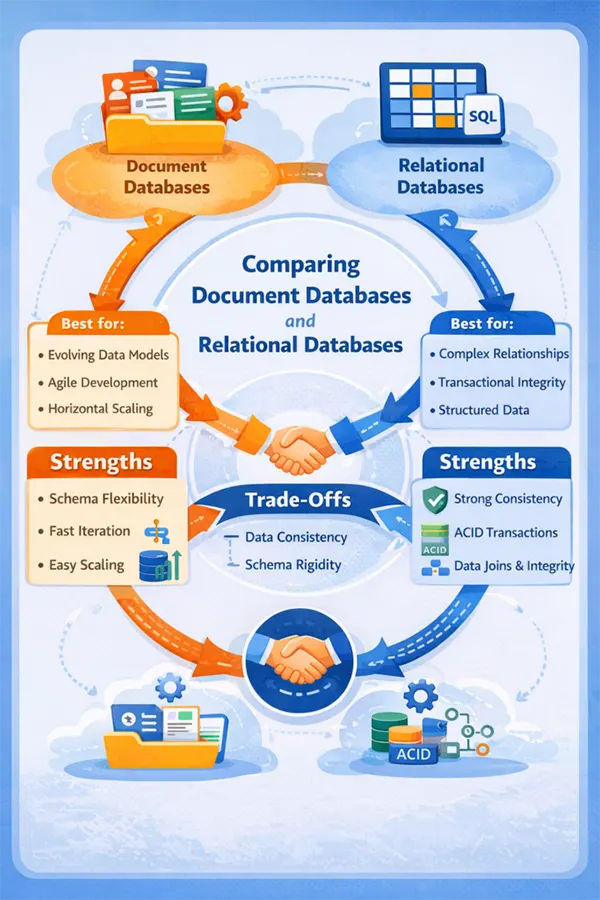
The infographic below further explains how poorly defined data domains create risks. Take a look!
And, the most damaging one: cultural impact. Because when teams lose trust in data, they revert to the outdated, manual workarounds. As a result, strategic decisions become slower and more cautious
Strategies for Maintaining Accuracy, Ownership, and Consistency Across Domains
There is no cheat code for building strong data domains. They require deliberate governance, and here is how enterprises achieve them:
- Assign a clear, accountable business owner to the domains
- Agree on naming conventions, formats, and validation rules before scaling systems.
- Track domain health using different metrics: completeness, duplication rates, and error frequency.
- All the schema changes, new attributes, or field updates should follow formal review processes.
- Encourage a cross-functional data council.
These might seem like small practices, but they truly make a huge difference and maintain accuracy, ownership, and consistency across domains.
DataRecovee – Maintaining a Scalable Enterprise Data Model
When enterprises grow, they go through various changes: mergers happen, new systems are adopted, and product lines expand. With all this, the data domains must scale.
And, this is where solutions like DataRecovee focus mainly on maintaining a scalable data model by supporting bulk domain search, data-driven architecture, structured data governance workflows, centralized metadata visibility, and continuous monitoring for domain drift.
The goal is sustainability. When new systems integrate or acquisitions occur, well-defined data domains prevent chaos during transition.
Conclusion
Loosely defined data slows down decisions and shakes up the organization’s foundation completely. On the other hand, when data domains are clearly structured and continuously governed, something shifts.
The teams stop questioning and start taking the required actions. Analytics becomes insights instead of debate, and growth initiatives move faster because the foundation beneath them is strong and stable.
Frequently Asked Questions
Do we really need to define data domains, or is it just an IT thing?
What’s the biggest sign our data domains aren’t working?
The biggest sign that the data domains aren’t working is when teams argue over numbers in meetings, and all the teams report different figures.
Is Master Data Management only for large enterprises?
It’s more common in large organizations, but even mid-sized companies benefit from having one clean, consistent version of key data like customers and products.
Can tools alone fix bad data management?
No. Tools help, but ownership and clear processes matter more. Technology supports discipline; it doesn’t replace it.
Related Posts
How Image and File Corruption Happens (and How to Prevent It)
When people think of file corruption, they typically picture something large and visible, like a broken USB stick, a dead…

Key Features to Look for in Log Management Software
Every action within your systems – let it be logins, errors or updates – creates a log. Most of these…

Turning Organizational Data into Actionable Business Insights
Every day, businesses generate huge volumes of data – yet identifying what truly needs improvement and what should be focused…

How Marketing Consultants Can Benefit From Data-Driven Marketing Strategies
A few years back, marketing advice was all about instinct and guess work. Experience mattered; creativity ruled. And, yes, these…

7 Best Web Scraping Tools in 2026: Features, Pricing & Honest Reviews
Extracting data from websites shouldn’t feel like solving a Rubik’s Cube blindfolded. Yet for many businesses, web scraping remains frustratingly…

How to Find the Best Enterprise EDI Integration Provider for Your Supply Chain Business
Supply chain systems are all about accuracy. Because even the slightest error can reflect on a series of tasks: one…
Document Databases: Strengths, Weaknesses, and Comparison With Relational Databases
Data is no longer a byproduct of business; it is the business. With every click on an e-commerce site, organizations…

Backing Up Your Study Files Automatically: Student Setup Guide
You don’t know how much you rely on your laptop until it acts up. The cursor stops moving. The fan…

Accelerating Development Cycles with GitHub-Slack Integration
The majority of engineering teams work at a much slower pace than they could because of systematic friction in their…