
An AI agent is a software system that can execute tasks without human intervention by means of artificial intelligence technologies.
AI Agents Explained: Business Benefits, Use Cases, and Development Company Hiring Guide
 Reviewed By Brijesh Kumar Singh
  Upasna Deewan
Updated on: Feb 23, 2026
Table of Contents
- What are AI Agents and How Do They Work?
- Key Types of AI Agents Businesses Can Use
- Business Benefits of Using AI Agents
- Common Business Use Cases for AI Agents
- Data Security and Integration Considerations Before Adoption
- How to Hire the Right AI Agent Development Company
- Conclusion
- Frequently Asked Questions
AI agents are quickly emerging as one of the most crucial technologies driving contemporary business operations. AI agents can interpret information, make decisions, and adapt based on interactions, and perform tasks with minimal human intervention, unlike automated agents, which execute standardized tasks.
The OECD report suggests that AI is being taken up by businesses in every sector, as they strive to become productive, efficient, and intelligent in their decision-making.
Whether you’re a healthcare provider, a financial institution, an ecommerce platform, a delivery service, or an enterprise software solution, AI agents are finding their way into customer support systems, advanced workflow automation, and beyond. With films toying with AI-driven systems, it’s become crucial for companies to grasp the inner workings of artificial intelligence agents and select the appropriate development partner for sustained digital evolution.
Key Takeaways
- AI agents can streamline tasks, facilitate data analysis, and assist in business decision-making.
- Modern AI agents are more adaptive than the “rules” based automation.
- AI agents are utilized in various domains like customer service, analytics, and workflow automation within businesses.
- Security and system integration are of paramount importance prior to the adoption of AI.
- Hiring a seasoned AI development company increases the likelihood of a successful long-term project.
What are AI Agents and How Do They Work?
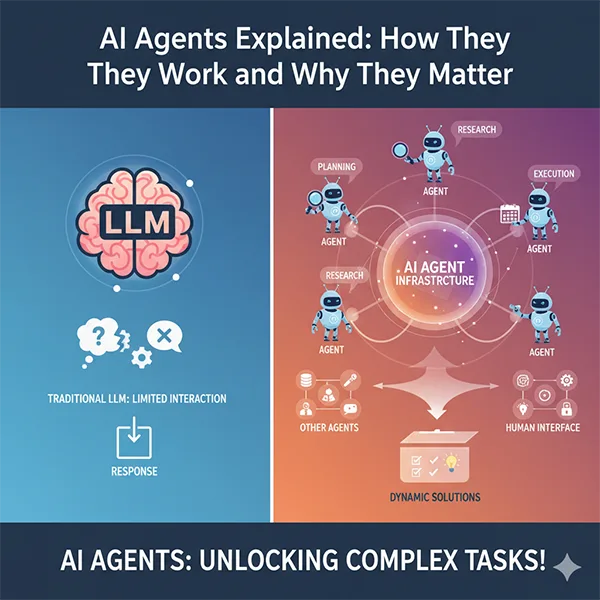
AI agents are computer programs that can execute tasks independently with artificial intelligence technologies like machine learning, natural language processing, and predictive analytics. Unlike automation that is based on rules, AI agents can interpret data, be flexible to respond to inputs that are changing, use user interactions to learn, make recommendations, and execute actions independently.
The majority of AI agents come with various parts, such as data processing systems, decision-making models, APIs, and automation workflows.
For instance, an AI customer agent can identify customer queries, fetch data from databases, process it to craft a response, and automatically escalate complex problems without constant human oversight. With the evolution of AI models, these agents can now manage increasingly complex operational and analytical tasks for businesses.
Key Types of AI Agents Businesses Can Use
The use of AI agents varies across different organizations, depending on the complexity of their workflow and the specific needs of their industry.
Task Automation Agents
Agents for task automation are designed to work with repetitive activities in the operation, which otherwise would require employment time. These are often used by businesses for scheduling workflows, data entry, invoice processing, document classification, and internal reporting.
The biggest benefit is uniformity. AI agents can carry out repetitive tasks around the clock without human error and delays. When businesses grow, automation agents assist organizations in handling a bigger workload without adding a much bigger administrative burden.
Customer Support and Service Agents
AI agents for customer service are now becoming more prevalent on ecommerce platforms, banking websites, SaaS, and healthcare platforms. These systems can answer customer questions, route support tickets, handle appointment requests, provide product recommendations, and offer multilingual assistance.
Unlike conventional chatbots, AI-powered support agents can comprehend the context of the conversation better and react in real-time to the customer’s needs. This is to enhance response time and assist support teams to concentrate on higher complexity communications, which will require human interaction.
Data Analysis and Decision-Support Agents
Certain AI agents are focused on data analysis and providing actionable insights for the business. These systems assist organizations in recognizing operational inefficiencies, customer behavior trends, financial forecasting patterns, fraud risks, and sales opportunities.
Companies that have a lot of operational or customer data that they process every day particularly benefit from decision-support agents. Businesses don’t have to go through the work of reviewing reports in manual fashion, but can receive real-time information and suggestions.
Business Benefits of Using AI Agents
AI agents are proving to be appealing to businesses as they simultaneously enhance the speed of operations and decision-making.
Faster Workflow Automation
Older business processes tend to be repetitive and need to be carried out by the team over time. AI agents can streamline across departments, minimizing delays and ensuring consistency. AI-driven automation often leads to quicker response times, less manual effort, and increased productivity within organizations’ operational teams.
Additionally, these agents can keep working around the clock without the need to hire the same number of staff members as manual operations, making automation more scalable.
Improved Data-Driven Decision-Making
Every day, businesses generate tremendous amounts of data that are essential for their operation. The information can be processed faster and more accurately through the use of an AI agent, which can help organizations better manage their time.
AI systems can analyze data to detect trends, forecast outcomes, and provide actionable insights more efficiently, rather than relying on historical reporting. This enables more informed planning and timely responses to operations.
Better Customer Experience and Operational Efficiency
By minimizing wait times and increasing service availability, AI agents enhance customer interactions. AI-powered support systems can help businesses improve on the following fronts:
- Faster customer responses
- 24/7 service availability
- More personalized interactions
- Improved the resolution speed of issues
Meanwhile, the teams working on the operations side also experience better efficiency due to less manual work on repetitive processes.
Common Business Use Cases for AI Agents
The applications of AI agents are vast and are now being leveraged in various industries and contexts. There are some common business applications that include:
- E-commerce customer support
- AI-powered sales assistants
- Fraud detection systems
- HR recruitment screening
- IT service desk automation
- Healthcare scheduling systems
- Financial risk analysis
- Workflow automation platforms
Custom AI solutions suited to their workflows and industry needs are a particular priority for many companies delving into the realm of the best AI agent development companies. As businesses increasingly digitalize, the demand for AI agents specific to their industries is anticipated to rise sharply.
Data Security and Integration Considerations Before Adoption
Although AI agents provide significant operational benefits, businesses must also scrutinize potential security and integration challenges before adopting their use. AI systems typically analyze customer records, financial information, internal business data, operational analytics, and employee information.
AI systems that are not properly secured may lead to vulnerabilities such as data breaches, unauthorized access, or compliance issues. Planning for integration is also key. AI agents need to seamlessly integrate with the current CRM system, databases, cloud solutions, and workflow applications, ensuring that business processes do not suffer.
When implementing an AI solution, organizations should keep in mind:
- Strong access controls
- Encryption standards
- API security
- Compliance monitoring
- Vendor transparency
Security planning should never be an afterthought, but part of the process of adopting AI.
How to Hire the Right AI Agent Development Company
The selection if an AI development partner can have a profound influence on the project’s success, scalability, and reliability in the long term. Businesses should consider the following factors when choosing a development company:
- Industry experience
- AI model expertise
- Integration capabilities
- Security practices
- Scalability support
- Post-deployment maintenance
You should also consider the company’s track record in creating AI systems that are tailored to specific business objectives as opposed to providing general automation solutions. The development partner should be able to explain:
- How will AI models be trained?
- Which data protection measures are in place?
- How will integrations be made?
- How will the product be continually optimized?
A reliable AI development provider typically has good communication skills and a clear understanding of the technical aspects.
INTERESTING FACT
Some enterprise AI agents can communicate with other AI systems without human intervention, enabling coordinated and collaborative action by multiple automated workflows, thereby completing complex operational tasks.
Conclusion
AI agents are fast changing the way businesses operate, analyze data, and enhance customer experience. Whether it’s automating workflows or intelligent decision support, AI agents offer organizations solutions to boost efficiency and the ability to meet the increasing complexity of their operations.
But the adoption of AI technology is not the only thing that can be done for successful adoption. Security, integration, scalability, and vendor experiences are areas that businesses need to consider carefully before deployment. By adopting AI agents wisely and effectively, companies can boost their productivity, enhance customer service, and thrive in the digital era of business.
Frequently Asked Questions
What is an AI agent?
What are the applications of AI agents in businesses?
They leverage them for automation, customer support, analytics, workflow management, and optimization.
What are the key distinctions between AI agents and chatbots?
Yes. Generally, AI agents are more sophisticated and can perform more complex actions and make decisions.
Which sectors are most likely to be applying AI agents?
AI agents are typically found in customer service, ecommerce, healthcare, finance, logistics, and other sectors that depend on customer interactions.
Related Posts
8 Best AI Presentation Makers for Business-Ready Slides
Making a presentation doesn’t just mean designing slides. It’s about defining a clear structure, using defined logic, useful visuals, and…
Queue Management Software Troubleshooting Guide: 8 Common Faults and Fixes
The long wait times and ineffective management of customer queues can have a significant impact on customer satisfaction and business…
How to Use Similarweb Website Traffic Data for Competitor Research
Competitor research without traffic data is guesswork. You can guess who your rivals are, guess how big they are, guess…
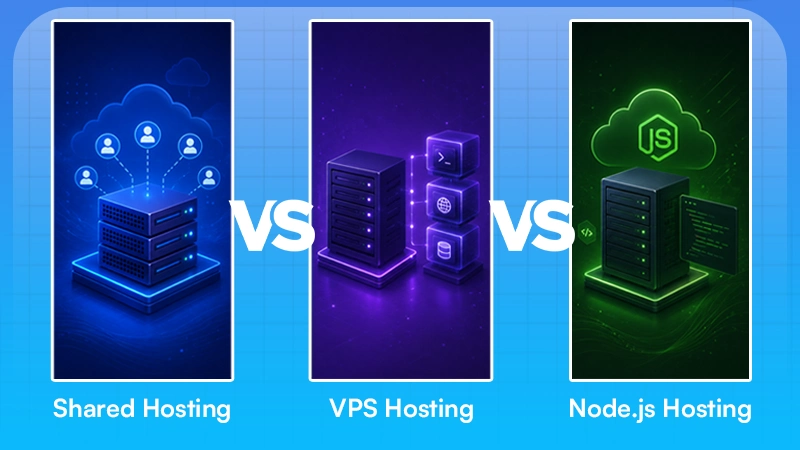
Choosing the Right Hosting Model for Scalable Digital Platforms
The performance of digital business is directly related to website speed, uptime, and scalability. Slow page performance has a negative…

How Data-Driven Performance Tools Are Transforming Employee Recognition in Tech Companies
“People work for money but go the extra mile for recognition, praise, and rewards.” — Dale Carnegie (Writer & Teacher)…

Why Businesses Struggle to Collect Reliable Data from the Web
Almost every company that depends on data runs into the same problem: although they can find the data they need,…

Why Financial Data Recovery Matters for Businesses
Financial data supports every part of a business, directly affecting cash flow, payroll, tax reports, audits, customer billing, and daily…

CMMC Compliance Is Coming for Manufacturers. Here Is What You Need to Do
“Cybersecurity is much more than a matter of IT.” — Stephane Nappo (Cybersecurity Professional) For manufacturers working within the defense…

How Data-Based Tools Influence Learning Performance
Learning has transformed in the modern age with the integration of new technologies to help students and professionals prosper in…