
ITSM is the acronym for IT Service Management, which deals with the effective management and delivery of IT services.
Dominating ITSM Trends 2026: Big Shifts Reshaping AI Workflows and Data Security
 Reviewed By Brijesh Kumar Singh
  Mahima Dave
Updated on: Mar 20, 2026
Table of Contents
- What’s New in ITSM 2026 Trends
- AI-Driven Service Management and Workflow Automation
- Data Security as a Core ITSM Priority
- Cloud-Based ITSM Platforms and Scalable Operations
- Integration of ITSM with Cybersecurity and Data Recovery Planning
- Preparing Your Business for Smarter ITSM Adoption
- Frequently Asked Questions
IT Service Management (ITSM) is evolving rapidly as businesses adopt AI, digital infrastructure, and automation to manage increasingly complex IT environments. And, today organizations don’t just use ITSM only for ticket management and technical support, but also for improving operational efficiency, strengthening cybersecurity, and streamlining digital workflows.
According to a report by Gartner, AI-driven automation is expected to play a major role in enterprise IT operations over the next few years, helping businesses reduce manual workloads and improve service delivery.
With the increase in cyber threats and expanding remote operations, modern ITSM platforms have become a necessity for maintaining secure, scalable, and intelligent business operations.
Key Takeaways
- The emphasis in 2026 with ITSM is primarily on AI automation and workflow optimization.
- Data security is an important concern in today’s ITSM approaches.
- Cloud-based ITSM solutions enhance flexibility and scalability.
- Conducting cybersecurity and recovery planning together enhances business continuity.
- AI-driven ITSM enables businesses to save money and enhance service efficiency.
What’s New in ITSM 2026 Trends
ITSM strategies are evolving from a helpdesk-centric approach to a service ecosystem powered by AI. The trend is toward automating tasks, predictive analytics, cloud integration, better security systems, and more. There’s a growing emphasis on automation, predictive analytics, cloud integration, better security systems, and more.
Today, organizations must have ITSM platforms, such as https://alloysoftware.com, that are capable of meeting their needs. It is not enough to appreciate the technologies that are fueling all of this; however, before diving into the specifics, it is crucial to grasp the basics.
The top ITSM trends for 2026 are:
- AI-powered workflow automation
- Predictive issues detection
- Cloud-native ITSM platforms
- Integrated cybersecurity management
- Self-service support systems
- Data-driven decision-making
New solutions, like Al Alloy Software, are assisting enterprises to optimize IT operations and enhance the efficiency and effectiveness of service management, compliance, and visibility. The innovations are transforming the way that businesses are handling their IT infrastructure and employee support services.
INTERESTING FACT
The IT Service Management concept became popular around the world following the creation of the ITIL framework in the 1980s, which established best practice guidelines for the management of IT services.
AI-Driven Service Management and Workflow Automation
AI is one of the most impactful factors in ITSM innovation. Many companies are leveraging AI to automate repetitive tasks, streamline service response times, and cut down on costs. AI-driven tools are now being adopted to streamline processes and enhance IT efficiency in addition to relying on manual support.
Key benefits of AI in ITSM are automated ticket routing, faster incident resolution, predictive maintenance, intelligent chatbots, workflow optimization, and reduced manual workloads.
Historical service data can be used to input into AI systems, which can predict future problems and suggest solutions to prevent disruptions. With the automation of these tasks, IT teams can dedicate more time and resources to strategic initiatives rather than mundane administrative tasks.
Data Security as a Core ITSM Priority
Cybersecurity is extremely important today due to the increased amount of sensitive information that businesses are processing. Today, ITSM platforms come with built-in security monitoring, access management, and compliance tracking features, which are now incorporated into the service management systems.
Before introducing IT service management solutions, companies need to be aware of the increasing significance of data security in IT operations.
The major security priorities in ITSM are access control management, endpoint monitoring, threat detection, compliance reporting, data encryption, and incident response planning.
Organizations are also putting resources into secure IT workflows to decrease dangers in the event of ransomware, phishing, and unauthorized access. Embedding security into ITSM processes can help enhance the stability and compliance of business operations.
Cloud-Based ITSM Platforms and Scalable Operations
As cloud technology evolves and matures, it is also transforming the ITSM industry to offer you businesses flexible and scalable service management solutions. Cloud-based ITSM solutions can help organizations be more efficient with their distributed teams, remote systems, and expanding infrastructure needs. Benefits of cloud based ITSM include:
- Remote accessibility
- Faster deployment
- Lower infrastructure costs
- Automatic software updates
- Improved collaboration
- Greater scalability
The infographic below further extends on the advantages of cloud-based ITSM. Check it out to know more!
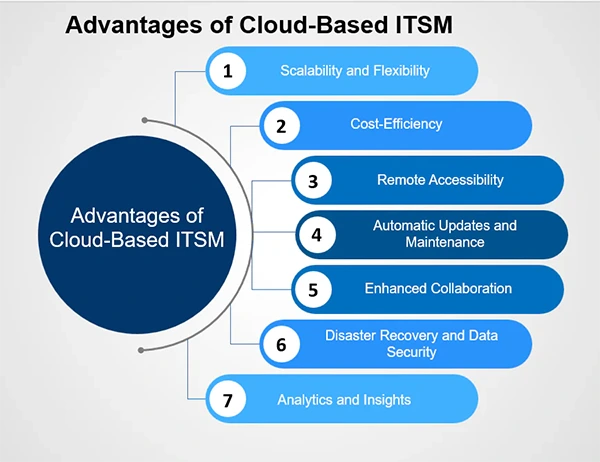
Cloud platforms are becoming more and more popular among businesses to meet their growing operational demands and digital transformation initiatives.
Organizations can use tools like alloysoftware.com/roi-calculator to calculate operational savings and gains from ITSM solutions. Businesses expanding to multiple locations or hybrid environments will also benefit from the flexibility that cloud-native ITSM systems provide.
Integration of ITSM with Cybersecurity and Data Recovery Planning
Organizations are now more frequently following a trend of combining ITSM with cybersecurity and disaster recovery protocols. This integration can assist companies in responding to security incidents rapidly and keep operations intact even during interruptions.
Businesses need to have a clear understanding of the primary advantages of integrating ITSM with security planning before adopting an integrated system. ITSM and cybersecurity integration offer many benefits, such as:
- Faster incident response
- Improved threat visibility
- Centralized security management
- Better compliance tracking
- Streamlined disaster recovery
- Reduced operational downtime
ITSM platforms can automate security workflow, alerts, and coordinate the recovery process in case of cyber incidents. The ever-changing nature of cyber threats for businesses makes it increasingly critical to have integrated ITSM and security systems to mitigate risk and maintain business continuity.
Preparing Your Business for Smarter ITSM Adoption
The adoption of ITSM software is not enough. ITSM strategies need to be aligned with the organization’s goals, staffing needs, and long-term plan for digital transformation. A step-by-step strategy is vital for companies to reap the benefits of contemporary ITSM platforms.
Best practices of ITSM adoption are:
- Determine pain points in operations
- Automate repetitive workflows
- Prioritize cybersecurity integration
- Train employees regularly
- Track the performance of the services
- Select scalable cloud-based solutions
However, companies need to continually review ITSM performance and adjust workflows to meet evolving operational needs. Businesses willing to adopt AI-powered automation and anticipatory service offerings will be better equipped for future tech challenges.
Frequently Asked Questions
What is ITSM?
Why is AI important in ITSM?
Automates workflows, enhances response times to services, and decreases manual loads.
What are cloud-based ITSM platforms?
They are online ITSM solutions that are deployed on cloud-based infrastructure to provide flexibility and scalability.
What does ITSM contribute to cybersecurity?
Today’s ITSM platforms combine threat monitoring, incident response, and compliance management capabilities.
Related Posts
8 Best AI Presentation Makers for Business-Ready Slides
Making a presentation doesn’t just mean designing slides. It’s about defining a clear structure, using defined logic, useful visuals, and…
Queue Management Software Troubleshooting Guide: 8 Common Faults and Fixes
The long wait times and ineffective management of customer queues can have a significant impact on customer satisfaction and business…
How to Use Similarweb Website Traffic Data for Competitor Research
Competitor research without traffic data is guesswork. You can guess who your rivals are, guess how big they are, guess…
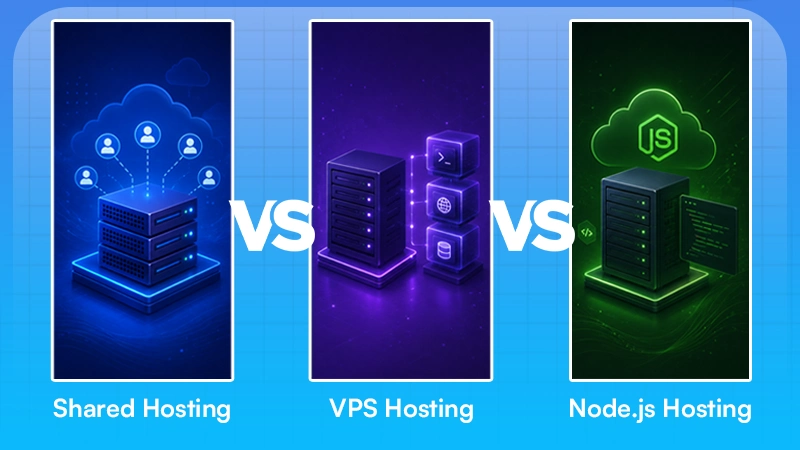
Choosing the Right Hosting Model for Scalable Digital Platforms
The performance of digital business is directly related to website speed, uptime, and scalability. Slow page performance has a negative…
How Data-Driven Performance Tools Are Transforming Employee Recognition in Tech Companies
“People work for money but go the extra mile for recognition, praise, and rewards.” — Dale Carnegie (Writer & Teacher)…

Why Businesses Struggle to Collect Reliable Data from the Web
Almost every company that depends on data runs into the same problem: although they can find the data they need,…
Why Financial Data Recovery Matters for Businesses
Financial data supports every part of a business, directly affecting cash flow, payroll, tax reports, audits, customer billing, and daily…

CMMC Compliance Is Coming for Manufacturers. Here Is What You Need to Do
“Cybersecurity is much more than a matter of IT.” — Stephane Nappo (Cybersecurity Professional) For manufacturers working within the defense…

How Data-Based Tools Influence Learning Performance
Learning has transformed in the modern age with the integration of new technologies to help students and professionals prosper in…