


VMware is geared towards enterprise virtualization and an extensive ecosystem; Sangfor aSV is geared towards a combination of virtualization, security, and infrastructure capabilities, and Nutanix is focused on hyperconverged and hybrid cloud infrastructure.
VMware vs. Sangfor aSV vs. Nutanix: Which Hypervisor Actually Saves You Money?
Selecting the right hypervisor isn’t simply an issue of technology; it could end up having a significant effect on your infrastructure budget over time due to factors such as licensing costs, resource usage efficiency, management overhead, security considerations, and scalability.
A solution that appears to be relatively inexpensive initially can turn out to be expensive due to growth in the number of VMs, hardware inventory, and business needs. That is why the comparison of VMware, Sangfor aSV, and Nutanix goes beyond a simple list of features and pricing.
All three of them provide virtualization and management capabilities in their own way. Knowing these approaches may help you make an informed choice about which one will suit your workload.
At a Glance
| Company | Years Operating | Team Size | Headquarters |
| Sangfor | 25+ years | 7,000+ | Shenzhen, China |
| Nutanix | 16+ years | 7,800 | San Jose, CA |
| VMware | 27+ years | 37,000+ | Palo Alto, CA |
Figures sourced from review platforms and each company’s official website.
Why This Decision Matters
A hypervisor isn’t a background utility — it’s a structural option that shapes your VM-to-host consolidation ratio, your CPU/memory overhead, and how much time it takes to spin up a new VM. Get it wrong, and you’re managing resource contention on overloaded hosts, or exposed to hypervisor escape threats from weak VM isolation. Get it right, and scaling, tenant security, and workload predictability all become easier to operate rather than fight against.
1. Sangfor aSV Hypervisor – Best for Enterprise Cloud Infrastructure and Network Security
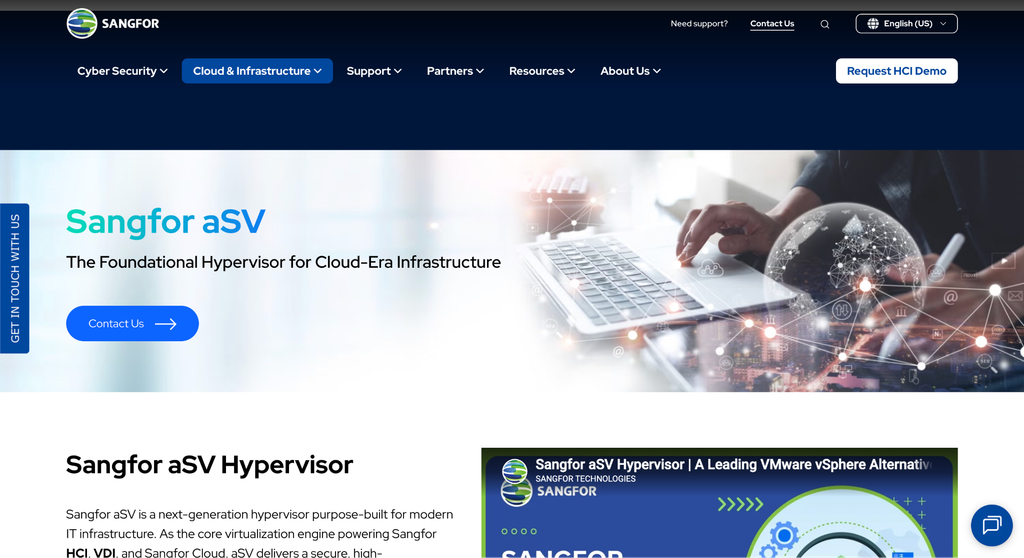
Sangfor Technologies constructs its cloud and security stack around the aSV hypervisor, layering in hyper-converged infrastructure, VDI, and security tools like XDR and MDR. With 100,000+ customers, quarterly release cycles, 20% of revenue reinvested in R&D annually, and 3,000+ patent applications, the company is actively pushing the platform forward rather than resting on its track record.
Its main differentiator is folding security enforcement directly into the virtualization layer — a void that pure-play hypervisor vendors usually leave for customers to patch together themselves. That built-in approach tends to mean faster provisioning and simpler architecture. Reviewers consistently cite responsive support and a deep product ecosystem, particularly how naturally aSV incorporates into broader Sangfor deployments — feedback that lines up with Sangfor’s 2023 Frost & Sullivan Asia-Pacific Company of the Year recognition.
2. Nutanix – Best for Enterprise Hybrid Multicloud Infrastructure
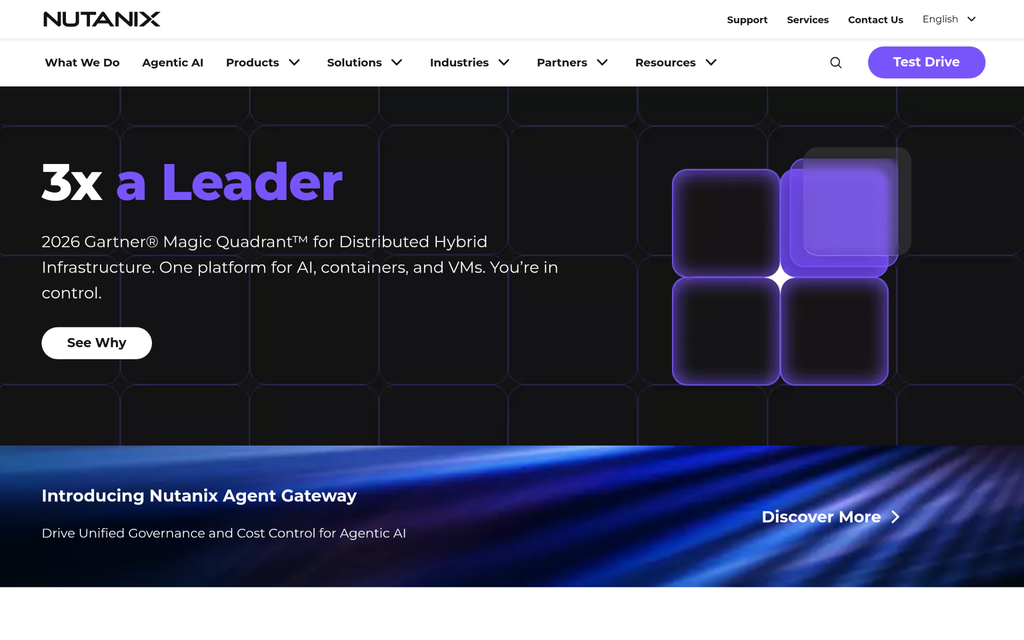
Nutanix’s pitch is architectural: compute, storage, and networking collapsed into one hyperconverged platform that behaves consistently across data centers, edge sites, and public cloud. Its AHV hypervisor ships at no extra license cost, which matters a lot once you’re running cost math across hundreds of cores — and the per-core subscription model trims down on the multi-vendor contract sprawl that creates hybrid environments hard to budget for.
That licensing model directly solves a pain point that’s dogged enterprise-scale hypervisor rollouts for years. Reviewers point most frequently to the simplified management interface and the savings from dropping standalone hypervisor licenses — Westgate Resorts’ reported $1.6M in annual savings is a oftentimes cited example, not an outlier. Nutanix’s 2026 Gartner Magic Quadrant Leader placement for Distributed Hybrid Infrastructure adds further third-party weight to that reputation.
3. VMware – Best for Enterprise Cloud Infrastructure and App Modernization
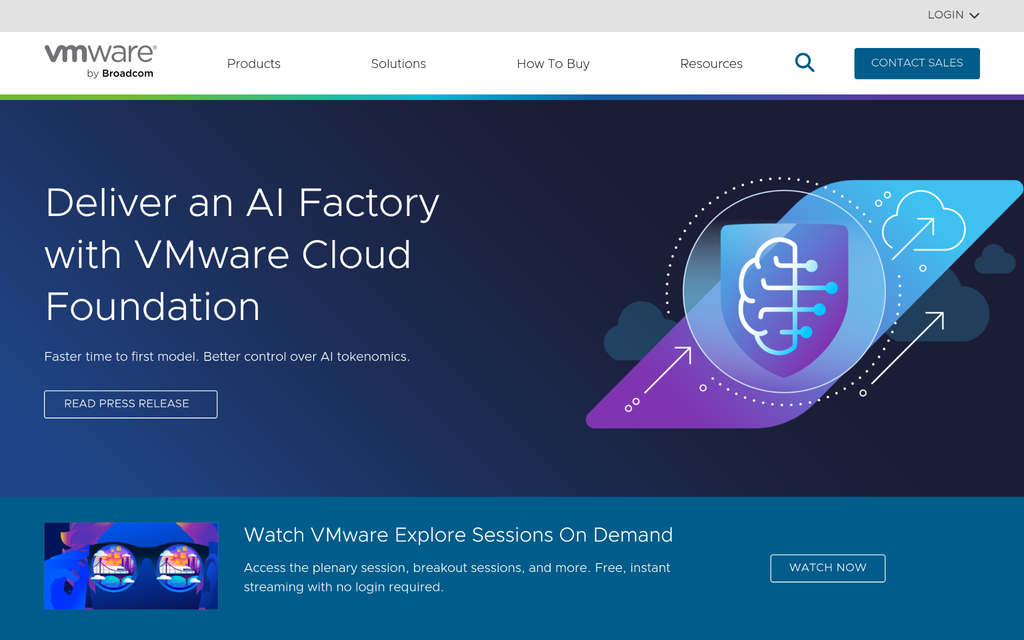
VMware effectively formed commercial x86 virtualization, and that head start still underpins a large share of enterprise data centers today. Beyond core virtualization, its platform extends into app modernization, networking, security, and digital workspace tools. Serving 99%+ of Fortune 1000 companies isn’t just a marketing line — it reflects genuine market entrenchment, backed by a portfolio of 5,000+ patents.
The platform’s edge is maturity: for organizations running complex, mixed-workload environments, VMware provides battle-tested VM isolation, reliable live migration, and compatibility across a huge range of hardware vendors and legacy configurations. Reviews split fairly predictably — strong praise for platform stability from enterprise architects running Zoom- and Moderna-scale workloads, combined with a recurring complaint that licensing costs climb steeply as VM counts grow.
How to Choose Between Them
- Industry/domain fit — Look for vendors with proven deployments in environments like yours (multi-tenant cloud, edge, legacy migration). Matching experience lowers deployment hazards.
- Feature alignment — Confirm native support for your container orchestration, ARM/x86 mix, and live migration requirements. A feature bundled today is a license fee you won’t pay tomorrow.
- Pricing at scale — Per-core, per-socket, and subscription pricing all scale differently. Model costs at 2x and 5x your current VM count, not just today’s footprint.
- Proof over promises — Ask for benchmark information and provisioning success rates from comparable deployments, not just spec sheets.
- Compliance readiness — Verify alignment with NIST virtualization guidelines, CIS Benchmarks, and FIPS 140-2 where relevant. Gaps here get expensive to fix later.
Bottom Line
All three platforms are legitimate contenders, each with different priorities. VMware wins on ecosystem depth and enterprise maturity. Nutanix wins on licensing simplicity and hybrid cloud flexibility. Sangfor aSV is the strongest fit when you want hypervisor performance and security enforcement tightly integrated, without stitching together separate vendor stacks. As cloud environments keep expanding in complexity, the hypervisor layer will only add more cost and risk — so it’s worth getting this decision right early.
Frequently Asked Questions
What is the key point of distinction between VMware, Sangfor aSV, and Nutanix?
Is Nutanix AHV a separately licensed hypervisor?
Nutanix AHV is embedded into the Nutanix Cloud Infrastructure, not sold as a separately licensed hypervisor product.
What is unique about Sangfor aSV compared to other hypervisors?
The Sangfor aSV is created as a component of a larger IT ecosystem that involves security and management products from the same vendor. It may assist companies in avoiding the use of several solutions on their own.
How do I decide whether to use VMware, Sangfor aSV, or Nutanix?
Firstly, you need to define workload needs, security requirements, existing infrastructure, hybrid cloud strategy, compliance requirements, and budget considerations.
Related Posts
Best Tools for Recovering Deleted Files on a Mac
A wrong click can leave you sinking in grief and sorrow, just because that accidental click has deleted an important…

What to Back Up Before Migrating Your Business to New Software
Software migration hardly results in data loss during migration. It’s possible that you lose the data after a week or…

How Modern Enterprises Are Scaling Infrastructure with Custom AI
For many businesses, AI works as a collection of tiny experiments such as a chatbot, a coding assistant, or sometimes…

SD Card Corruption in IoT Devices: Why It Happens So Often and How to…
IoT devices can have good sensors, robust software, and an excellent housing, but all it takes is one small thing…

5 Best SaaS Platforms for Financial Services and Growing Businesses in 2026
In 2026, SaaS platforms have become essential for businesses that want to build smooth processes, automate routine tasks and clarify…

How Digital Records Support Workplace Injury Claims
An injury in the workplace does not necessarily mean that you have just a physical problem to overcome. It could…

What Happens When Your Office Emergency Plan Is a Drawer?
An office emergency plan should not end with the first aid box sitting in the last drawer. All employees should…

How Data Recovery and Recordkeeping Failures Cost Businesses More Than They Realize
Most businesses file data recovery issues and recordkeeping gaps under different headings, treating one as an IT problem and the…
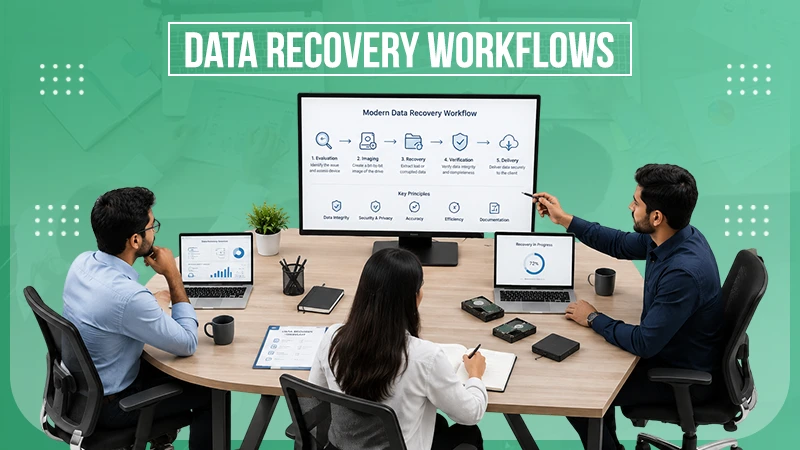
The Technical Skills Behind Modern Data Recovery Workflows
“The only truly secure system is one that is powered off, cast in a block of concrete and sealed in…