
How to Evaluate an SEO Agency’s GEO Capabilities Before Signing a Contract


Is SEO outdated? No, it has actually just changed or updated into other forms, such as GEO. The major question that arises from here is, then, why is my business not experiencing high growth like others?
A straightforward and clear answer for this is in the SEO agency you rely on. The one that follows those same old SEO tactics in the world of GEO can definitely not compete with the modern brands and their marketing tactics.
Here comes the decision to choose the right SEO agency with better GEO capabilities.
To help with the same, this guide helps to evaluate the right aspects to look for in an SEO agency with GEO capabilities – all before signing a contract.
Key Takeaway
- Modern GEO demands cannot be fulfilled with traditional SEO agencies. Find agencies that know about AI discoveries, content references and more.
- Check for the real world examples, don’t feel satisfied with just proof. Case studies and explanations share much more than random claims.
- A right GEO approach uses clear answers, organzied data and trusted websites to boost chances of coming in AI content.
1) Assess the Agency’s Understanding of GEO Fundamentals
An SEO agency’s foundational mastery of GEO should be one of the first things you need to test. Their level of knowledge can affect the quality of the methods they create and the tips they give.
Checking a competing agency’s website can share how effectively it considers GEO as a service. Its GEO service pages, blog articles, or educational offerings should serve clues into its grasp of the field. Content that provide clear, working examples hints that the SEO agency has given time to master how GEO sets into the changing search space.
Low-quality claims, thin service listings, or frequent use of terms like “AI visibility” without proper reasoning, on the other hand, may show lack of required knowledge.
When done with reviewing information of the website, fix a meet. Physical discussions can reveal things that are hidden on the website descriptions. Evaluate what they think about GEO, traditional SEO, and AI-powered search.
This can share whether they consider things as connected, rely on a single metric or work with the broader SEO and GEO terms.
2) Examine Their Content Strategy
Content plays a major role in most GEO efforts. AI-powered search platforms depend on content to create signals and provide information to users. The quality, clarity, and value of your content can affect whether it’s recognized by these platforms. For this reason, an SEO agency’s strategy with respect to how it treats content as a source of truthful answers can show a great deal about its GEO skill set.
During meetings with the SEO agency, ask how it prepares content for GEO campaigns. A reply should go beyond simply listing keywords or delivering articles, as GEO rests on content that can answer specific questions with enough context. For instance, the agency may share how they structure content around common search questions or update recent pages to make key terms easier to understand.
These traits can shift how AI-powered search platforms assess and reference content, and SEO experts worth their respect would know that.
3) Review Their Approach to Structured Data and Technical Optimisation
While content quality is an important part of GEO, the technical elements of your website also play a role in how information is discovered and accepted. AI search platforms use AI web crawlers to locate, access, and process content before it can be listed in returned responses. Ensuring your website is crawlable helps make your content more appealing to these bots, thus upping its chances of surfacing in AI-generated answers.
A prospective SEO agency should be able to clarify how it examines and improves your site’s technical preparation for GEO. They can explain how they track issues that may prevent AI crawlers from observing your content, like crawl bans, blocked pages, and robots.txt rules.
Asking the agency more queries about structured data and crawlability can also help you learn whether their technical work involves GEO, not just standard SEO. An SEO agency that can explain these areas clearly is more likely to have a valid strategy relating to technical optimisation.
4) Ask How They Measure GEO Performance
GEO performance can be tough to judge than traditional search rankings. AI-generated replies don’t always show in the same way for every user, query, or platform, making success more difficult to evaluate correctly. In this case, an SEO agency that can define its testing policy clearly is more likely to set realistic targets.
Their responses should include the practices they use to track accuracy across AI-powered search experiences. Things like monitoring brand mentions and auditing referral traffic from AI platforms can help provide a more accurate view of your website’s performance. Authentic agencies will also avoid offering assured placement in AI-generated answers. Instead, they should be able to share what evolution may look like over time and how their presentations will help you evaluate the results of their work.
5) Request Examples of Completed GEO-Focused Client Work
Service descriptions and meetings will disclose how an SEO agency chooses GEO, but their past work can provide even more crucial insight into their GEO skill sets. Completed projects will show how those ideas are used in practice. Knowing that, it’s worth requesting examples of past GEO work before sealing a contract.
When supplied with case studies, campaign briefs, or content samples, pay attention to the problem the agency fixed and the outcome of its work. This can give you a clearer assessment of whether the agency has worked on GEO initiatives similar to your own vision.
You can also evaluate how their examples reflect the claims they made during your earlier talks. For instance, when viewing content samples, check their formatting, clarity, and quality. Content that seems rushed or overly keen on search rankings may signal that the agency’s content strategy isn’t applicable to GEO.
Conclusion
At the end of the day, just looking at that AI mention in the description of the SEO agency is not enough to decide that they might know much about GEO tactics. It asks for a selective and defined process.
The right one should be able to match the market growth. One can evaluate this by checking their claims backed by real-world examples, realistic goal setting and transparent strategy making.
With this approach, businesses can actively end on an SEO agency that also matches the GEO advancement in the market.
FAQs
- How to trust a GEO-based SEO agency?
Check their real-world examples, don’t just believe one of those AI tricks mentioned in the descriptions. - Is it costly to hire a GEO-based SEO agency?
Yes, it might be a bit higher. But the benefits it gives back are much more than the amount paid. - Are the old SEO tactics not relevant in today’s market?
No, they are also valid. Just the SEO has evolved to GEO with some major updates. For better growth, using both is important.
Have you ever wished to keep a file or folder in one location while making Windows think it exists somewhere…
Alt: Old Hard Disk Drives Nearly one-third of all data loss is caused by accidental deletion, hardware failure, or a…
An AAE file is an Apple sidecar file that contains editing instructions, like crops and filters, applied to an iPhone…
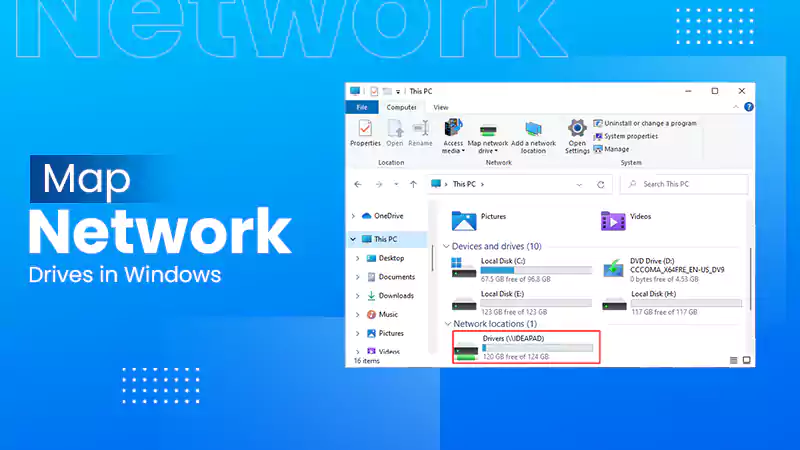
Shared folders are useful until you have to search for the same network path every single day. That is where…
An RPMSG file usually appears when someone sends you a protected or encrypted email through Outlook. That is why the…
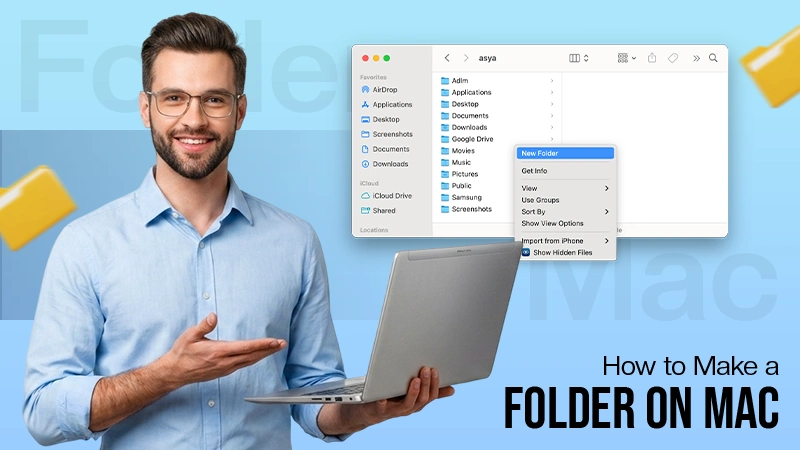
Is your Mac Desktop/Finder a mess of random files and screenshots? Don’t worry. You are at the right place because…
Seeing Error 640 Mac while opening a ZIP file? It can be confusing, especially when the file looks completely normal.…
Selecting multiple files on a Mac sounds simple, but most people still waste time clicking one file at a time.…
Disk Utility is the main way to format an SD card on a Mac. This built-in tool can be used…