


Mainly four stages: assess the previous environment using Azure Migrate, build the Azure foundation (identity, networking, landing zone), execute workload migrations in ordered waves, and establish post-migration monitoring and governance.
From On-Premises to Azure: What System Administrators Need to Know Before Moving to the Cloud

Moving from on-premises infrastructure to Microsoft Azure is barely a matter of just moving servers and applications. The real challenge is making the team and workflow ready for dependencies, identity, networking, downtime, compliance and what happens when workloads go live.
To deal with these, a proper assessment helps system administrators to identify and get ready for the risks. Careful preparation not just improves the outcome but also makes it more effective and risk-free.
Read this guide to get complete information about a proper move from on-premises to Azure.
What to Verify Before Any Azure Migration
A quick pre-migration test helps teams avoid the most common early mistakes. Before selecting tools or setting cutover dates, check the following:
- Migration assessment occurs first, before tooling or cutover plans
- Workload fit, dependencies, identity, networking, compliance, and downtime tolerance all need review
- Each workload should be divided into four categories: rehost, revise, or remain on-premises for now
- Rollback ownership and post-migration operational performance must be confirmed before anything moves
Assess the Estate Before You Choose a Path
A migration assessment that starts with poor data leads to decisions built on assumptions. Before selecting tools or timelines, system administrators need a full understanding of what they are charged with.
What the Migration Assessment Must Uncover
The inventory should be about servers, applications, databases, storage, and virtual machines, not just what is running, but how each section interacts with others. Dependency mapping is where most unexpected behaviors surface, because upstream and downstream breakpoints rarely exist on network diagrams.
Beyond topology, the assessment should include performance baselines, latency sensitivity, licensing obligations, and compliance restrictions. A workload dictated by data residency requirements, for instance, may not spread to every Azure region without extra configuration.
Azure Migrate supports this discovery phase directly, supplying agentless assessment tools that generate dependency maps and set up reports without demanding extensive pre-configuration.
How the 5 Rs Shape Migration Decisions
Once the inventory is full, the 5 Rs of migration provide a framework for classifying each workload rather than observing every server identically. The five options listed are rehost, refactor, rearchitect, rebuild, and retire.
Rehost, or lift-and-shift, workloads to Azure without modification and fits most standard virtual machines in early migration phases. The three remaining Rs apply progressively deeper change and are worth checking as teams build confidence for system administrators moving into the cloud and want to align workloads more tightly with cloud-native capabilities. Assessment findings are also where skills deficiencies tend to surface, making hands-on preparation through resources like an Azure 104 practice test highly useful to ensure operational readiness for Azure-specific administration activities alongside the workload setup itself.
Also, explore the top 7 SD-WAN solutions optimized for cloud application performance.

Build the Azure Foundation Before Cutover
Infrastructure moves fail less often from copying data inaccurately than from unresolved identity and connectivity interactions. Getting these two areas right before cutover begins eliminates a category of problems that are quite difficult to clarify after workloads are already live.
Identity, Directory, and Access Planning
Before any workload moves, the identity architecture needs to be accurately mapped. Most on-premises environments rely on Active Directory, and incorporating that into Microsoft Azure requires thoughtful planning rather than a last-minute decision.
Microsoft Entra Connect is the standard procedure for synchronizing on-premises Active Directory identities with Azure. Teams need to understand which sync model fits their environment, whether that is password hash communication, pass-through authentication, or federation, because this choice changes how users prove their identities once workloads are live in the cloud.
Administrative bounds and role assignments should also be defined before cutover begins. Identity misconfigurations that surface post-migration are among the hardest to separate cleanly.
Networking and Landing Zone Decisions
Networking judgments follow closely behind identity, and they carry just as much risk. Teams working through hybrid connectivity need to discuss whether a VPN or ExpressRoute connection is appropriate, based on latency specs, bandwidth expectations, and the sensitivity of traffic moving between on-premises facilities and Azure.
DNS, routing policies, and network branching all require planning before the first workload transfers. These are not options to adjust mid-migration.
Alongside connectivity, teams should specify a landing zone that establishes governance guardrails, subscription structure, resource hierarchy, and security controls. This structure also explains how the environment will handle data residency rules in Microsoft’s cloud and whether workloads can be placed in exclusive regions without compliance exposure. A landing zone designed before migration begins is far easier to maintain than one retrofitted afterward.
Plan Migration Waves and Failure Scenarios
With the base in place, the next step is turning architecture decisions into an executable sequence that accounts for what can occur when things go wrong.
Grouping workloads into migration waves helps mitigate risk by limiting the blast radius of any single failure. The first wave should comprise low-criticality workloads with minimal requirements, giving the team a controlled environment to verify replication, test cutover paths, and identify gaps before moving systems that the business relies on daily.
Dependency mapping from the evaluation phase directly informs this sequencing. Workloads with upstream or downstream linkages should move together or in a clearly set order, never independently.
Each wave should have specified maintenance windows, acceptable downtime thresholds per workload, and documented owners for every picking point. For virtual machines that need stronger resilience or failback capability, Azure Site Recovery can be woven into the wave plan to support controlled storage and recovery testing.
Rehost candidates are typically the easiest to sequence, but they still need validated cutover paths before production moves. Testing in a staging setting, not during the actual migration window, is the standard that blocks reactive decisions under pressure.
Minimizing downtime during infrastructure transitions depends greatly on how thoroughly rollback plans are defined before migration arrives. A rollback plan should consist of clear triggers, the steps required to revert, and named owners who have the ultimate power to execute it, so that if a wave fails, the reply is already documented rather than a spontaneous decision.
What Changes After the Workloads Are Live
Going live is not the final line. Once workloads are active in Microsoft Azure, system administrators shift from migration processing into steady-state operations, and that transition requires a different set of techniques.
The first priority is boosting visibility. Azure Monitor should be configured to track performance baselines, trigger alerts on problems, and surface any drift from ideal behavior. Without this in place early, teams lose the reference point that makes corrections meaningful.
Security posture also calls for ongoing attention. Microsoft Defender for Cloud provides an ongoing assessment across deployed resources, flagging incorrect settings, unresolved vulnerabilities, and compliance gaps that can grow as workloads evolve.
Beyond security and monitoring, usage patterns barely stay static after cutover. Workloads that were sized based on on-premises baselines may have been over- or under-provisioned in the cloud, making adjustment reviews a routine part of post-migration operations. Cost cutting follows the same logic. It is not a one-time task settled at project close, but an ongoing administrative responsibility that should be examined as part of any cloud migration strategy.
Also, learn what an RPMSG file is and how to open it.
A Smooth Move Starts Before the First Server
At the end of the day, a successful move to Azure should start long before the first server is set to migrate. When the process is managed from the start, teams give some time to access workloads, plan identity and networking, and test each migration wave, the chances of avoiding costly surprises rise significantly.
The end goal is not to simply move to the cloud, but to ensure a safe, secure and manageable Azure environment. For this, good preparation goes a long way.
Frequently Asked Questions
What Are the Steps Involved in Migrating from On-Premises to Azure Cloud?
What Are the Five Rs of Cloud Migration?
The 5 Rs of migration are rehost, refactor, rearchitect, rebuild, and retire. Each has its own value.
What Are the 7 Migration Strategies?
The 7 Rs expand on the original five by executing relocate and retain, giving teams a broader classification framework for workloads that do not fit simply into the standard cloud migration strategy options.
How to Migrate from On-Prem to Cloud?
Start with a full workload assessment, set the identity and networking architecture, establish a landing zone, and then migrate in waves using Azure Migrate, starting with low-criticality workloads before moving business-critical systems.
Related Posts

How to Fix Black Shadow on Laptop Screens?
A black shadow on laptop screens can look like a Windows glitch, but the shape and location of the dark…

Fixing Broken IP Allowlists With a Dedicated Static Address
IP allowlisting is one of the easiest security controls available. Tell a service to accept connections only from addresses you…

What is DumpStack.log and Can You Delete It in Windows?
If you have noticed a file named DumpStack.log in the root of your Windows drive, you may wonder why it…

How eSIM Fits Into Your Global Travel Itineraries
Multi-country trips can be exciting, but sometimes mobile device data makes it concerning. Whenever you cross a border, there will…

How to Pick the Right Data Structure Before You Build Your Database
Every application that stores information depends on a structure chosen long before the first row of data arrives. That structure…

Standardizing React Component Iconography Across Distributed Product Teams
Creating a common React component library is essentially a losing battle. During a cross-team review, I shared my screen. I…
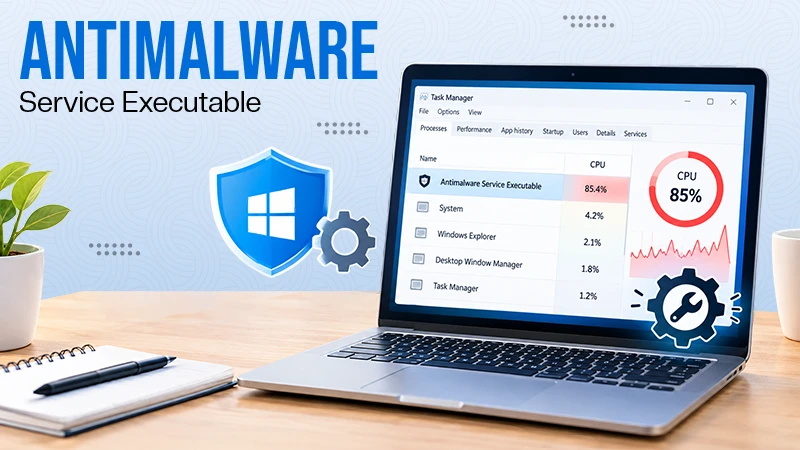
Antimalware Service Executable: What It Is and How to Fix High CPU Usage
You open Task Manager and notice Antimalware Service Executable using a surprising amount of CPU or memory. It may keep…

Keeping Your Website Healthy: A Practical Guide to Long Term Success
Introduction The website may appear to be finished once it is launched; however, making sure that the site remains reliable…
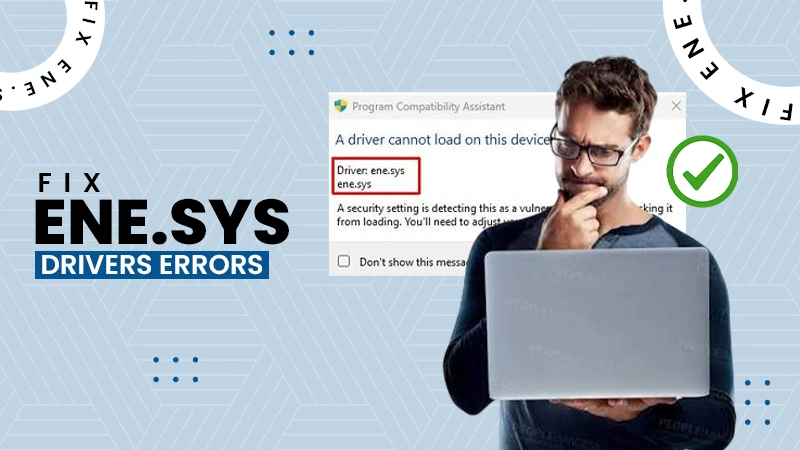
How to Fix the ene.sys Driver Cannot Load Error?
A Windows update can suddenly turn a harmless RGB utility into a startup warning: “A driver cannot load on this…